
Disclosure: This post may contain affiliate links, which means I may earn a small commission at no extra cost to you. I only share products I genuinely love and recommend. This content is also for educational purposes only and is not intended to diagnose, treat, cure, or prevent any illness or disease. Please consult your healthcare provider with any medical concerns or medication questions.
If there’s one thing I’ve learned as an Integrative Health Practitioner, it’s this: most people have no idea what’s really happening between their first bite of food and their next bathroom break.
And I get it!
The digestive system can sound super technical and full of words like “pyloric sphincter” and “peristalsis”, but when you break it down step by step (literally, from mouth to poop), it actually makes a lot of sense.
It can help explain why you might feel bloated, sluggish, or uncomfortable after meals.
So in this post, we’re walking through the digestive system. We’ll go over how your body digests food, how long it takes, and what signs to watch for when things go a little off track.
? Before we dive in, quick heads-up:
If you love having supportive resources at your fingertips, I’ve put together a Free Wellness Library just for you. It’s packed with meal planners, checklists, gut-friendly tips, and simple wellness guides. Grab it below!

What Is the Digestive System?
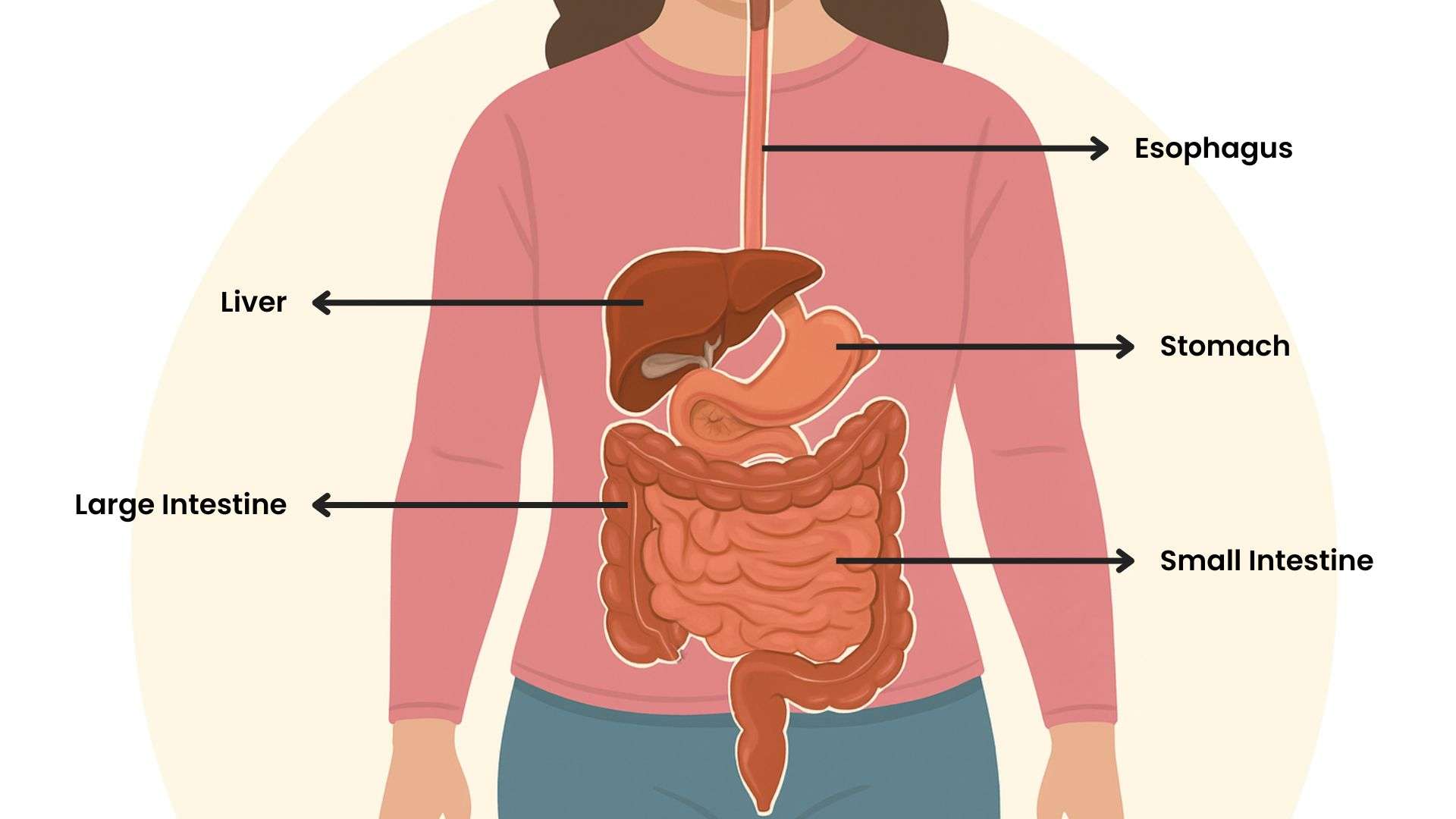
The digestive system (aka: your gut) is basically one long, winding tunnel (about 26 to 28 feet long) that runs from your mouth to your… well, you know where.
It includes:
- Mouth
- Esophagus
- Stomach
- Small intestine
- Large intestine (aka colon)
And it’s way more than just your stomach.
Your body is extracting nutrients, sending enzymes to help with digestion, absorbing vitamins, and—eventually—getting rid of the leftovers (hello, poop!).
Step-by-Step: How Digestion Works
1. Mouth
Digestion starts in the mouth, not the stomach.
Your saliva contains enzymes (like amylase) that begin breaking down carbs before anything even hits your belly.
If you rush through your meal and swallow chunks of food, you’re putting all the pressure on your stomach and intestines to finish what your mouth skipped.
So if you’ve ever been told to chew your food thoroughly, this is why.
Chewing strengthens the jaw, the muscles, and the bones of the face.
For kids, especially, chewing hard foods like apples can help develop strong facial structure and proper digestion early on.
2. Esophagus
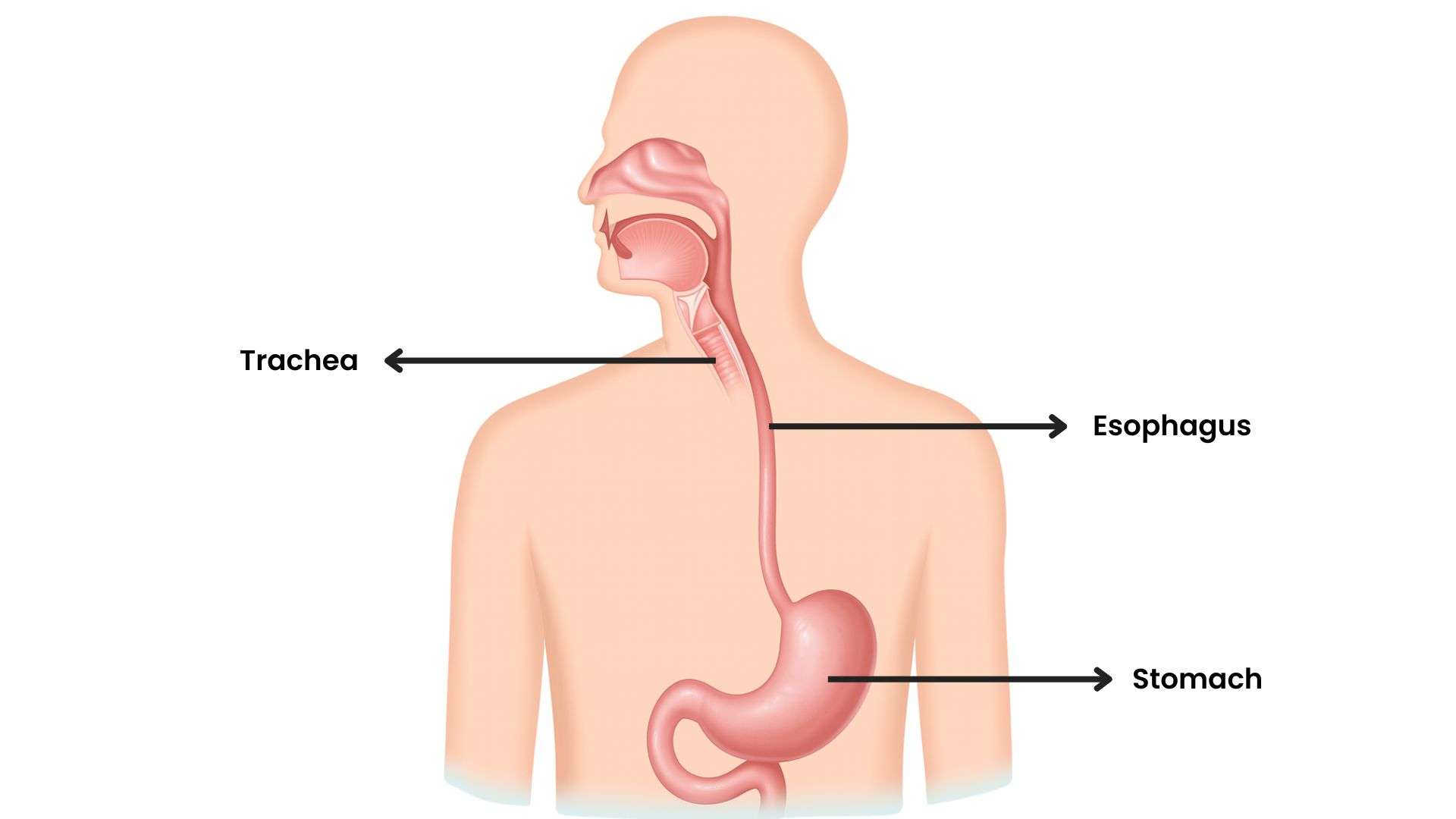
That “wrong pipe” moment when you choke a little? That’s because your esophagus is right next to your trachea.
One is for food, one is for air, and sometimes things go sideways.
The esophagus is about 10–13 inches long and acts like a muscular slide that pushes food down into the stomach through a process called peristalsis (think: a gentle wave).
Fun fact: You swallow once, and your esophagus takes over from there. But when you’re stressed or anxious, that smooth movement can get stuck.
3. Stomach
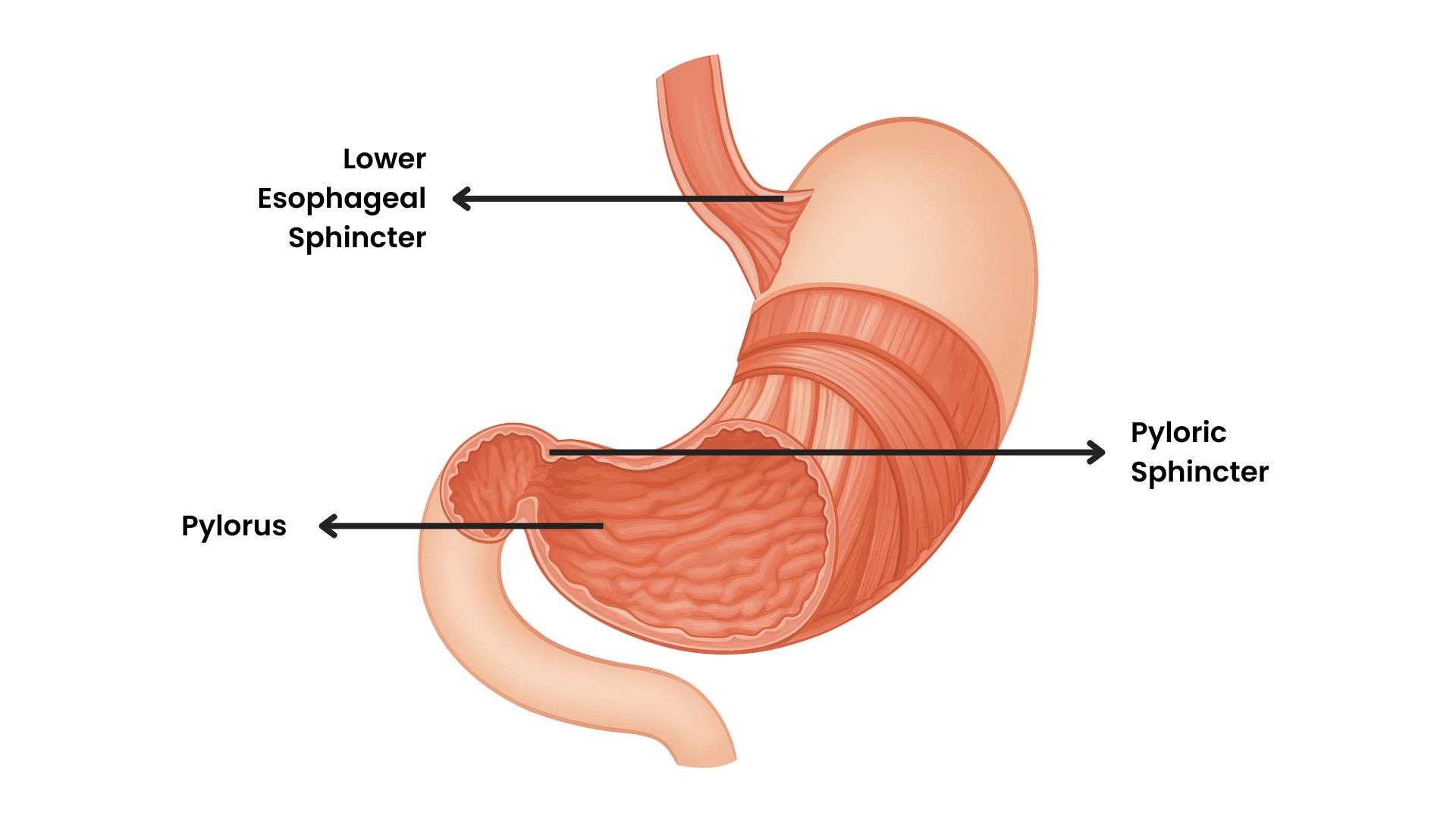
Your stomach is a temporary holding tank that mixes food with acids and enzymes (like pepsin and HCL) to start protein digestion.
- Top of the stomach: Starts mixing.
- Middle: Called the “body.”
- Bottom (pylorus): Where food exits into the small intestine through the pyloric sphincter.
How long food sits in your stomach varies by food:
- Liquids: ~30 mins
- Fruit: 30–60 mins
- Starches (like potatoes): ~1 hour
- Light protein (eggs, fish): 1–2 hours
- Heavy protein (red meat): 2–3 hours+
- Raw veggies: 2–3 hours
If your food is sitting in your stomach too long and causing bloating, low stomach acid might be the reason.
4. Small Intestine
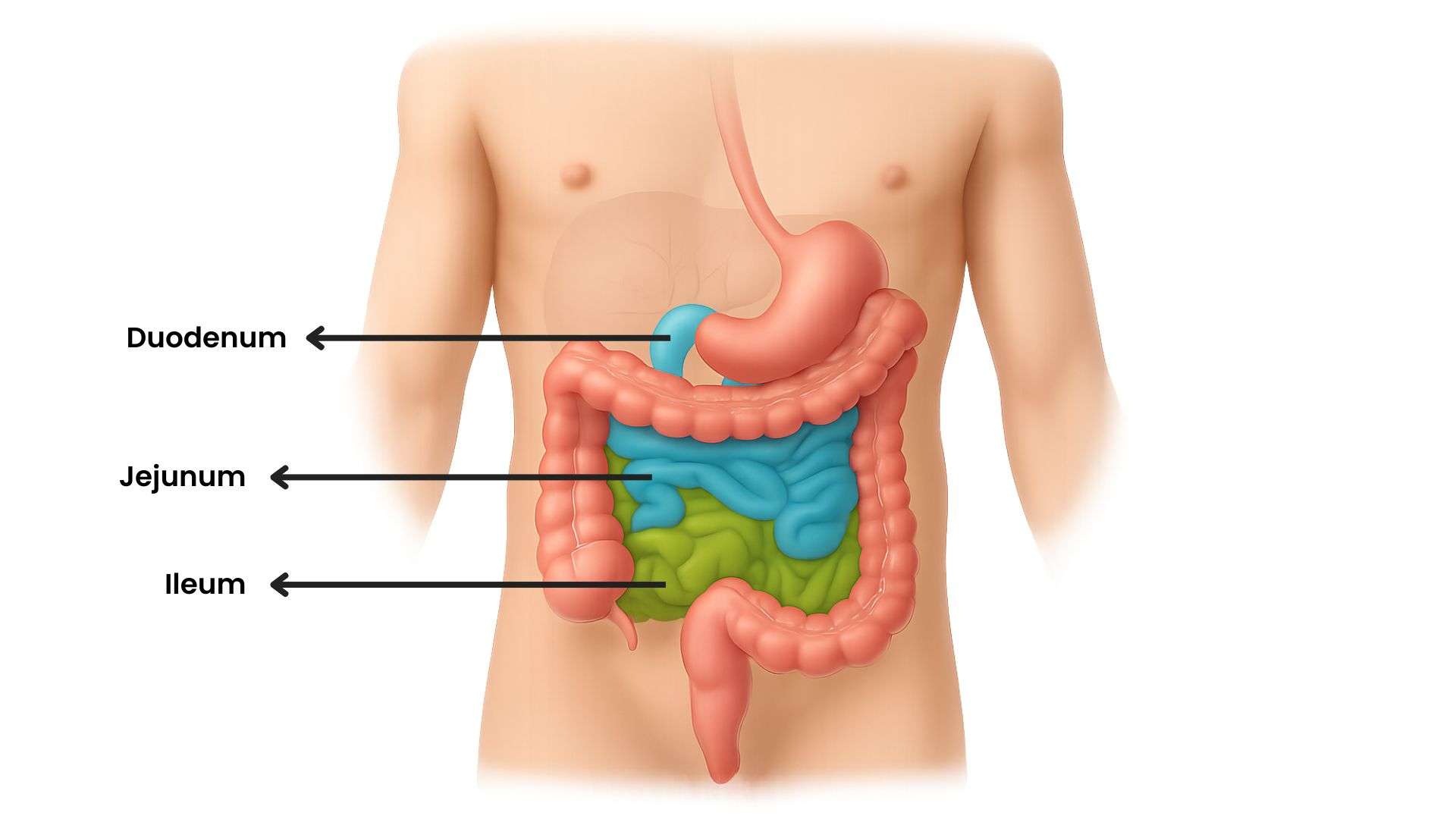
This is where most of the magic happens!
The small intestine is made of three parts:
- Duodenum (10 inches): First stop after the stomach. Bile from the liver and pancreatic enzymes begin breaking down fat and protein. If your body needs some backup breaking things down, digestive enzymes like these can make a big difference.
- Jejunum (8 feet): Absorbs nutrients.
- Ileum (10+ feet): Absorbs remaining bile and B12.
So yes, it’s called small, but it’s actually 21+ feet long and handles most of the digestion and absorption.
If your stool is green or floats, you may not be absorbing fats properly.
5. Large Intestine (Colon)
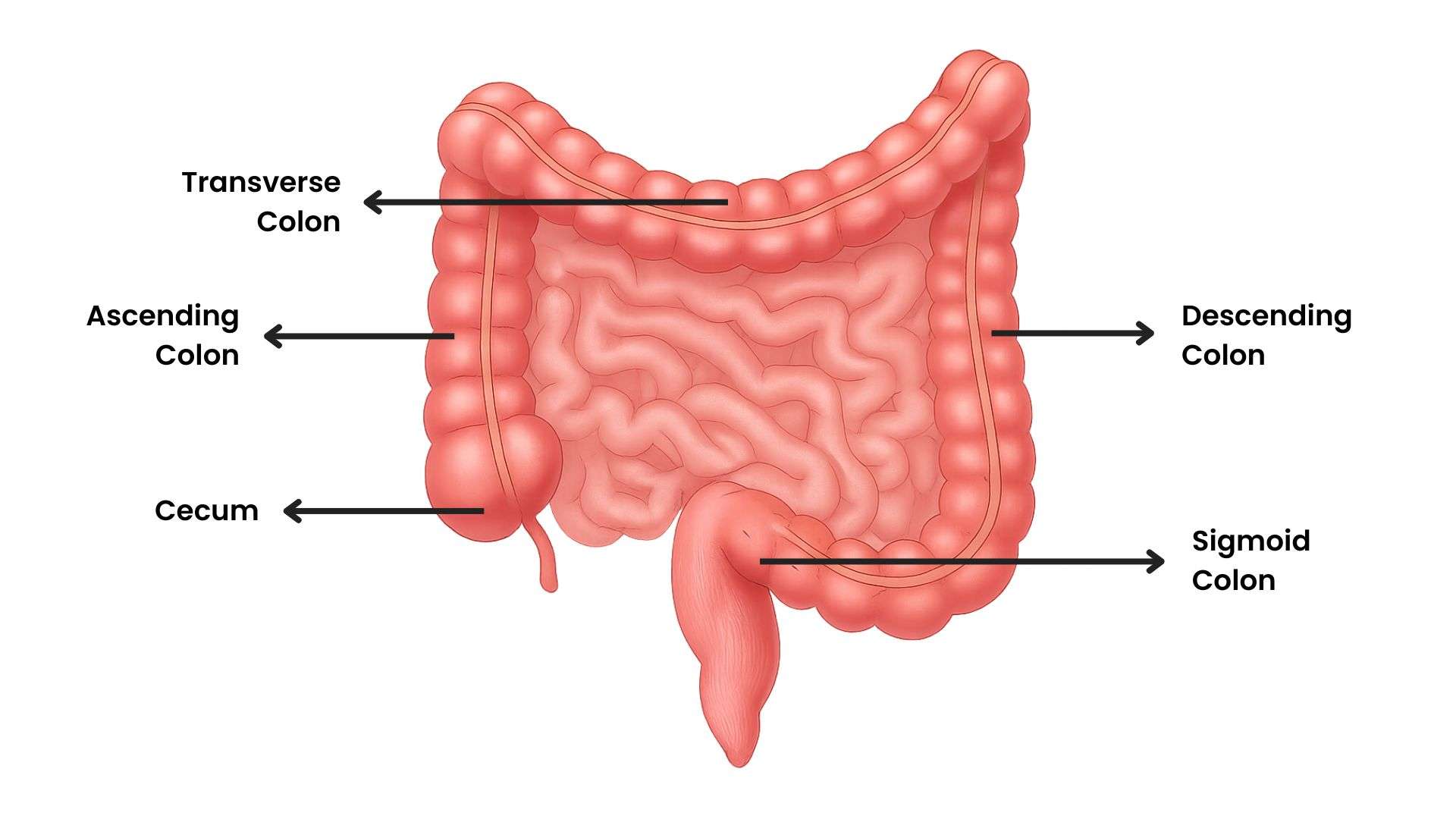
This is your body’s last chance to reabsorb water and compact waste.
The colon is about 5–6 feet and has three parts:
- Ascending colon (up the right side)
- Transverse colon (across the top)
- Descending/sigmoid colon (down and out)
Fun fact:
- Stool is about 75% water.
- The rest is mostly bacteria, plus leftover carbs, protein, and fat.
- Half of your bowel movement is bacterial biomass.
- The gut is not sterile and that’s a good thing.
? Side note: Looking for simple tools to support your digestion? My Free Wellness Library is full of meal planners, gut guides, and daily trackers. You can get free access below!
How Long Does Digestion Take?
Depending on your food and stress levels, it can take:
- 1–3 hours in the stomach
- 5–6 hours in the small intestine
- 12–24 hours in the large intestine
- A total of around 24 to 36 hours from plate to potty
But that doesn’t mean you only poop every day and a half. If you’re eating 2–3 meals a day, you should have at least one bowel movement per day.
Why It Matters (and What Can Go Wrong)
When digestion slows down, everything backs up. Here’s what can go wrong:
- Poor chewing can lead to bloating and fatigue
- Stress could cause food to get stuck in esophagus
- Incomplete fat digestion can lead to oily or floating stools
- Slow movement may result in constipation or bacterial overgrowth
- Quick movement may mean poor absorption and greenish stool
Tips to Support Your Digestion
- Chew like a champ: Until your food is a paste.
- Eat slowly: Gulping causes food to move too fast or too slow.
- Reduce stress: Especially around meals. Stress tightens the muscles that move food along.
- Listen to your gut: Bloating around the belly button usually points to the intestines, not the stomach.
- Your food choices can make or break digestion. Here are the best foods to ease bloating and support your gut naturally.
Quick Recap
✅ Digestion starts in the mouth, not the stomach
✅ Your small intestine is where most nutrients are absorbed
✅ Stool should reflect balance — too loose or oily? Pay attention
✅ Stress affects digestion at every level
✅ You should poop at least once a day
Final Thoughts
If you’ve ever felt like digestion was some mysterious, complicated system, I hope this gave you a little clarity (and maybe even a new appreciation for your gut). Your body’s doing so much behind the scenes, and once you understand how, it’s easier to help it do its thing. If you’re planning to heal your gut more deeply, this guide walks you through how to prepare the right way.
Now, I’d love to hear from you! What surprised you the most about how digestion works? Share below, I’d love to hear!
Additional Resource
- Gut Health 101: Everything You Need to Know
- How to Fix Low Stomach Acid Naturally (And Protect Your Gut)
- 7 Best Digestive Enzymes to Beat Bloating Fast
- 10 Best Debloating Foods to Eat When You’re Feeling Bloated
? Like this and want to save it for later? Tap the Pinterest Pin button below—it’s an easy way to keep it on hand when you need it.