
Disclosure: This post may contain affiliate links, which means I may earn a small commission at no extra cost to you. I only share products I genuinely love and recommend. This content is also for educational purposes only and is not intended to diagnose, treat, cure, or prevent any illness or disease. Please consult your healthcare provider with any medical concerns or medication questions.
If you’re dealing with high cortisol right now, chances are you already feel it. You might feel tense even when nothing is “wrong,” exhausted but unable to fully rest, or frustrated that your body isn’t responding the way it used to.
When cortisol stays elevated, it’s often because your body is under ongoing stress and one of the most common, overlooked sources of that stress is inflammation. Certain foods can keep that stress signal turned on, even if they’re foods you’ve always thought of as normal or healthy.
In this post, we’ll break down which foods research consistently links to inflammation and cortisol activation, so you can make changes that actually help your body calm down.
? Before we get started:
Grab my Daily Cortisol Reset Worksheet, a quick, printable tool to help you spot your biggest stress triggers and create easy daily resets to calm your nervous system. You can grab your free access below!

Why Inflammation Can Keep Cortisol High
Cortisol is your body’s main stress hormone. It’s released through the HPA axis (hypothalamic-pituitary-adrenal axis) when your brain senses a threat.
That “threat” doesn’t have to be emotional stress.
It can also be:
- Blood sugar crashes
- Gut irritation
- Ongoing inflammation
- Poor sleep
When inflammation is present, your body interprets it as a stress signal and responds by releasing more cortisol.
Over time, that can mean cortisol stays elevated longer than it should.
Food plays a big role here because some foods create more internal stress than others when your system is already overwhelmed.
Related:
How to Reduce Inflammation by Fixing the Root Cause
The 7 Inflammatory Foods to Avoid If Cortisol Is High
Some foods below affect cortisol directly (like alcohol and caffeine). Others affect it indirectly by increasing inflammation or causing blood sugar swings, both of which are well-known cortisol triggers in the scientific literature.
1. Added Sugars
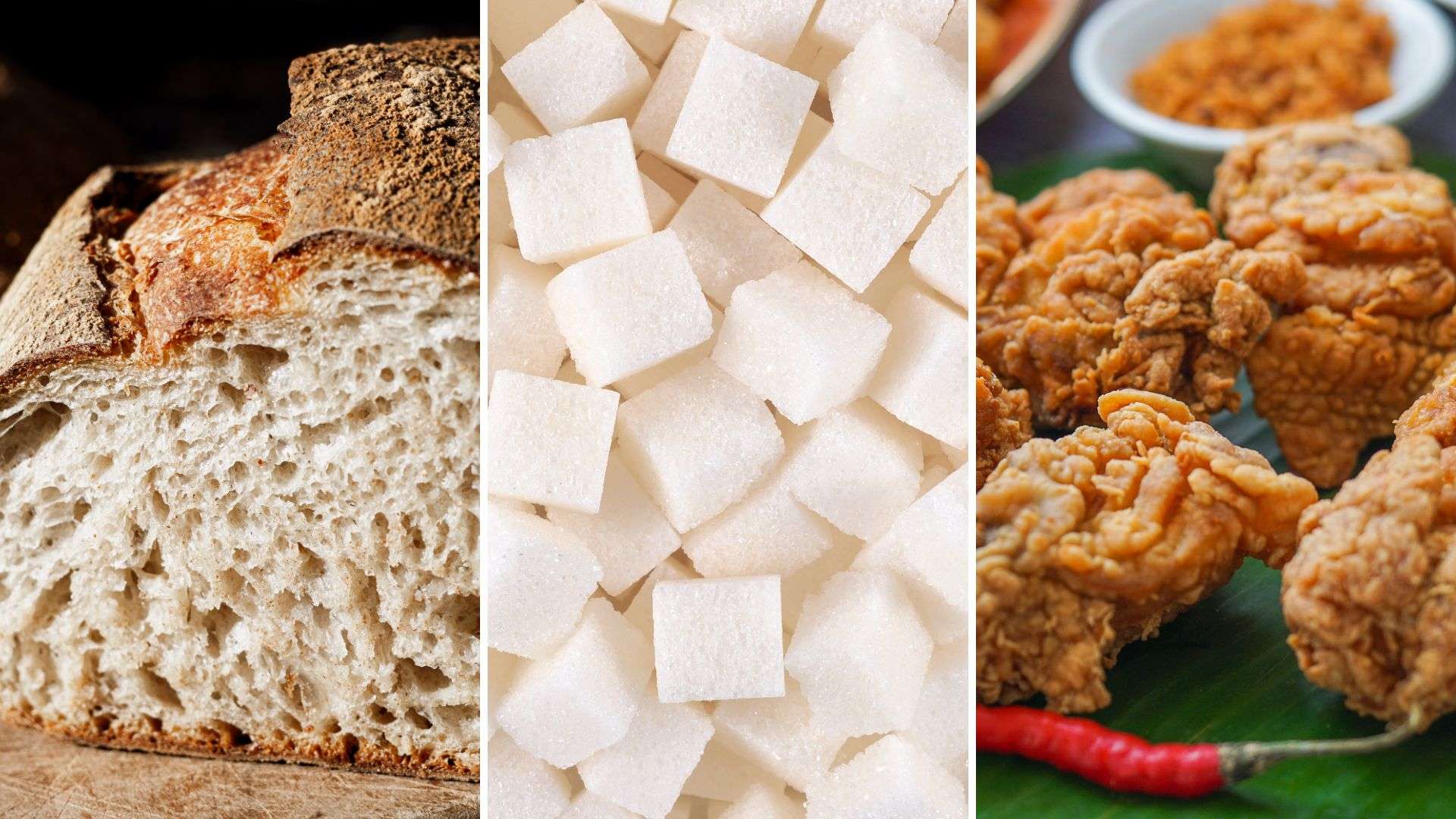
Added sugars are one of the strongest dietary drivers of inflammation.
Research shows that high sugar intake increases inflammatory markers like C-reactive protein (CRP) and inflammatory cytokines.1
Why this matters for cortisol:
- Sugar causes rapid blood sugar spikes
- Those spikes are often followed by crashes
- Blood sugar crashes trigger cortisol release to bring glucose back up
Common sources:
- Sugary drinks
- Desserts
- Sweetened yogurt
- “Healthy” bars and cereals
When cortisol is high, your body does better with steady blood sugar, not sugar highs and lows.
2. Refined Carbohydrates
Refined carbs act very similarly to sugar in the body.
Studies have found that higher dietary glycemic load is associated with higher C-reactive protein (CRP), while lower-glycemic diets have been shown in clinical research to reduce CRP and other inflammatory markers.2
Why this matters for cortisol:
- Refined carbs digest quickly
- They raise blood sugar fast and drop it fast
- Repeated blood sugar swings increase cortisol reactivity
Common sources:
- White bread
- Pastries
- Crackers
- White pasta
3. Ultra-Processed Foods
Ultra-processed foods are strongly associated with inflammation in large observational studies.3
These foods often contain additives, emulsifiers, and highly refined fats and carbohydrates.
Why this matters for cortisol:
- Ultra-processed foods can disrupt gut health
- Gut inflammation sends stress signals to the brain
- Chronic low-grade inflammation keeps cortisol elevated
Common sources:
- Fast food
- Packaged snacks
- Frozen meals
- Highly processed “diet” foods
4. Trans Fats and Partially Hydrogenated Oils
Trans fats are one of the most well-established inflammatory dietary components.
Peer-reviewed studies link trans fat intake to:4
- Higher CRP
- Increased oxidative stress
- Impaired insulin sensitivity
Why this matters for cortisol:
- Metabolic stress increases cortisol demand
- Chronic metabolic stress keeps the stress response turned on
Common sources:
- Fried foods
- Shelf-stable baked goods
- Some margarines (older formulations)
5. Alcohol
Alcohol has one of the clearest, most direct relationships with cortisol.
Human studies5 show that alcohol consumption:
- Increases cortisol levels
- Activates the HPA axis
- Disrupts sleep, which further raises cortisol
Even moderate drinking can interfere with cortisol regulation if your nervous system is already stressed.
Why this matters:
- Cortisol naturally drops at night
- Alcohol can raise nighttime cortisol
- Poor sleep keeps cortisol elevated the next day
6. Excess Caffeine
Caffeine directly stimulates cortisol release. The effect is stronger when:
- You’re already stressed
- You’re sleep-deprived
- You drink caffeine without food (on an empty stomach)
Why this matters for cortisol:
- Caffeine increases ACTH, which signals cortisol release
- Repeated stimulation can disrupt normal cortisol rhythms over time
Common sources:
- Strong coffee
- Energy drinks
- Pre-workout supplements
7. Deep-Fried and Fast Foods
Omega-6 fats themselves are not inherently inflammatory. Large reviews6 show they don’t cause inflammation on their own in humans.
The issue is dietary imbalance:
- Very high omega-6 intake
- Very low omega-3 intake
- Common in fried and fast foods
Why this matters for cortisol:
- Pro-inflammatory dietary patterns increase internal stress
- That stress keeps cortisol elevated
- Anti-inflammatory pathways are less supported
Common sources:
- Fast food
- Fried snacks
- Highly processed meals
What to Focus on Instead
When cortisol is high, your body responds best to:
- Stable meals
- Enough protein
- Fiber-rich carbs
- Regular eating times
- Less internal stress
Consistency calms cortisol more than perfection.
Related:
8 Best Foods That Lower Cortisol and Calm Stress
7 Simple Activities That Naturally Lower Cortisol and Improve Mood
Want to make anti-inflammatory eating even easier?
I put together a comprehensive Anti-Inflammatory Food Bundle that helps take the guesswork out of what to buy, what to snack on, and how to plan your week. If you love these snack ideas, this bundle will help you make healthy choices every day.

It includes:
✔ Food lists (Enjoy • Limit • Avoid)
✔ Grocery shopping guide
✔ 25 snack ideas
✔ A 7-day meal plan
✔ Printable templates for planning
✔ BONUS: Free recipe book & meal planner
Who May Be Extra Sensitive to These Foods
You may notice stronger effects if you’re dealing with:
- Chronic stress or burnout
- Poor sleep
- Blood sugar instability
- Digestive issues
- Hormonal transitions (like perimenopause or postpartum)
Quick Recap
✅ Inflammation acts as an internal stress signal
✅ Some foods raise cortisol directly (alcohol, caffeine)
✅ Others raise cortisol indirectly through inflammation and blood sugar swings
Final Thought
If your cortisol is high, it’s because your body is responding to ongoing stress signals. Food is just one of those signals, but it’s one you have some control over. Reducing foods that increase inflammation or disrupt blood sugar can take pressure off your stress response and give your system space to reset.
You don’t need to eliminate everything or aim for perfection. Even small, consistent changes can make a real difference in how your body handles stress over time. The goal is creating conditions that help your body feel safer and more supported.
Now I’d love to hear from you! Which of these foods do you think might be contributing to your high cortisol right now? Let me know in the comments below.
? Still dealing with bloating, fatigue, or inflammation, no matter what you try?
If you’ve been chasing symptoms and nothing seems to stick, it’s time to look deeper. I’d love to help you uncover the root cause of your digestive + hormone issues so you can finally get the answers you’ve been looking for.
? To get started, learn how private coaching and functional lab testing can help you.
Additional Resources
- How to Reduce Inflammation by Fixing the Root Cause
- 5 Powerful Anti-Inflammatory Foods to Boost Your Health Today
- 7 Easy Anti-Inflammatory Dinners Ready in Just 20 Minutes
- How Your Hidden Stress Hormones Are Blocking Fat Loss
- 10 Hidden Signs of High Cortisol (And How to Fix It)
Footnote:
- Intakes and Sources of Dietary Sugars and Their Association With Inflammatory Markers ↩︎
- Relation between a diet with a high glycemic load and plasma concentrations of high-sensitivity C-reactive protein in middle-aged women ↩︎
- Ultra-Processed Food Consumption and Systemic Inflammation ↩︎
- Dietary intake of trans fatty acids and systemic inflammation in women ↩︎
- Stress and the HPA axis: role of glucocorticoids in alcohol dependence ↩︎
- Effect of dietary linoleic acid on markers of inflammation in healthy persons: a systematic review of randomized controlled trials ↩︎
? Like this and want to save it for later? Tap the Pinterest Pin button below—it’s an easy way to keep it on hand when you need it.