
Disclosure: This post may contain affiliate links, which means I may earn a small commission at no extra cost to you. I only share products I genuinely love and recommend. This content is also for educational purposes only and is not intended to diagnose, treat, cure, or prevent any illness or disease. Please consult your healthcare provider with any medical concerns or medication questions.
Mushrooms are one of those foods that seem harmless but can trigger digestive symptoms for a lot of people, especially if you’re following a low-FODMAP diet or dealing with IBS.
The good news is mushrooms are not a simple yes or no food. Some types can fit into a low-FODMAP diet, while others are more likely to cause problems. Once you understand why mushrooms affect digestion and which ones tend to be better tolerated, things start to feel a lot less overwhelming.
In this post, we’ll go over whether mushrooms are FODMAP-friendly, why they can cause bloating and discomfort, which types are usually better tolerated, and how to eat mushrooms that feels safer for your gut.
? Before we get started:
Be sure to grab access to my Free Wellness Library. It’s packed with e-books, gut health checklists, food trackers, and practical resources to help you feel better faster. You can get your free access below!

Are Mushrooms Low FODMAP?
The answer is: sometimes.
Mushrooms contain a type of FODMAP called polyols, specifically mannitol. Polyols are carbohydrates that are poorly absorbed in the small intestine. When they are not absorbed properly, they move into the large intestine where gut bacteria ferment them.
That fermentation process is what can lead to bloating, gas, stomach pain, and changes in bowel movements.
Research1 shows that polyols like mannitol can trigger digestive symptoms in people with IBS because of poor absorption and increased fermentation in the gut.
So mushrooms are not automatically high FODMAP. The reaction depends on the type of mushroom and the portion size.
Why Mushrooms Can Cause Bloating
Your small intestine absorbs most carbohydrates just fine.
Mannitol is different.
For many people with IBS, it does not absorb well. When it reaches the large intestine, gut bacteria break it down.
That process:
- Produces gas
- Pulls water into the gut
- Increases pressure in the intestines
According to Harvard School of Public Health2, this combination is a major reason fermentable carbohydrates trigger IBS symptoms.
That’s why mushrooms can feel fine one day and terrible another.
Related:
9 Root Causes of Burping and Gas (& How to Fix Them Naturally)
Low FODMAP Mushrooms to Enjoy
Some mushrooms are better tolerated in small amounts, especially during the elimination phase of the low-FODMAP diet.
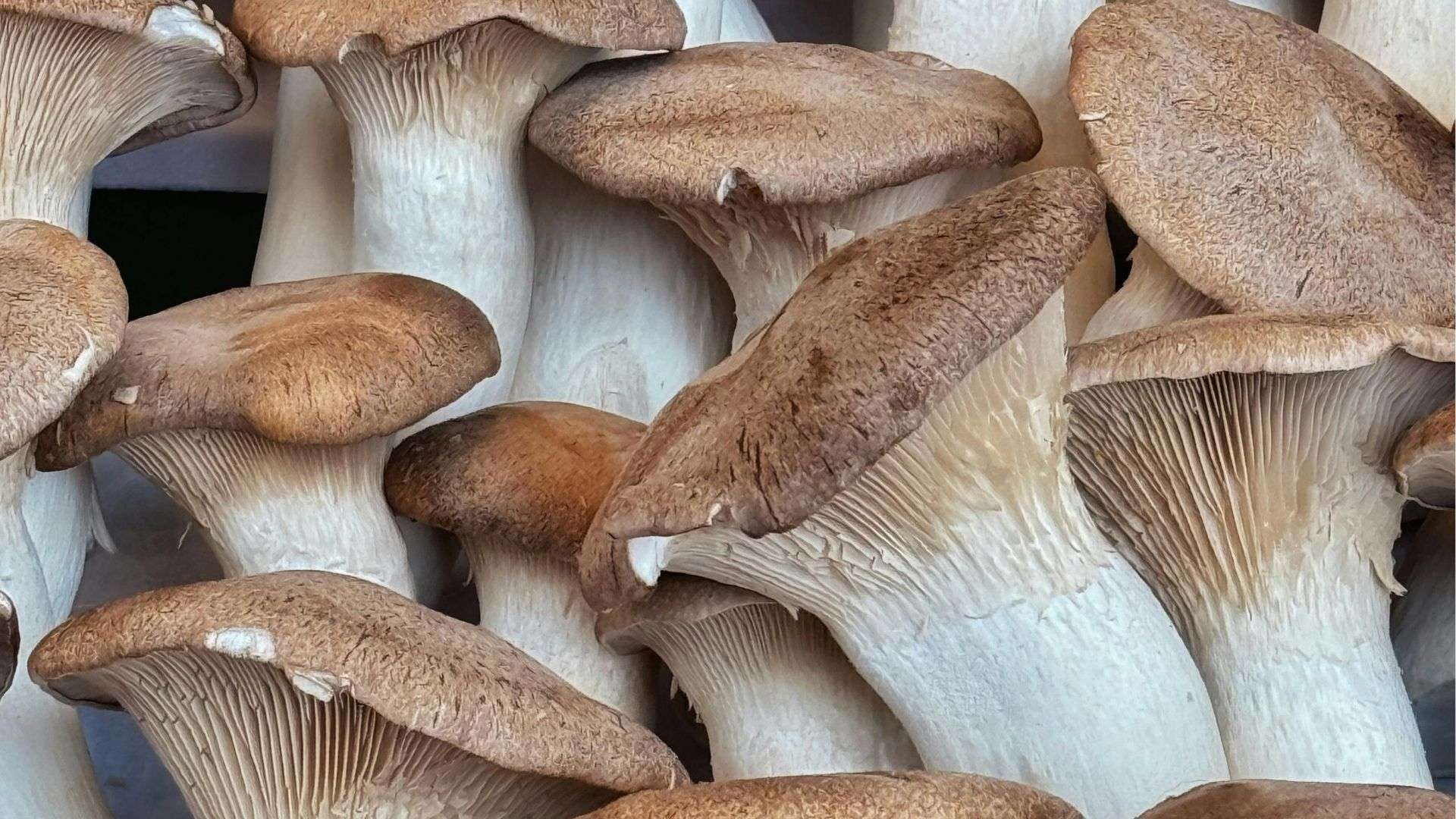
1. Oyster mushrooms
Serving: 1 cup
Oyster mushrooms have a mild, slightly sweet flavor with a soft texture. According to Monash University, they are low FODMAP in a 1-cup serving.
They work well in soups, stews, and sauces. Add them toward the end of cooking so they don’t get too soft. You can also sauté them or toss them into a stir-fry for an easy, gut-friendly option.
2. Canned champignon mushrooms
Serving: ½ cup
Canned champignon mushrooms, also known as button mushrooms, are low FODMAP in a ½-cup serving. This is different from fresh button mushrooms, which are higher in FODMAPs.
The reason canned mushrooms are better tolerated is that mannitol can leach into the brine during the canning process, lowering the FODMAP content of the mushrooms themselves.
Tips for best tolerance:
- Choose mushrooms packed in brine, not oil
- Drain and rinse them well before eating
These mushrooms work well in salads, omelets, rice dishes, and stir-fries.
3. Black fungi mushrooms
Serving: 1 cup
Black fungi mushrooms are low FODMAP in a 1-cup serving, according to testing from FODMAP Friendly.
They are commonly used in Chinese cooking and are great in soups and stir-fries. Their texture is slightly crunchy, which can add interest to dishes without needing a large portion.
4. Shimeji mushrooms
Serving: 1 cup
Shimeji mushrooms are native to East Asia and are low FODMAP in a 1-cup serving according to FODMAP Friendly.
They are bitter when raw, so always cook them. Try adding them to soups, stews, or stir-fries. They also work well slow-roasted at a low temperature with butter or olive oil.
5. Dried shiitake mushrooms
Serving: 2 mushrooms
According to Monash University, dried shiitake mushrooms are low FODMAP at a serving of two mushrooms. Larger portions become high FODMAP due to mannitol.
They are great in soups, where they soften as they cook. If using them outside of soup, soak them in hot water first and remove the tough stems.
6. Dried porcini mushrooms
Serving: 1 tablespoon
Dried porcini mushrooms are:
- High FODMAP at 1 cup
- Moderate FODMAP at ½ cup
- Low FODMAP at 1 tablespoon
A small amount adds deep flavor, so you don’t need much. You can soak them whole or grind them into a powder and use a pinch to enhance soups, sauces, or meats.
High FODMAP Mushrooms to Limit
Some mushrooms contain higher amounts of mannitol and are more likely to cause symptoms, especially during the elimination phase.
These include:
- Button mushrooms
- Portobello mushrooms
- Fresh shiitake mushrooms
This does not mean you can never eat these again. It just means they are more likely to trigger symptoms when your gut is sensitive.
One important thing to know. Cooking does not reduce FODMAPs. Roasting, sautéing, or grilling mushrooms does not lower their mannitol content.
I know… that one hurts.
How to Eat Mushrooms With IBS
The low-FODMAP diet is not meant to be forever. It is a tool to help you learn what your body can handle.
Here are some gentle, practical tips:
- Start with small portions
- Avoid stacking mushrooms with other high-FODMAP foods
- Pair mushrooms with low-FODMAP ingredients
- Test mushrooms during the reintroduction phase instead of guessing
Quick Recap
✅ Mushrooms contain mannitol, a polyol FODMAP
✅ Some mushrooms are low FODMAP in small portions
✅ Others are more likely to cause bloating and gas
✅ Portion size matters more than the food itself
Final Thoughts
If mushrooms have made your gut feel unpredictable in the past, you’re not alone. Foods that are considered “healthy” can still cause discomfort, and that can make eating feel stressful fast.
But once you understand why mushrooms affect digestion and how portion size and type matter, it becomes a lot easier to make choices that feel safe and supportive.
Now I’d love to hear from you! Have mushrooms ever surprised your digestion, either in a good way or a not-so-great one? I’d love to hear what your experience has been.
? Still dealing with bloating, fatigue, or inflammation, no matter what you try?
If you’ve been chasing symptoms and nothing seems to stick, it’s time to look deeper. I’d love to help you uncover the root cause of your digestive + hormone issues so you can finally get the answers you’ve been looking for.
? To get started, learn how private coaching and functional lab testing can help you.
Additional Resources
- Find the Root Cause of IBS and Finally Feel Better
- The Ultimate Guide to Low FODMAP Garlic and Onion Substitutes (That Actually Taste Good)
- 10 Best Debloating Foods to Eat When You’re Feeling Bloated
- 9 Root Causes of Burping and Gas (& How to Fix Them Naturally)
- 5 Proven Remedies to Reduce a Bloated Belly Fast
Footnote:
- Sorbitol and Mannitol Absorption and IBS Symptoms ↩︎
- Try a FODMAPs diet to manage irritable bowel syndrome ↩︎
? Like this and want to save it for later? Tap the Pinterest Pin button below—it’s an easy way to keep it on hand when you need it.