
Disclosure: This post may contain affiliate links, which means I may earn a small commission at no extra cost to you. I only share products I genuinely love and recommend. This content is also for educational purposes only and is not intended to diagnose, treat, cure, or prevent any illness or disease. Please consult your healthcare provider with any medical concerns or medication questions.
A 7-day anti-inflammatory diet plan can be a simple way to support your body without making healthy eating feel overly complicated. One of the easiest places to start is by building your meals around more whole, anti-inflammatory foods.
Over time, chronic inflammation can affect how you feel day to day. While no single food is a quick fix, consistently eating more nutrient-dense foods can help support overall health and create a stronger foundation for feeling better.
So in this post, you’ll learn how to follow a simple, structured 7-day anti-inflammatory diet plan that helps you reset, stay consistent, and start feeling better in a realistic way.
👉 Before we get started:
Be sure to grab access to my Free Wellness Library. It’s packed with e-books, gut health checklists, food trackers, and practical resources to help you feel better faster. You can get your free access below!

How an Anti-Inflammatory Diet Helps
Chronic inflammation is not something you can always feel right away, but over time it can show up as fatigue, digestive issues, or blood sugar imbalances.
According to the National Institutes of Health, long-term inflammation is associated with many chronic conditions, including metabolic and cardiovascular concerns.1
Here is how an anti-inflammatory diet helps:
- Provides antioxidants that help protect your cells from everyday stress
- Supports immune balance so your body is not constantly in a heightened state
- Helps stabilize blood sugar, which plays a role in inflammation
- Nourishes your gut with fiber and whole foods that support digestion
Anti-Inflammatory Foods to Eat and Limit
Your results will come from what you consistently include in your meals.
Foods to focus on
These are the foundation of your 7-day anti-inflammatory diet plan:
- Leafy greens like spinach, kale, and arugula
- Berries such as blueberries, strawberries, and raspberries
- Healthy fats like olive oil, avocado, and walnuts
- Clean proteins including fish, poultry, and legumes
- Anti-inflammatory spices like turmeric and ginger
- Fiber-rich foods that support gut health
Foods to limit
These can contribute to higher levels of inflammation when eaten regularly:
- Refined sugar and sugary drinks
- Highly processed foods
- Refined carbohydrates like white bread and pastries
- Processed meats
- Excess alcohol
Research has linked higher intake of ultra-processed foods with increased inflammatory markers, which is why reducing them can make a noticeable difference.2
Related:
7 Inflammatory Foods to Avoid If You Have High Cortisol Right Now
How to Quit Sugar Without Cravings (Step-by-Step)
Sample 7-Day Anti-Inflammatory Diet Plan
This plan is designed to be realistic and easy to follow. You can mix and match based on what you have at home.
Day 1
- Breakfast: Overnight oats with berries
- Lunch: Mediterranean chickpea bowl
- Snack: Apple or pear with nut butter
- Dinner: Baked salmon with quinoa and broccoli
Day 2
- Breakfast: Greek yogurt berry bowl
- Lunch: Salmon grain bowl (using leftovers)
- Snack: Handful of unsalted nuts
- Dinner: Lentil and vegetable soup with whole grain toast
Day 3
- Breakfast: Overnight oats (repeat for simplicity)
- Lunch: White bean and herb salad
- Snack: Bell pepper slices with hummus
- Dinner: Tofu vegetable stir-fry
Day 4
- Breakfast: Vegetable omelet with fruit
- Lunch: Lentil soup with a simple green salad
- Snack: Coconut yogurt with chia seeds
- Dinner: One-pan chicken with roasted vegetables
Day 5
- Breakfast: Green smoothie
- Lunch: Mediterranean chickpea bowl (leftovers)
- Snack: Apple or pear slices
- Dinner: Shrimp taco bowl
Day 6
- Breakfast: Overnight oats or yogurt bowl
- Lunch: Chicken and roasted vegetables (leftovers)
- Snack: Veggie sticks with hummus
- Dinner: Baked cod with potatoes and greens
Day 7
- Breakfast: Avocado toast with egg
- Lunch: Leftover soup or grain bowl
- Snack: Small trail mix
- Dinner: Vegetable-heavy whole grain pasta
Want to make anti-inflammatory eating even easier?
I created a simple 7-Day Anti-Inflammatory Meal Plan to help you take the guesswork out of what to eat each day. This is the exact style of plan you see above, with simple meals, repeat ingredients, and built-in leftovers to save you time.
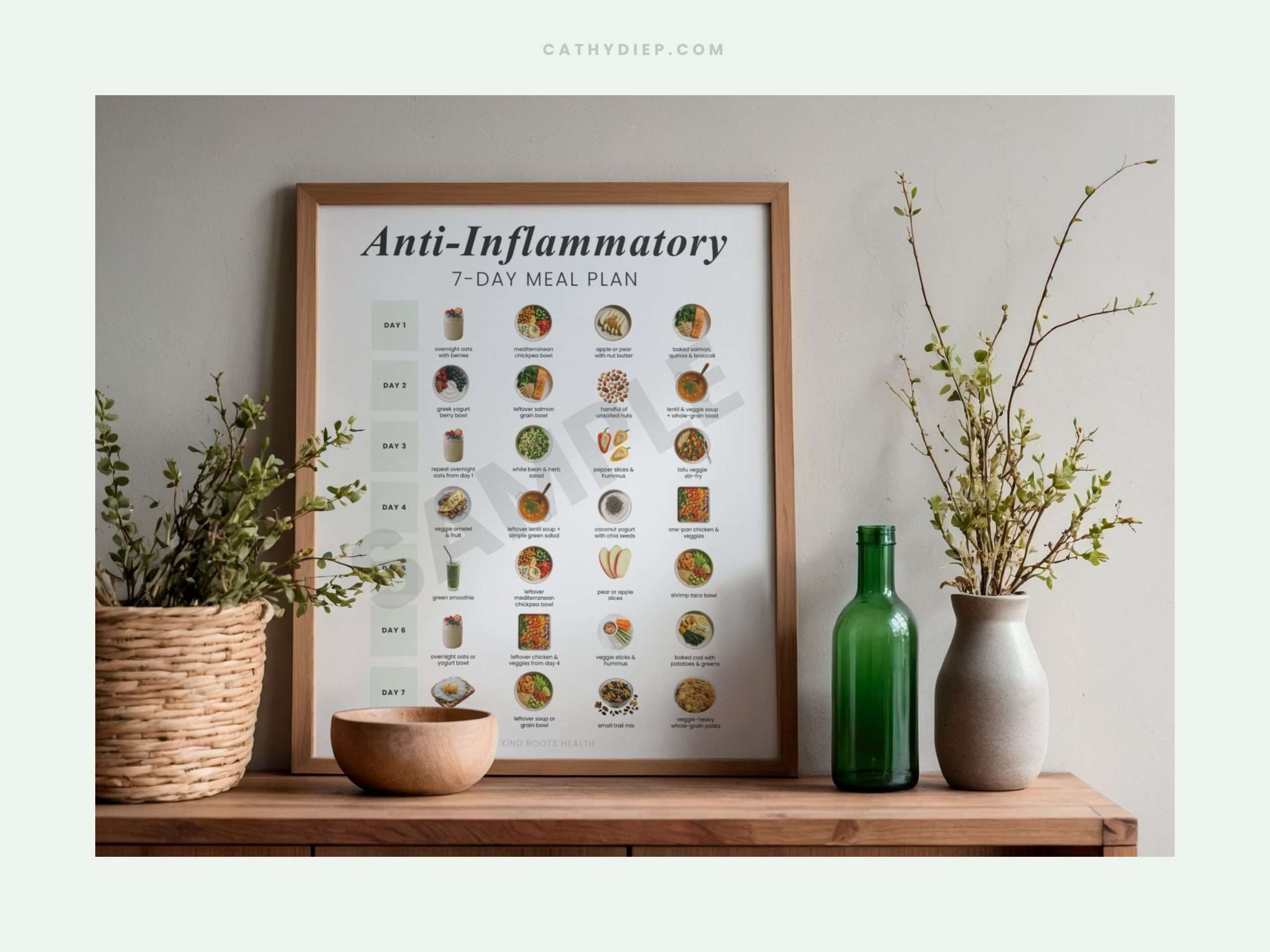
It includes:
✔ 7 full days of balanced meals (breakfast, lunch, dinner, and snacks)
✔ Simple, whole-food ingredients
✔ Easy-to-repeat meals to reduce decision fatigue
✔ Built-in leftovers to make your week easier
✔ A clean, printable layout you can keep in your kitchen
✔ BONUS: Free recipe book & meal planner
Common Anti-Inflammatory Diet Mistakes
Even with a solid plan, a few common habits can get in the way of results.
- Relying on packaged “healthy” foods that still contain inflammatory oils or additives
- Not eating enough protein, which can lead to energy dips
- Skipping meals, which can impact blood sugar balance
- Expecting noticeable changes within a day or two
- Overlooking sleep and stress, which also influence inflammation
How to Make It Sustainable
Here are simple ways to make it sustainable:
- Prep basic staples like proteins and roasted vegetables ahead of time
- Keep easy snacks like nuts, fruit, and hummus available
- Cook more meals at home using whole ingredients
- Slowly reintroduce foods to see how your body responds
- Focus on progress instead of perfection
Research consistently shows that long-term dietary patterns have a greater impact on overall health than short-term changes. Keeping things simple is what helps you stay consistent.3
Quick Recap
✅ Focus on whole, nutrient-dense foods to help reduce inflammation
✅ Limit processed foods, refined sugar, and excess alcohol
✅ Follow a simple 7-day structure to support your body
✅ Support gut health with fiber-rich and fermented foods
✅ Stay consistent rather than aiming for perfection
💢 Following an anti-inflammatory diet, but still not feeling your best?
I love using food as a foundation for feeling better. But I also know how frustrating it can feel when you’re eating well and still dealing with bloating, low energy, inflammation, food reactions, or feeling “off.”
As an Integrative Health Practitioner, I help you look at your meals, digestion, lifestyle, stress, and whole-body patterns so you can better understand what your body may need and create a plan that feels realistic, supportive, and personalized to you.
👉 Learn how private 1:1 health coaching and functional lab testing can help you take the next step.
Final Thoughts
Starting a 7-day anti-inflammatory diet plan does not have to feel overwhelming. Small, intentional changes can lead to noticeable improvements in how you feel each day. You may start to notice better energy, improved digestion, and fewer symptoms as your body begins to rebalance.
The most important thing is to keep it simple and realistic. Choose foods that nourish your body and fit into your lifestyle so you can stay consistent over time.
Now I’d love to hear from you. What is the main reason you want to try an anti-inflammatory diet right now? Let me know in the comments below.
Additional Resources
If you want to go deeper or make this easier to apply day to day, these posts will help you take the next step:
- The Ultimate Anti-Inflammatory Grocery List for Beginners (Foods to Eat & Avoid)
- 10 Best Anti-Inflammatory Foods for Better Health
- How to Reduce Inflammation by Fixing the Root Cause
- 20 Quick and Easy Gut-Healing Meals You’ll Actually Want to Make
- 7 Easy Anti-Inflammatory Dinners Ready in Just 20 Minutes
Footnote:
- Chronic Inflammation – StatPearls – NCBI Bookshelf ↩︎
- Low-Grade Inflammation and Ultra-Processed Foods ↩︎
- Mediterranean Diet and Health: Systematic Review and Meta-Analysis ↩︎
👉 Like this and want to save it for later? Tap the Pinterest Pin button below—it’s an easy way to keep it on hand when you need it.