

Disclosure: This post may contain affiliate links, which means I may earn a small commission at no extra cost to you. I only share products I genuinely love and recommend. This content is also for educational purposes only and is not intended to diagnose, treat, cure, or prevent any illness or disease. Please consult your healthcare provider with any medical concerns or medication questions.
Your body does so much for you every single day. But when inflammation sneaks in and refuses to leave, it can start to feel like your body’s working against you. The stiffness, the soreness, the low energy that just doesn’t match how well you’ve been eating or taking care of yourself.
And sometimes, it’s not stress or aging causing the problem. It’s certain foods you eat all the time that seem healthy but trigger inflammation beneath the surface.
This one surprised me when I first learned about it: a small group of foods called nightshades can lead to inflammation, gut issues, and even joint pain for some people, especially if you’re prone to autoimmune conditions or chronic inflammation.
In this post, we’ll uncover seven of these hidden nightshade foods, why they can be a problem for certain people, and how to know if they’re affecting you.
? Before we get started:
Be sure to grab access to my Free Wellness Library. It’s packed with e-books, gut health checklists, food trackers, and practical resources to help you feel better faster. You can get your free access below!

7 Hidden Foods That Trigger Inflammation
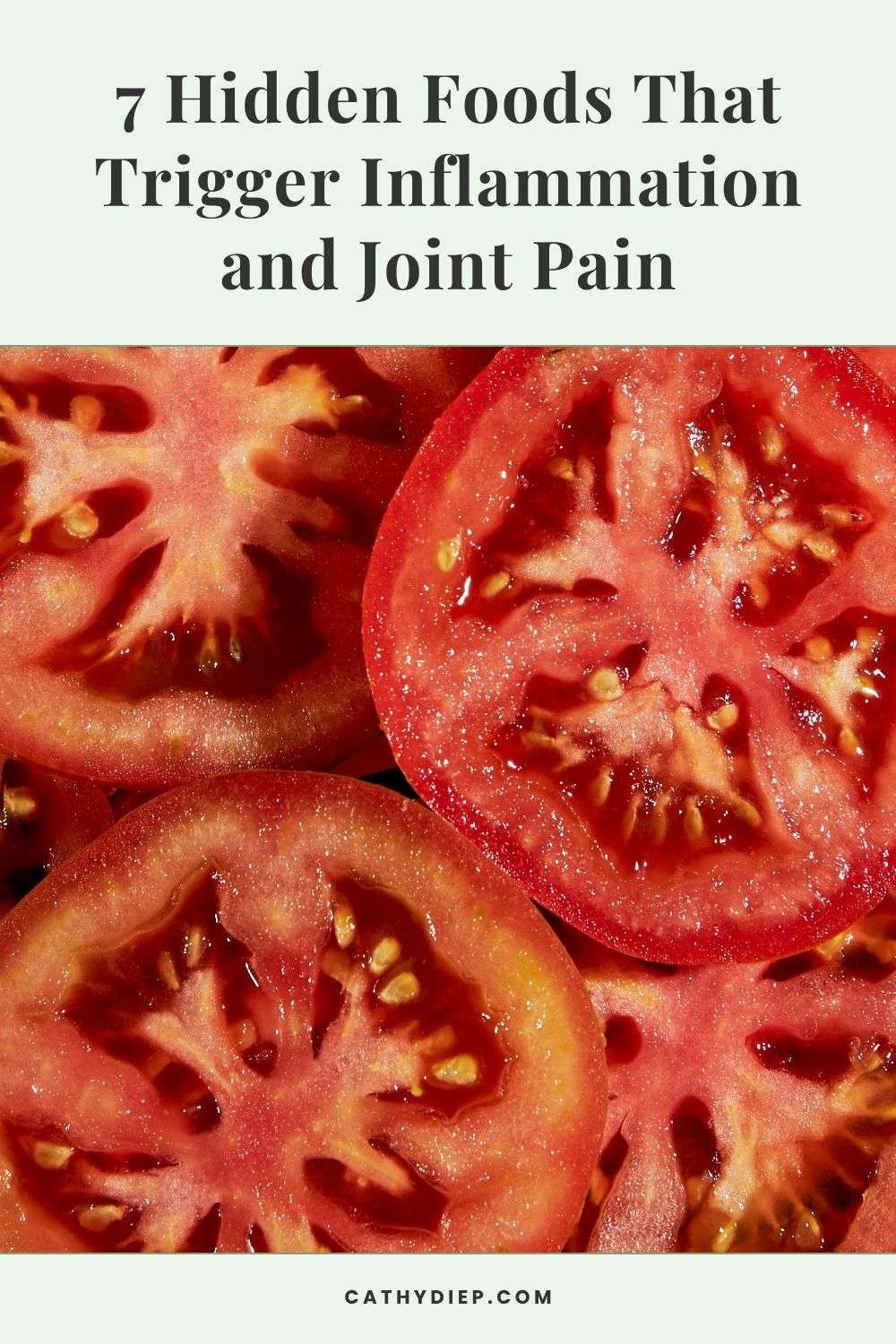
1. Tomatoes
Tomatoes are one of the most common nightshades, and they’re in everything from sauces to soups.
While they’re packed with antioxidants like lycopene, they also contain alkaloids, natural plant chemicals that can irritate the gut lining in some people.
Alkaloids act like a natural pesticide for plants, protecting them from insects, but they can trigger inflammation in humans with sensitive digestive systems.
For some people, eating tomatoes regularly leads to bloating, fatigue, or joint stiffness.
2. Potatoes
Regular potatoes (white, red, or gold) are also part of the nightshade family.
Sweet potatoes and yams, however, are not. They belong to a different plant family and are usually well-tolerated.
The issue with potatoes comes from their skins, where alkaloids concentrate. These compounds can disrupt gut bacteria and may even interfere with how your body metabolizes calcium, leading to calcified joints in susceptible people.
3. Peppers (All Kinds)
Bell peppers, chili peppers, cayenne, banana, and jalapeño. They’re colorful, full of vitamin C, and often praised as “superfoods.”
But for those dealing with inflammation or autoimmune issues, these spicy favorites can be problematic.
Peppers contain alkaloids that can inflame the gut and trigger pain or stiffness. They’re especially tricky because they often sneak into meals as seasonings or hot sauces.
4. Eggplant
Eggplant is another hidden culprit. It’s rich in fiber and antioxidants but high in alkaloids, which can irritate the digestive tract and worsen inflammation for some people.
If you’ve noticed sore joints or bloating after dishes like ratatouille or baba ganoush, eggplant might be worth testing out in your elimination plan.
5. Paprika & Pimentos
Even if you’ve cut out whole peppers, paprika and pimentos (made from dried or roasted peppers) might still be adding those same alkaloids to your food.
These spices are common inflammation triggers because they’re used so often in seasoning blends.
6. Goji Berries & Tomatillos
This one surprises almost everyone. Goji berries, often labeled a “superfood,” and tomatillos, used in salsa verde, are both part of the nightshade family.
While nutrient-rich, they can trigger inflammation in individuals prone to autoimmune conditions or gut imbalances.
7. Ashwagandha
This one’s surprising: ashwagandha, a popular adaptogenic herb known for calming the nervous system, is also a nightshade.
If you’re doing an initial elimination, it’s best to remove ashwagandha too, just to see if your body feels better without it.
Once inflammation calms down, you can always add it back later and observe how you respond.
? Tip: Rhodiola or holy basil can offer similar stress-supporting benefits without being in the nightshade family.
Why These Foods Trigger Inflammation
For most people, nightshades aren’t a problem. But for those prone to inflammation, autoimmune conditions, or gut imbalances, the alkaloids in these foods can:
- Irritate the gut lining
- Disrupt healthy gut bacteria
- Interfere with calcium metabolism
- Lead to tissue calcification and joint pain
Animal studies suggest that certain nightshade compounds can prevent proper calcium absorption into tissues, leading to stiffness and inflammation.1
To sum it up, nightshades are perfectly healthy for many, but for sensitive individuals, they can quietly keep inflammation simmering in the background.
The 21-Day Nightshade Elimination Plan
If any of this sounds familiar, you can try this elimination plan:
- Remove all nightshades for 21 to 30 days.
- Keep the rest of your diet the same so you can clearly identify the difference.
- Reintroduce one food at a time and track any symptoms such as joint pain, headaches, fatigue, or bloating.
- Find your threshold. Maybe you’re fine with a little tomato sauce once a week but not daily salsa.
Final Thoughts
Sometimes the “healthy” foods we eat every day are the very ones holding us back from feeling our best. If you’ve been dealing with chronic inflammation, fatigue, or joint pain, try experimenting with a temporary nightshade elimination diet plan, and see how you feel.
Now, I’d love to hear from you! Have you ever tried cutting out nightshades? Did you notice a change in your energy, digestion, or inflammation? Let me know in the comments below.
? If you enjoyed this post, find more helpful resources in the Free Wellness Library, including e-books, checklists, trackers, and more!
Additional Resources
- How to Repair Leaky Gut Naturally in 4 Simple Steps
- How to Calm Chronic Inflammation by Balancing Your Mast Cells
- 5 Hidden Causes of Leaky Gut Hurting Your Immunity
- 10 Signs You Might Have a Hidden Food Sensitivity
- 5 Surprising Truths About Inflammation You Need to Know
Footnote:
? Like this and want to save it for later? Tap the Pinterest Pin button below—it’s an easy way to keep it on hand when you need it.