
Disclosure: This post may contain affiliate links, which means I may earn a small commission at no extra cost to you. I only share products I genuinely love and recommend. This content is also for educational purposes only and is not intended to diagnose, treat, cure, or prevent any illness or disease. Please consult your healthcare provider with any medical concerns or medication questions.
Over the years, so many diets have promised results but often left people confused about what’s truly “healthy.” Even great diets like Paleo and Keto have become so “customized” that we’ve lost the original point, which is eating real, whole foods that nourish the body. That’s why I believe the Mediterranean diet should be the foundation for every healthy eating plan.
This time-tested approach focuses on whole foods, healthy fats, colorful fruits and vegetables, and meals that leave you feeling satisfied and energized.
In this post, we’ll break down what a true Mediterranean diet looks like, how it fits easily into real life, and why it’s one of the most researched, time-tested approaches to long-term wellness.
? Before we get started:
Be sure to grab access to my Free Wellness Library. It’s packed with e-books, gut health checklists, food trackers, and practical resources to help you feel better faster. You can get your free access below!

Why It Works
The Mediterranean diet has more positive research behind it than almost any other way of eating. Not just six-month or one-year studies, but decades-long research showing its impact on the top causes of mortality:
- Heart disease
- High blood pressure
- Type 2 diabetes
- And even a reduced risk of certain cancers
In other words, this diet has stood the test of time for literally thousands of years.
What makes it so powerful?
- It’s balanced.
- It’s whole-food-based.
- And it’s adaptable — you can make it work with nearly any other plan (even Paleo or low-carb).
You can still follow a Mediterranean-inspired approach, whether you’re Keto, Paleo, or somewhere in between. It’s all about choosing high-quality, anti-inflammatory foods instead of processed ones.
For example:
- If you’re on the Keto diet, skip the pork rinds and bacon. Instead, go for avocados, olives, olive oil, and wild-caught fish.
- If you’re Paleo, simply skip the grains and still enjoy fruits, veggies, nuts, and healthy fats.
Myths and Facts
Over the years, the Mediterranean diet has picked up a few misconceptions, mainly because the “modern” version looks a lot different than the traditional one.
? Myth 1: “It’s all about bread and pasta.”
Traditional Mediterranean eating isn’t grain-centric. Grains are included, often in their unrefined form, but in moderation, as part of meals centered around vegetables, legumes, olive oil, nuts, and fish.1
? Myth 2: “Wine is essential.”
Wine is often included in Mediterranean diet models, but it’s not required for health benefits. In fact, any alcohol intake is associated with increased cancer risk in human cohort studies (including wine).2
? Myth 3: “You have to eat dairy.”
In traditional Mediterranean diets, goat, sheep, or mixed-milk dairy products are included in modest amounts, not large volumes of cow’s milk.3 Cow’s dairy is one of the top food sensitivities I see in lab testing, along with eggs and wheat.
? Myth 4: “Legumes and nuts are bad for digestion.”
Some people do have trouble digesting them at first because of lectins and phytic acid. But once the gut heals, these foods can actually support good gut bacteria and help lower cholesterol and blood pressure.
What to Eat
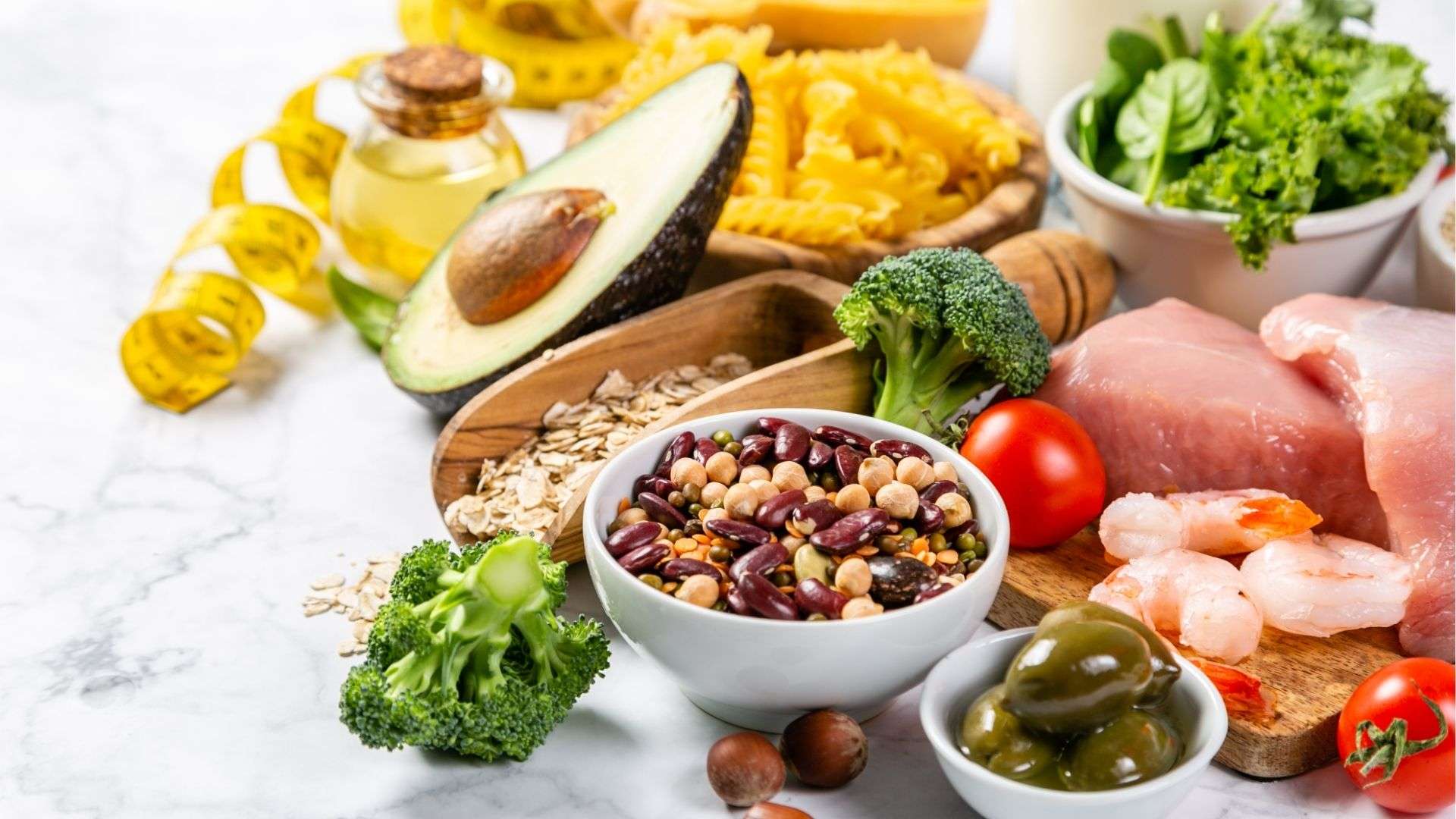
Here’s what a real Mediterranean diet approach looks like.
Daily:
- 6–8 servings of fruits and vegetables
(Broccoli, brussels sprouts, tomatoes, berries, citrus, leafy greens, and kiwis.) - 3–4 servings of healthy fats
(Olives, olive oil, avocados, walnuts, macadamia nuts, and pumpkin or hemp seeds.)
Several times per week:
- Fish — 4–5 times weekly for ideal omega-3 balance (wild salmon, sardines, trout, anchovies, or mackerel). This frequency will typically keep the healthy 3:1 ratio of omega-6 to omega-3 fats.
- Poultry and eggs — 2–3 times per week.
Occasionally:
- Red meat — only 1–2 times per month.
- Sweets and alcohol — kept minimal or enjoyed as an occasional treat.
Optional:
- Goat or sheep dairy in small amounts (yogurt or cheese).
- Avoid cow’s milk, which is the most common delayed food sensitivity.
Always:
- Stay hydrated with 10–12 cups of water per day, roughly half your body weight in ounces.
Sample Mediterranean Diet Meal Plan
Breakfast
- A smoothie made with:
- 2 cups of fruit (like berries)
- Vegan protein (rice and pea blend)
- A few macadamia nuts or a spoonful of nut butter
- Optional side: 1 cup of cooked oatmeal with blueberries or sliced fruit.
Lunch
- 3 cups of vegetables (broccoli, cauliflower, spinach, or tomatoes).
- A serving of starch like a purple potato or Japanese yam.
- A sprinkle of hemp hearts and olive oil drizzle.
Dinner
- 3 more cups of vegetables.
- Wild-caught fish, chicken, or turkey (4–5 nights a week).
- On vegan nights, replace meat with black beans or legumes.
- A little olive oil for flavor and healthy fats.
Keep It Balanced
You don’t need to count macros or chase the next super supplement. You just need to cover your nutritional bases consistently, including vitamins, minerals, antioxidants, omega-3s, and amino acids.
A strong nutritional foundation helps your body “weather the storm” when other habits (like sleep or stress) aren’t perfect.
And that includes not letting any one macronutrient dominate your diet. If 70% of your calories come from fat, carbs, or protein, it’s out of balance. Your body thrives on variety.
Additionally, nutrition is only part of the broader picture. Movement, mindset, sleep, and community all play a role.
Even daily habits, such as taking 10,000–12,000 steps and sharing meals with friends, are part of what makes the Mediterranean lifestyle so powerful.
Quick Recap
✅ The true Mediterranean diet focuses on fresh, seasonal foods — not processed grains or heavy dairy.
✅ Myth 1: It’s not all about pasta and bread — grains are eaten in moderation.
✅ Myth 2: Wine is optional, not essential. Too much can raise cancer risk.
✅ Myth 3: Dairy comes mainly from goat or sheep milk, not cow’s milk.
✅ Myth 4: Healthy fats like olive oil, fish, and nuts are the real stars.
✅ Myth 5: It’s a lifestyle — including movement, sunshine, and connection — not just a diet.
Final Thoughts
The Mediterranean diet is all about balance. Add more color to your plate with fruits and vegetables. Swap refined oils for rich, golden olive oil. Choose fish or plant-based proteins a few nights a week. When you eat in balance, your body naturally finds its own balance as well.
Now, I’d love to hear from you! What’s one small Mediterranean-inspired change you’re ready to make this week? Let me know in the comments below.
? If you enjoyed this post, find more helpful resources in the Free Wellness Library, including e-books, checklists, trackers, and more!
Additional Resources
- Find the Root Cause of IBS and Finally Feel Better
- How to Repair Leaky Gut Naturally in 4 Simple Steps
- 7 Hidden Foods That Trigger Inflammation and Joint Pain
- The Hidden Gut Link: The Natural Way to Heal Allergies
- How to Calm Chronic Inflammation by Balancing Your Mast Cells
Footnote:
- Adherence to a Mediterranean Diet and Survival in a Greek Population ↩︎
- Health Effects of Red Wine Consumption ↩︎
- Mediterranean milk and milk products ↩︎
? Like this and want to save it for later? Tap the Pinterest Pin button below—it’s an easy way to keep it on hand when you need it.