

Disclosure: This post may contain affiliate links, which means I may earn a small commission at no extra cost to you. I only share products I genuinely love and recommend. This content is also for educational purposes only and is not intended to diagnose, treat, cure, or prevent any illness or disease. Please consult your healthcare provider with any medical concerns or medication questions.
Have you ever picked up a food item, flipped it over, and felt like you were reading a secret code? I remember standing in the grocery store with a bag of granola in one hand, squinting at the label, wondering if “total carbohydrates” were something to worry about (and where on earth the sugar was hiding). I felt overwhelmed and, honestly, a little frustrated.
Reading food labels can be confusing at first, but once you learn the basics, it becomes so much easier. You’ll feel more confident, make quicker decisions, and (bonus!) you might even start to enjoy grocery shopping.
In this blog post, we’ll break down and explain what you need to know when reading food labels.
? Before we dive in, quick heads-up:
If you love having supportive resources at your fingertips, I’ve put together a Free Wellness Library just for you. It’s packed with meal planners, checklists, gut-friendly tips, and simple wellness guides. Grab it below!

Why Bother Reading Food Labels?
Learning how to read a food label and understanding what’s actually in the food you’re buying can make choices that support your health and goals.
- It helps you shop smarter and faster
- It empowers you to make informed decisions (without relying on flashy marketing)
- It helps your family eat better
What’s on a Nutrition Label?
Before we dive into the how, here’s a quick tour of what you’ll see on a standard U.S. food label:
- Serving Size & Servings Per Container
- Calories (and sometimes Calories from Fat)
- Percent Daily Value (%DV)
- Nutrients: Fat, Cholesterol, Sodium, Carbs, Fiber, Sugars, Protein
- Vitamins & Minerals
- Ingredient List
Let’s zoom in on each one…
How to Read a Food Label (Step-by-Step)

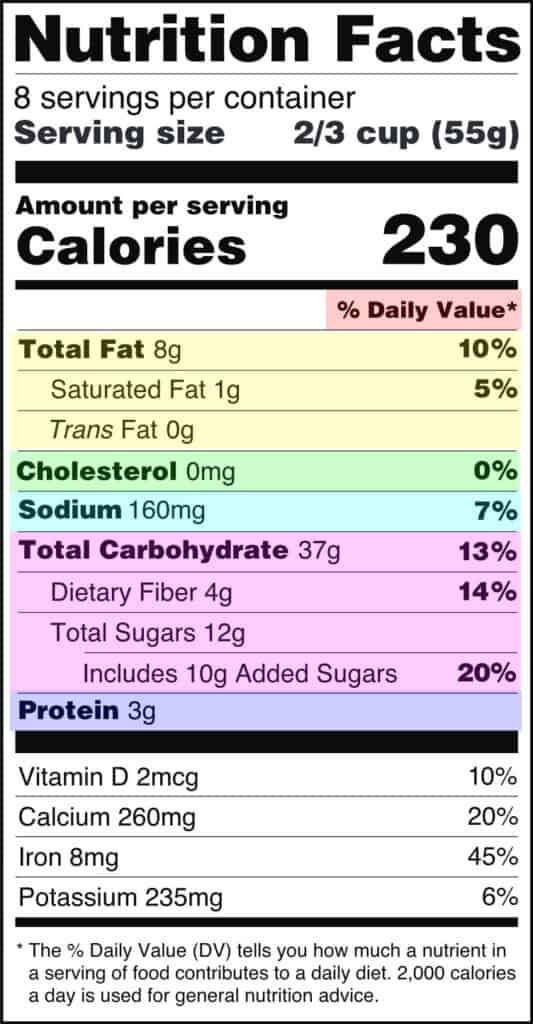
Serving Size
The very first thing you should look at is the serving size.
The food label is based on the indicated serving size. Above the serving size will tell you how many servings are in each container.
Remember that the indicated serving size may not always reflect how much you’re actually eating.
For example, a packet of instant noodles may contain 2 servings per container.
Let’s say one serving is equal to 190 calories. So, eating the entire packet of instant noodles in one sitting would result in twice the calories and other nutrients listed on the label.
So, 190 calories per serving multiplied by 2 servings per container would equal 380 calories.
Instead of using the serving size number to determine how much you should eat, you should use it to determine how many calories you are consuming in a single serving.
The number of servings you’ll need will come down to your personal goals (i.e., maintain weight, gain weight, or lose weight).
Calories
Next, you’ll want to pay attention to the number of calories per serving. Calories refer to how much energy you get from a single food serving.
Looking at this can also help you manage your weight goals.
On food labels, you may or may not see calories from fat. However, if you see one, this will indicate how many calories in a single serving comes from fat.

Remember that the number of servings you consume will determine the number of calories you actually eat.
- Overeat, and you risk gaining weight.
- Eat too little, and you risk losing weight.
Here’s a quick cheat sheet (based on a 2,000-calorie daily diet):
- 40 calories or less is generally considered low
- 100 calories or less is generally considered moderate
- 400 calories or less is generally considered high
% Daily Value
On the right-hand side of the food label, you’ll see the percent daily value (%DV) displayed in percentages. This number tells you how much a particular nutrient in a single serving of food contributes to your total daily diet based on a recommended 2,000-calorie per day diet.
This is a helpful guideline to show you if the food is low or high in nutrients.
In general:
- 5% or less of daily value is considered low in that nutrient
- 20% or more of daily value is considered high in that nutrient
If you’re wondering how to get more potassium (without just eating bananas every day), here are some surprisingly potassium-rich foods to try.
Total Fat
Next on the list is total fat. There are typically two types of fat to look out for:
- Saturated fat
- Trans fat
Some research now shows that moderate saturated fat can raise good cholesterol (HDL) and improve LDL particle size, which may lower heart disease risk.1
But if you have a medical condition, it’s still smart to keep an eye on it.
Trans fat, on the other hand, is the worst kind of fat you can find on a label. Also known as trans fatty acids, trans fat raises your LDL (bad cholesterol) levels and lowers your HDL (good cholesterol) levels.
Even if a label says “0g,” it can still have up to 0.5g.
Here’s what you can do about this:
- Check the ingredient list.
- Look for partially hydrogenated vegetable oil, which means that the food contains some trans fat.
Sodium
Sodium is a mineral and one of the chemical elements found in salt. Salt (also known by its chemical name, sodium chloride) is a crystal-like compound found in nature.
Your body only needs a small amount of sodium to function properly.2
Here is a general guideline to follow when reading food labels for sodium:
- 5% or less of the daily value per serving is considered low
- 20% or more of the daily value per serving is considered high
? Side note: Looking for simple tools to support your digestion? My Free Wellness Library is full of meal planners, gut guides, and daily trackers. You can get free access below!
Cholesterol
Cholesterol is a waxy, fat-like substance produced primarily by the liver.
There are two types of cholesterol found in the bloodstream: HDL and LDL.
- HDL (high-density lipoprotein) absorbs cholesterol and helps prevent buildup in your bloodstream by traveling back to the liver.
- LDL (low-density lipoprotein) makes up most of your body’s cholesterol and is the leading cause of buildup in your arteries.
Here is a general guideline to follow when reading food labels for cholesterol:
- 5% or less of daily value is considered low
- 20% or more of the daily value is considered high
- Cholesterol is found in animal-based foods, like meats and dairy products
Total Carbohydrates
Carbohydrates break down into glucose during digestion, which can be used as energy. It can also be turned into fat for stored energy for later use.
The number of carbohydrates shown on food labels includes starches, complex carbohydrates, dietary fiber, added sugars, and non-digestible additives.
Dietary Fiber
Dietary fiber is indigestible and usually passes through your intestinal tract without being absorbed.
It’s recommended that you get at least 25 grams of dietary fiber per day.
Foods high in fiber usually contain at least 5 grams per serving. Great sources of fiber include fruits, vegetables, and whole grains.
Sugars
Sugars give you the total carbohydrate, in grams, from naturally occurring sugars like lactose (milk sugar) and fructose (fruit sugar) PLUS any added sugars like high fructose corn syrup, brown and white sugar, cane juice, etc.
Added sugars are the sugars and syrups added to foods during processing or preparation. They add calories but little to no nutrients.
Protein
Protein is one of the three macronutrients that provide energy for your body and can be found in animals and plants.
Your body uses protein to build and repair cells and make enzymes, hormones, and other body chemicals.
As mentioned earlier, protein is one of the three macronutrients (alongside fats and carbohydrates), which means your body needs a lot to function optimally!
Here are healthy sources of protein:
- Beans and legumes
- Grass-fed beef and pasture-raised meats and dairy products
- Pasture-raised eggs
- Nuts and seeds
- Non-GMO soy (i.e., tofu)
- Seafood
- Whole grains and vegetables
Related:
5 Anti-Inflammatory List of Foods You Can Start Eating Today
Vitamins & Minerals
Vitamins and minerals are essential micronutrients that your body needs.
They’re essential because they aid in healing wounds, repairing damaged cells, boosting the immune system, and converting food into energy.
But, because they’re micro, you only need tiny amounts of them instead of macronutrients where you need a lot!
Your best bet for getting all the vitamins and minerals you need is to eat a wide variety of healthy foods (i.e., eat the rainbow).
Ingredient List
This section shows you what’s actually in your food. Ingredients are listed by weight, so the first few make up the bulk of the product.
Watch out for:
- Added sugars and artificial preservatives
- Long, unpronounceable ingredient lists
- Hidden trans fats (again: “partially hydrogenated oils”)
Want to dig deeper into what to avoid? Here’s a list of unhealthy foods to watch out for that might be hiding behind your food.
Quick Recap:
✅ Check the serving size
✅ Look at calories per serving
✅ Use % Daily Value as a guide (5% low, 20% high)
✅ Avoid trans fat, added sugar, and excess sodium
✅ Aim for more fiber, protein, and whole ingredients
✅ Read the ingredient list top to bottom
Final Thoughts
Reading food labels may seem overwhelming at first, but, like anything, it becomes easier with a little practice. Start with the basics: examine the serving size, identify the sneaky added sugars, and get curious about what’s actually in your food. The more you do it, the more confident and empowered you’ll feel every time you shop.
Now, I’d love to hear from you! What’s one thing on a food label that always confuses you, or surprised you when you learned what it really meant? Let’s chat in the comments!
Additional Resource
- 6 Unhealthy Foods to Avoid If You Want to Feel Better
- 5 Powerful Foods That Act Like Ozempic—Naturally
- 10 Best Foods High in Potassium (That Aren’t Just Bananas)
- How to Lower Blood Sugar Naturally (Without Eating Less)
- The Best Diet Plan for Weight Loss and Diabetes
Medical Disclaimer: The information provided is not intended to diagnose, cure, or treat any illness or disease but to provide education and support. Please consult a medical doctor in case of medical emergencies or to check for pharmaceutical contraindications.
Footnote:
? Like this and want to save it for later? Tap the Pinterest Pin button below—it’s an easy way to keep it on hand when you need it.