
Disclosure: This post may contain affiliate links, which means I may earn a small commission at no extra cost to you. I only share products I genuinely love and recommend. This content is also for educational purposes only and is not intended to diagnose, treat, cure, or prevent any illness or disease. Please consult your healthcare provider with any medical concerns or medication questions.
Gluten-free bread can be tricky to get right, especially when you are hoping for a crisp crust and a soft, chewy center instead of a loaf that feels dense or dry. After testing different flour blends and methods, this gluten free sourdough bread recipe became one I was genuinely excited to make again.
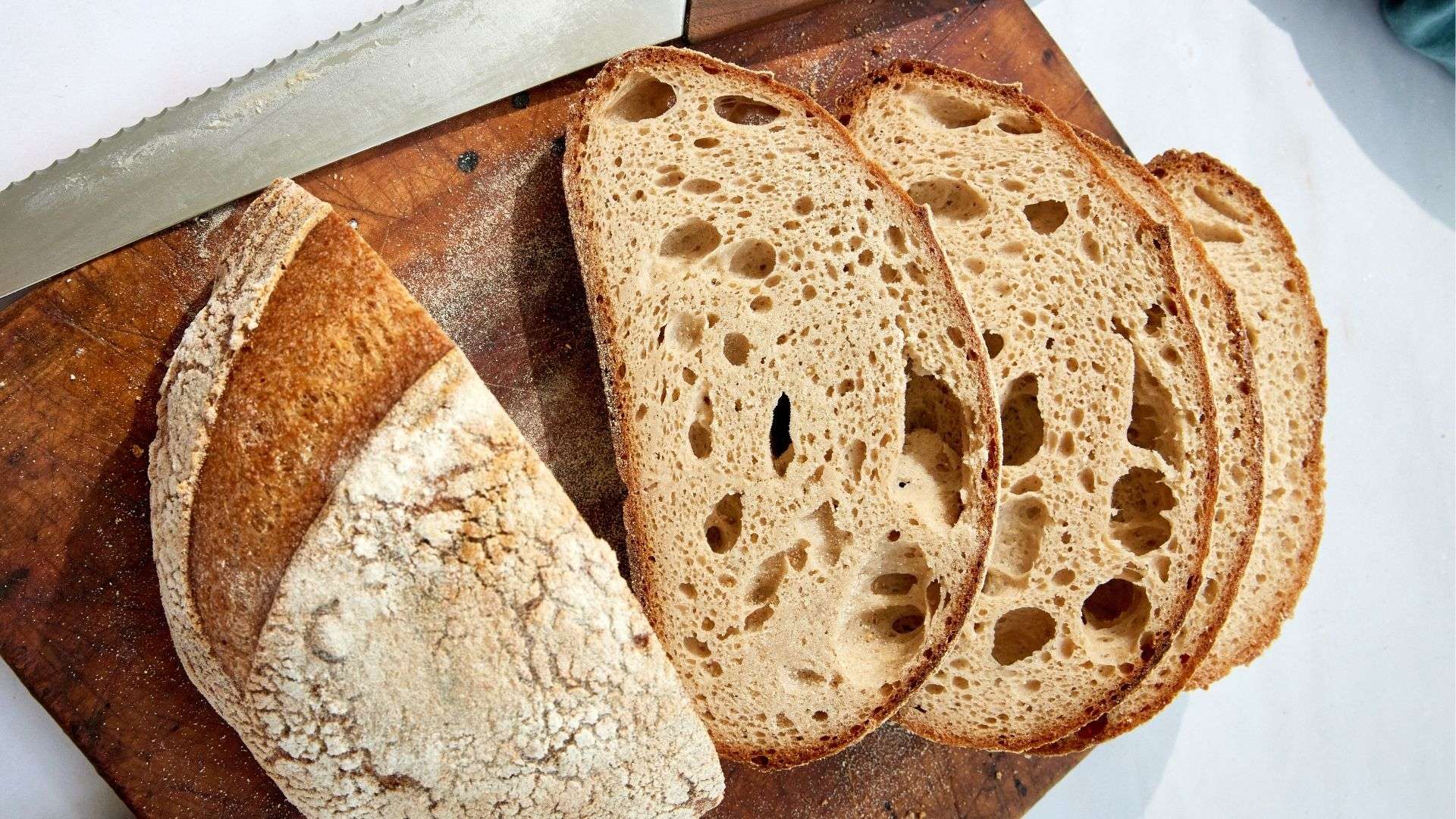
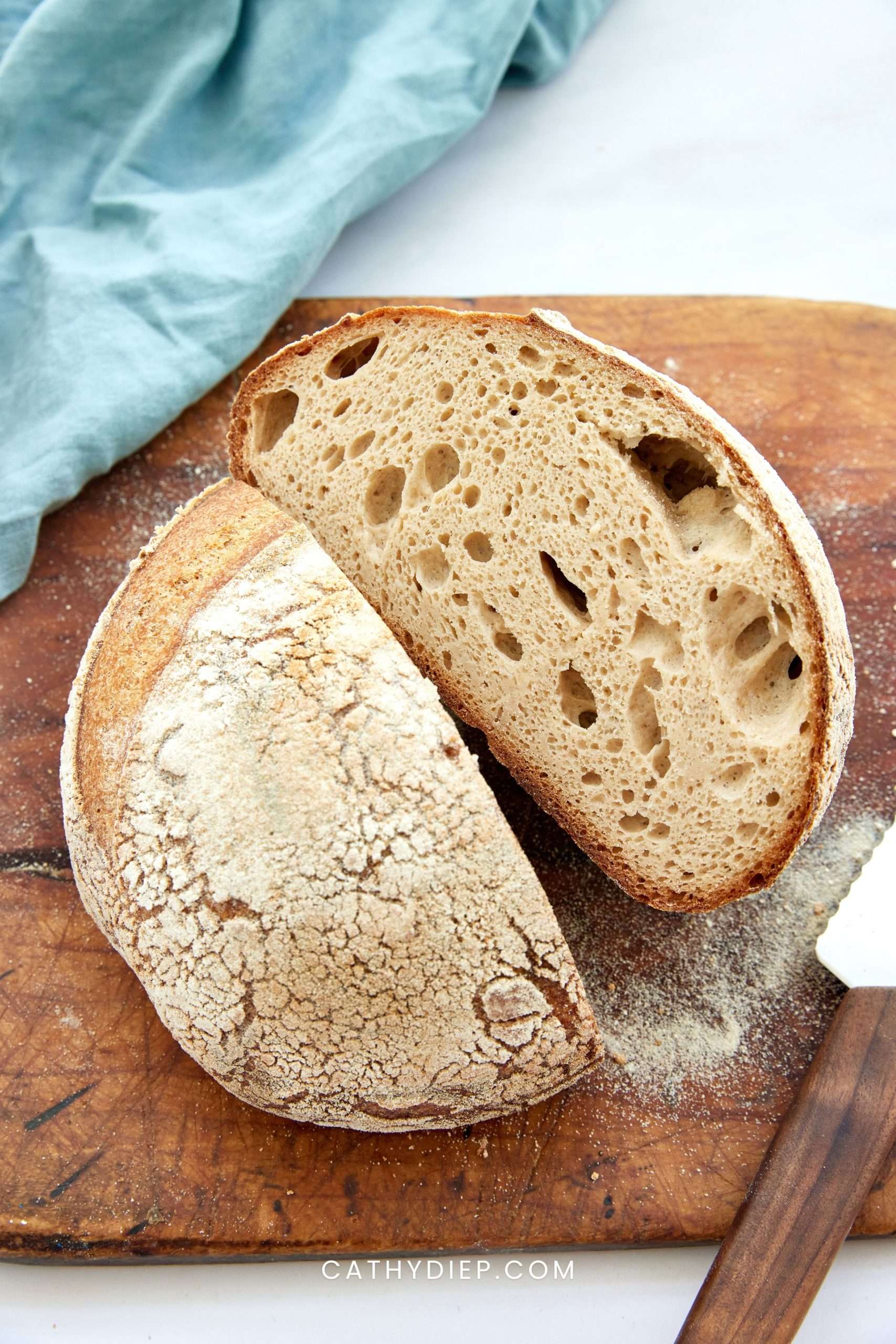
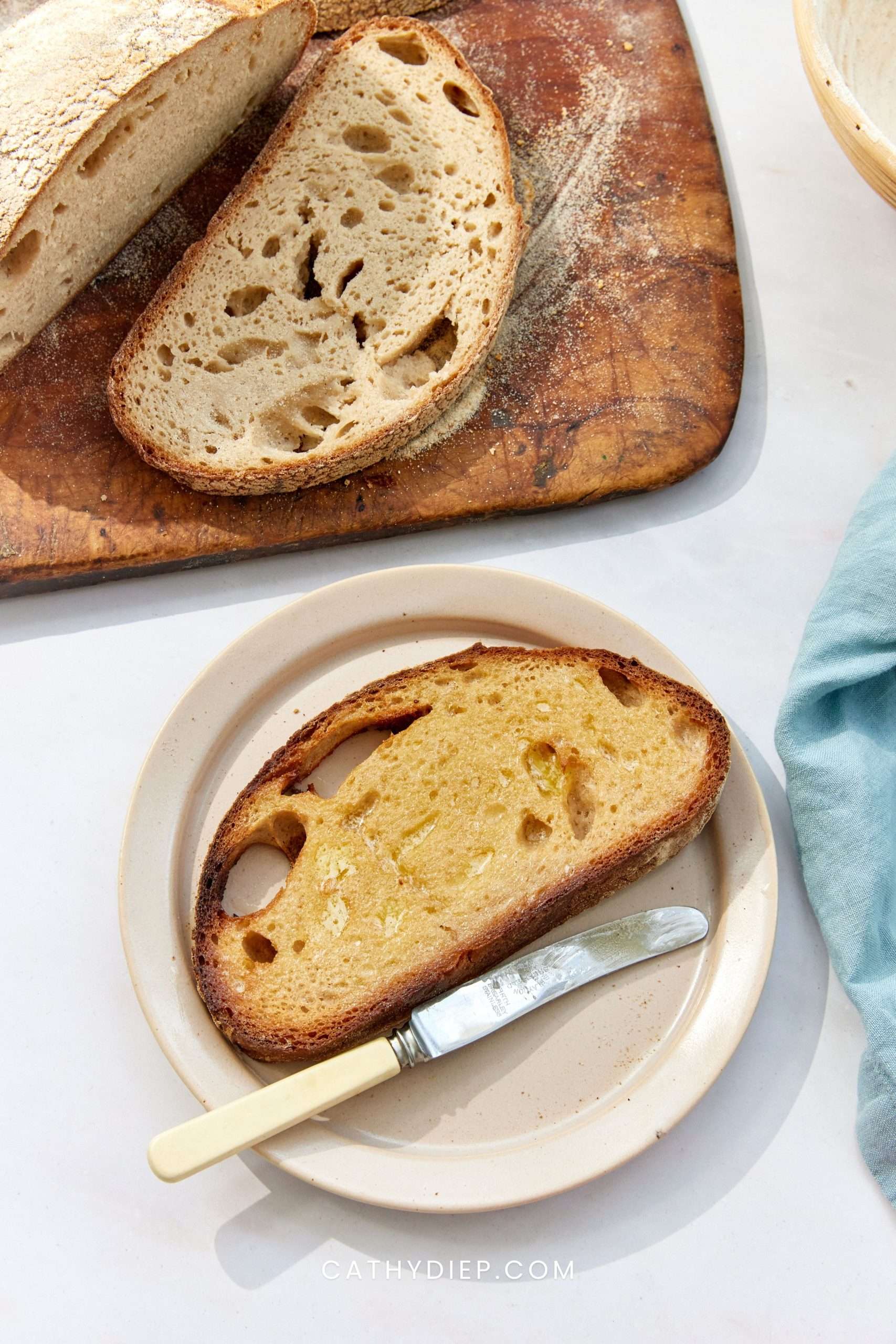
The dough is simple to mix, most of the work happens during the overnight rest, and the Dutch oven helps create that beautifully browned crust. I love slicing this homemade gluten-free sourdough bread for toast, sandwiches, or serving warm alongside soup.
If making sourdough from scratch has felt intimidating, this recipe keeps the process approachable while still giving you a loaf that feels special!
👉 Before we dive in, quick heads-up: I created a Free Recipe & Meal Planner you can use to track your favorite recipes, jot down notes, and map out weekly meals. Grab it below!

Watch How to Make Gluten-Free Sourdough Bread
If you want to see exactly how this comes together, I filmed the full step-by-step below.
👉 Turn on captions for instructions
🔔 If you enjoyed this, I’d love to have you over on YouTube, too! I share new recipes there every week.
Why You’ll Love This Recipe
- Beginner-friendly: The dough comes together with simple mixing and shaping steps, even if you are new to sourdough baking.
- Minimal hands-on time: Most of the process is resting and chilling, so this gluten free sourdough bread recipe does not require constant attention.
- Overnight convenience: The dough ferments in the refrigerator, making it easy to prep one day and bake the next.
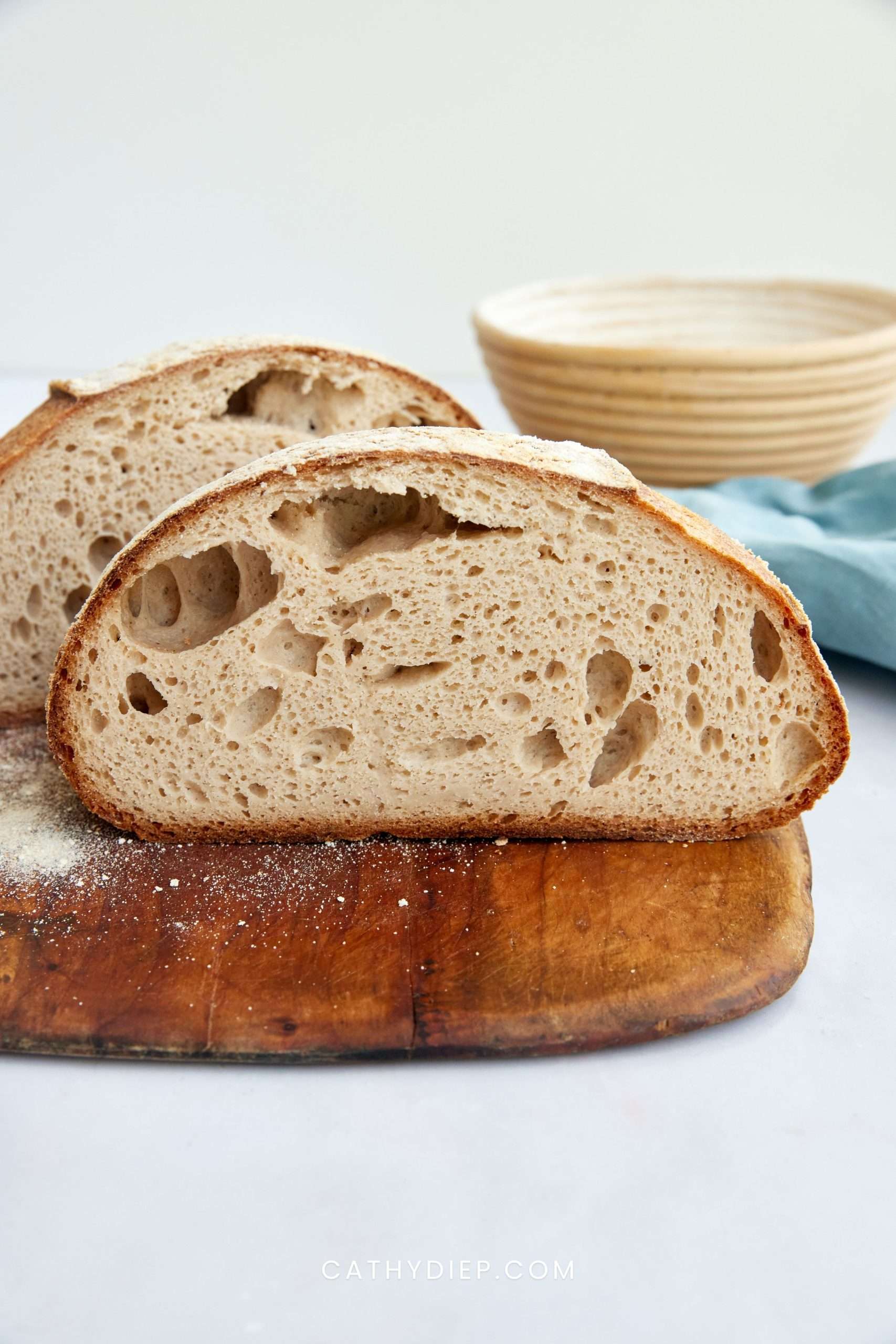
- Reliable texture: Psyllium husk and egg whites help create a sturdy crust and a soft, sliceable center.
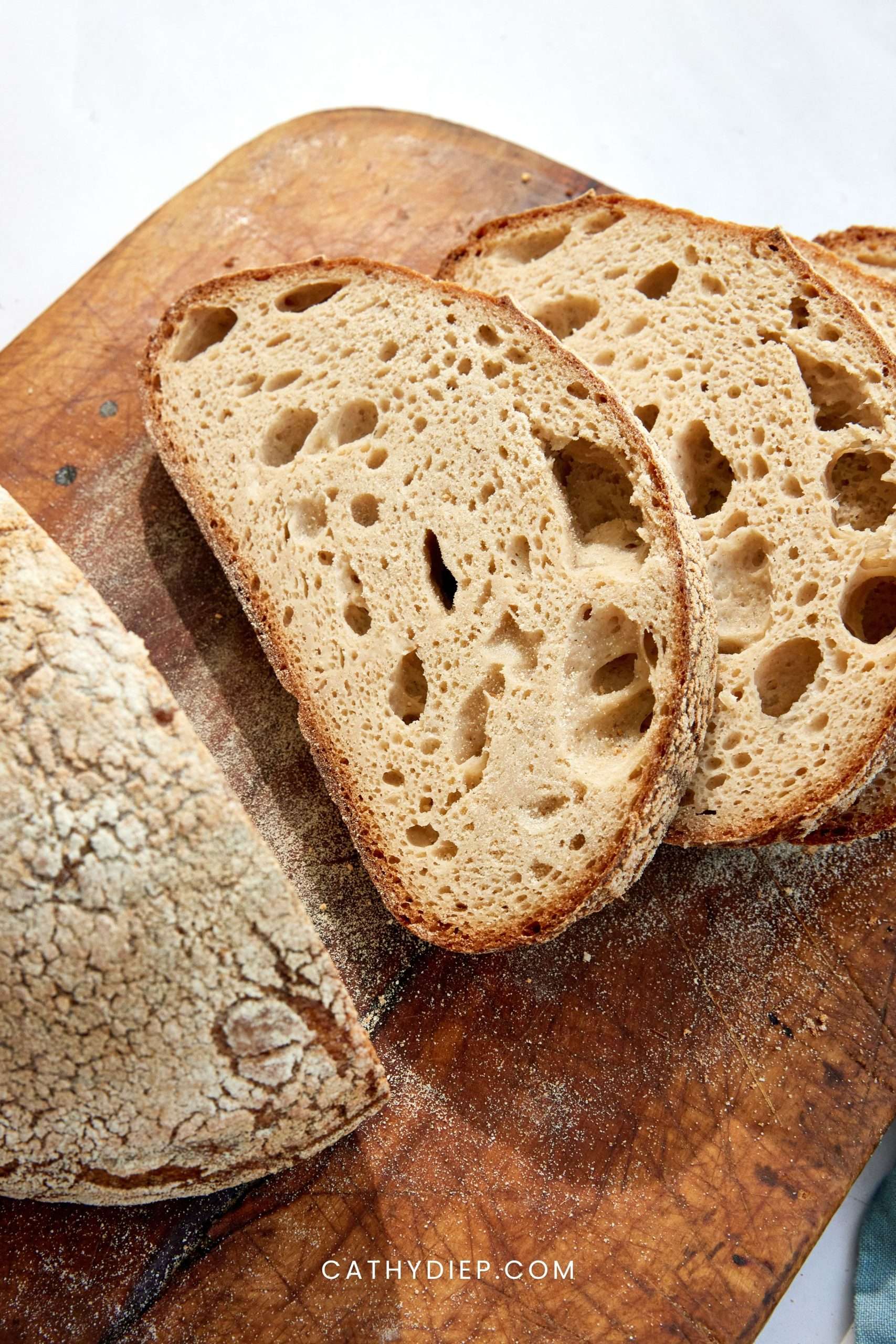
- Freezer-friendly: Slice and freeze the loaf so you can toast individual pieces whenever you need them.
Gluten-Free Sourdough Bread Ingredients
This gluten free sourdough bread recipe uses a balanced blend of gluten-free flours and starches to create a crisp crust with a soft, sliceable center.
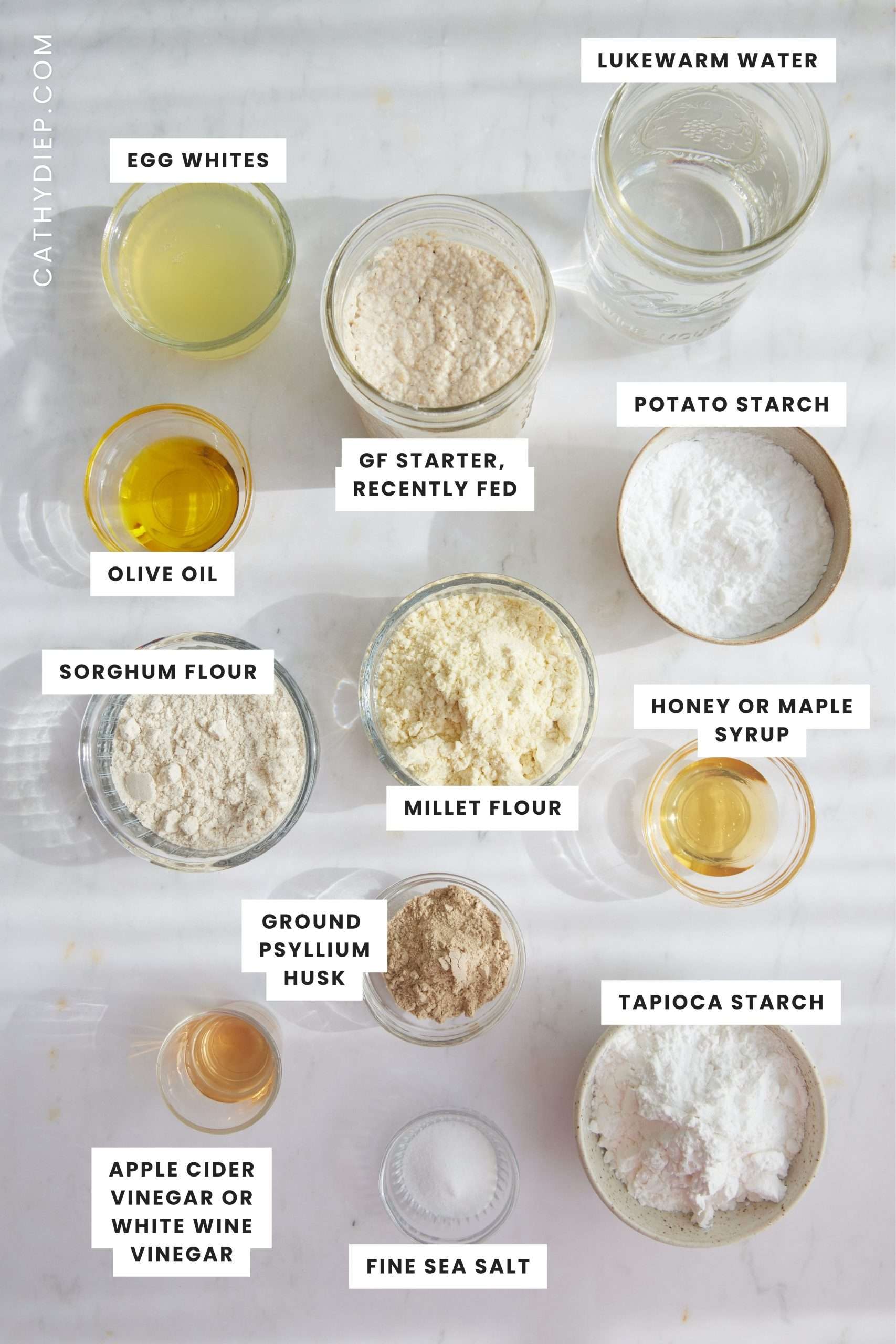
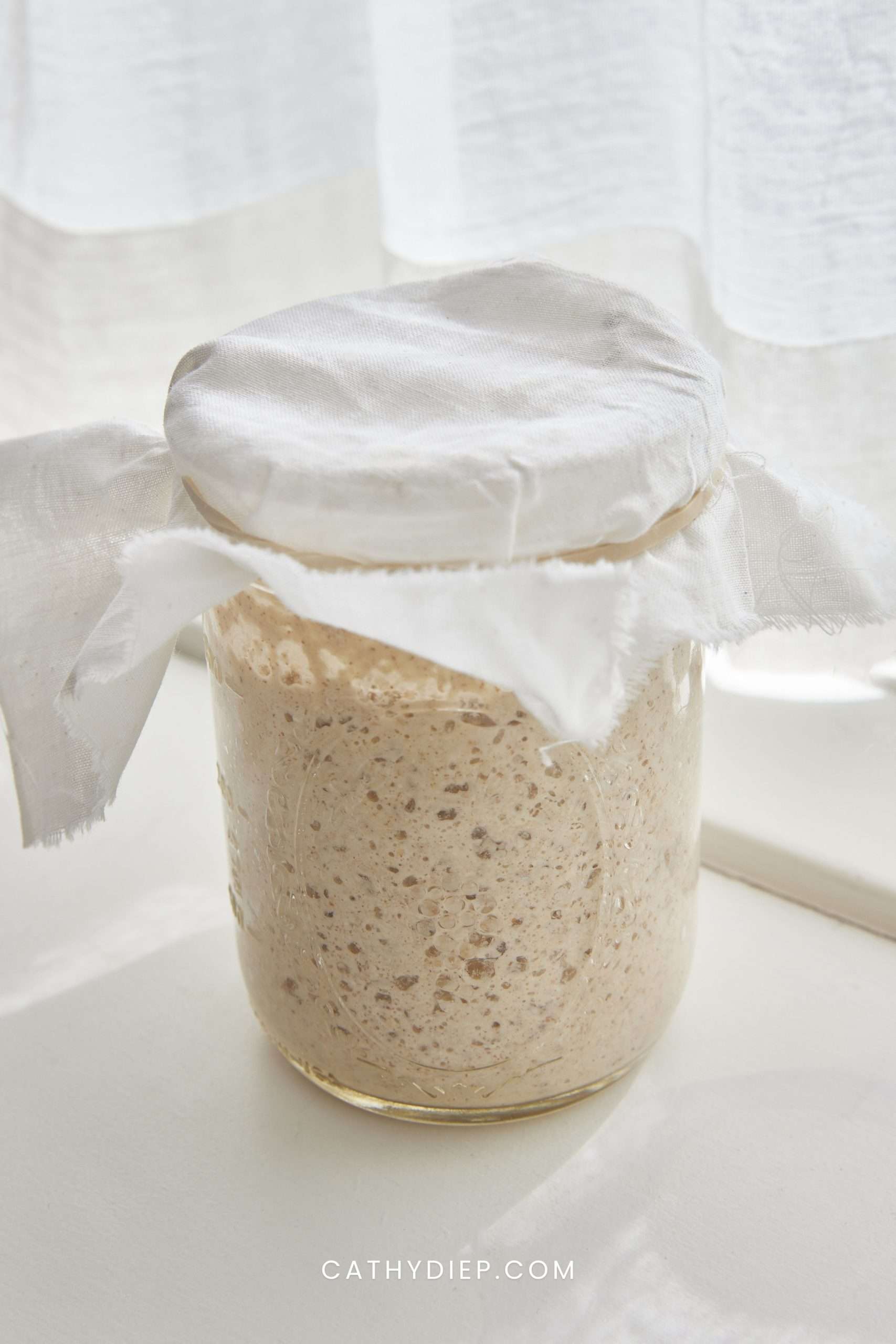
- Gluten-free sourdough starter: Use a recently fed, 100% hydration starter that has roughly doubled in volume. A starter made with superfine brown rice flour or a blend of gluten-free oat flour and brown rice flour works well.
- Ground psyllium husk: Forms a gel that gives the dough structure and helps trap air bubbles. Psyllium husk powder is required and should not be replaced with whole psyllium husks.
- Egg whites: Help strengthen the dough and create a lighter texture. They are essential to the structure of this loaf and cannot be substituted.
- Millet flour: Adds a mild flavor and helps create a tender crumb.
- Sorghum flour: Gives the bread a slightly sweet, whole-grain flavor without making it too heavy.
- Tapioca starch: Adds stretch and helps keep the center soft and chewy.
- Potato starch: Lightens the flour blend and supports a softer crumb. Be sure to use potato starch, not potato flour.
- Vinegar: White wine vinegar or apple cider vinegar adds acidity and supports the activity of the sourdough starter.
- Olive oil: Adds moisture and helps keep the gluten-free sourdough loaf from drying out too quickly.
- Honey or maple syrup: Either option adds a touch of refined-sugar-free sweetness and helps encourage fermentation.
- Fine salt: Balances the flavor and prevents the bread from tasting flat.
- White rice flour: Used for dusting the work surface and banneton so the dough releases more easily.
Optional Flavor Additions
For a slightly different flavor or texture, gently add one of these to the dough:
- Chopped fresh rosemary
- Sesame seeds
- Sunflower seeds
- Pumpkin seeds
- A small amount of dried thyme
Keep any additions modest so they do not weigh down the dough or interfere with its rise.
Find the complete recipe with measurements and instructions below. 👇
How to Make Gluten-Free Sourdough Bread: Step by Step
Step 1: Add the lukewarm water to a large bowl. Sprinkle in the ground psyllium husk, whisk well, and let it sit for 1 to 2 minutes until a thick gel forms.
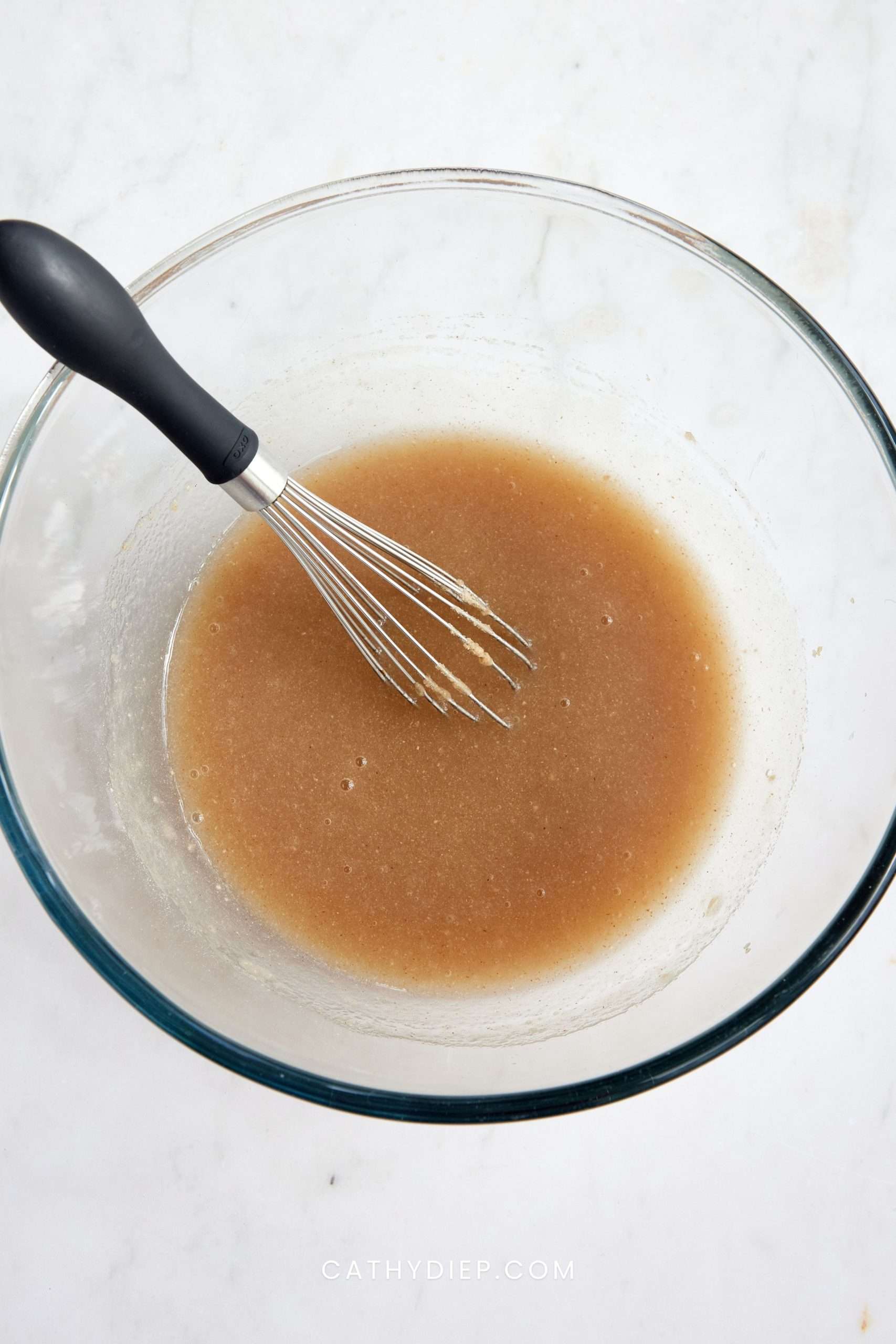
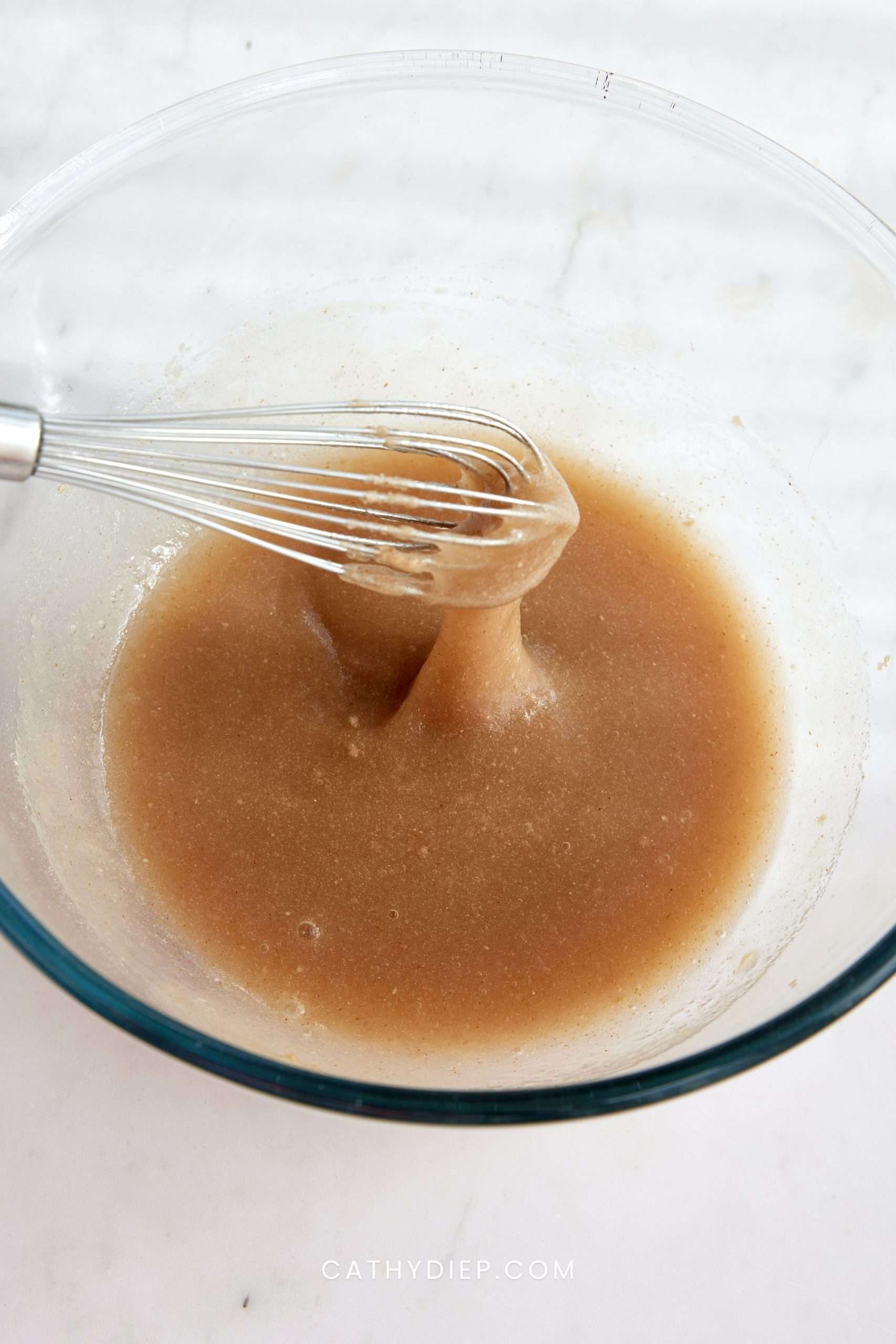
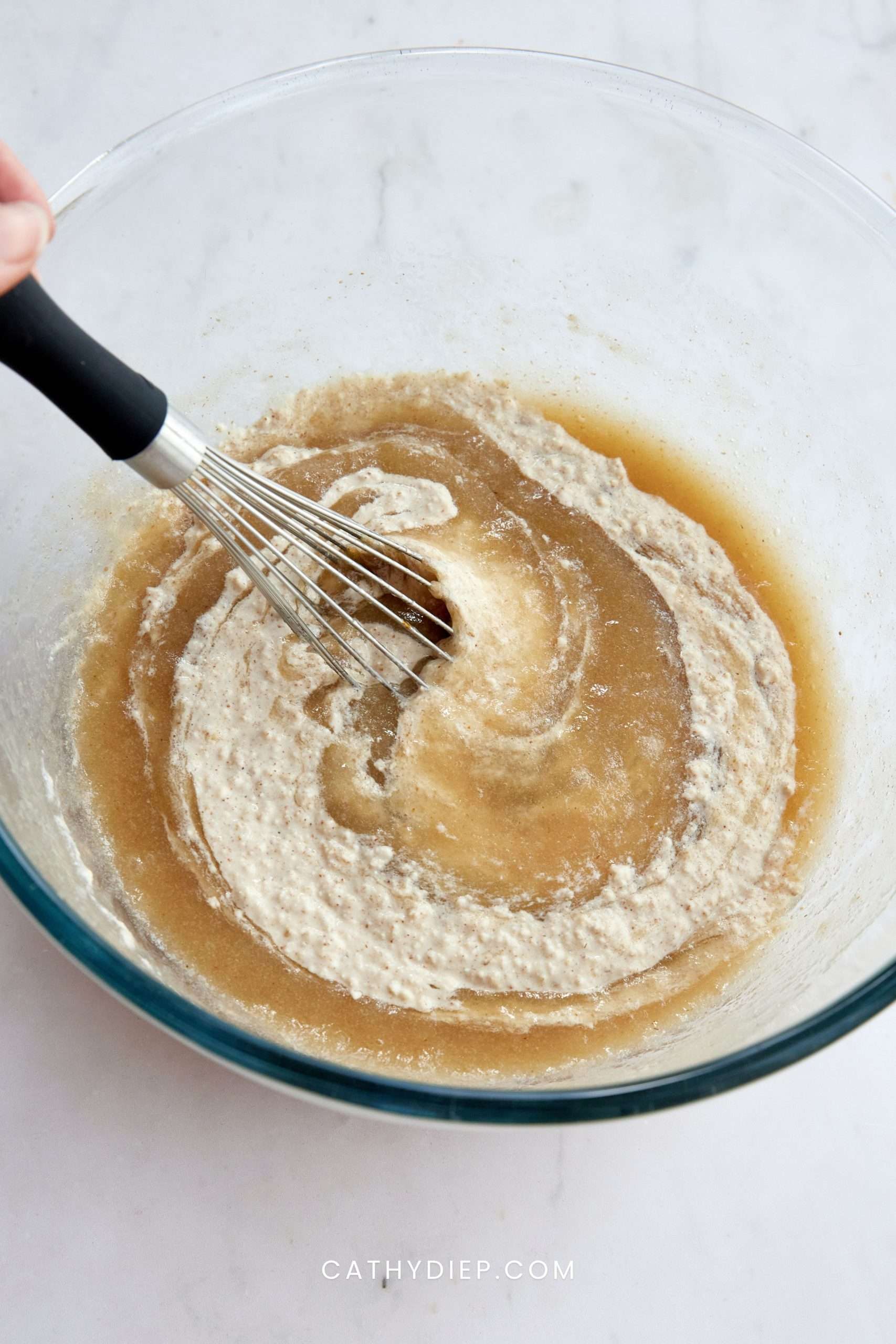
Step 2: Add the sourdough starter, egg whites, vinegar, olive oil, and honey or maple syrup. Whisk until the mixture is smooth and fully combined.
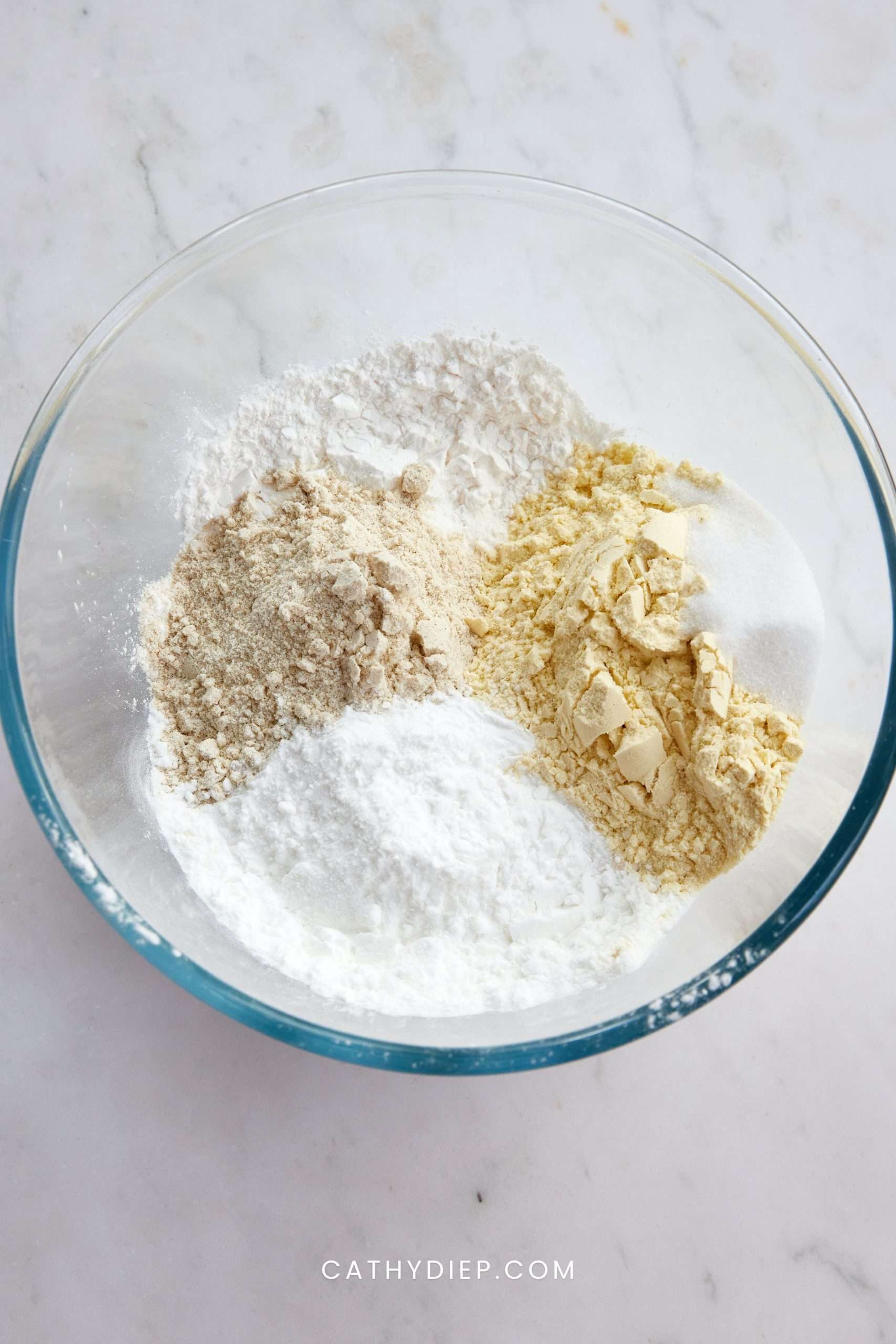
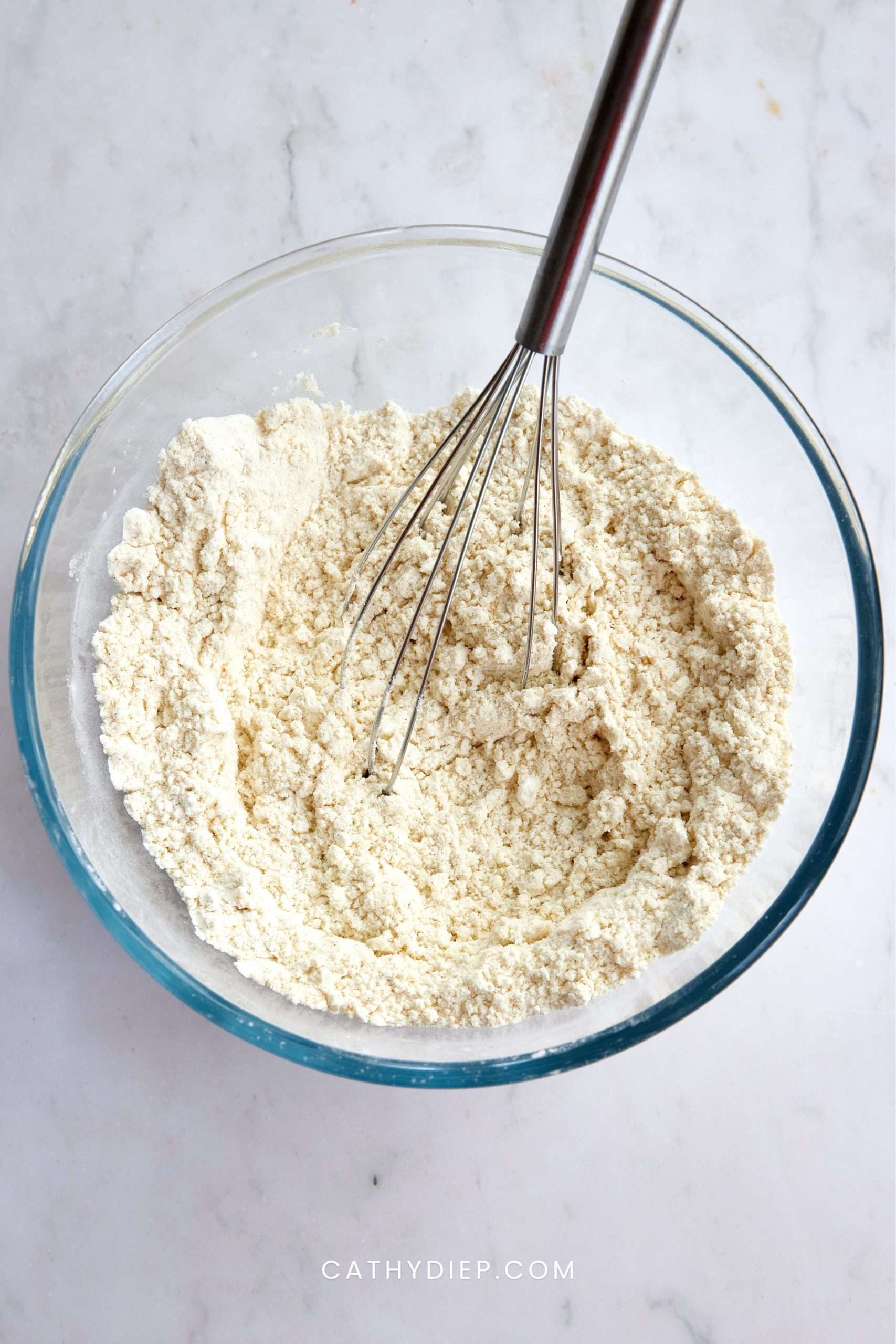
Step 3: In a separate bowl, whisk together the millet flour, tapioca starch, sorghum flour, potato starch, and salt.
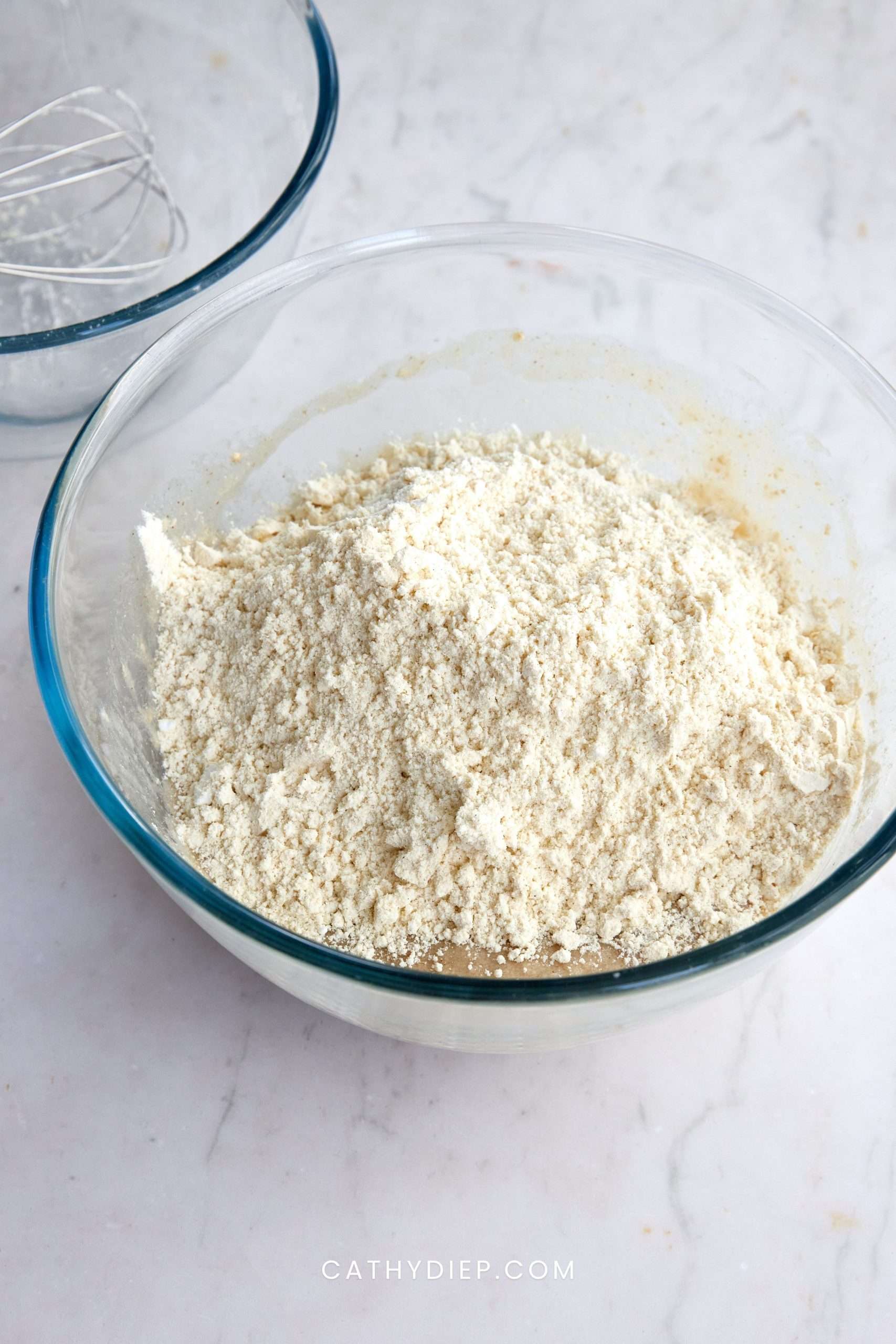
Step 4: Add the dry ingredients to the wet mixture and stir until a shaggy dough forms. Beat by hand or with a stand mixer fitted with the paddle attachment until no dry patches or lumps remain.
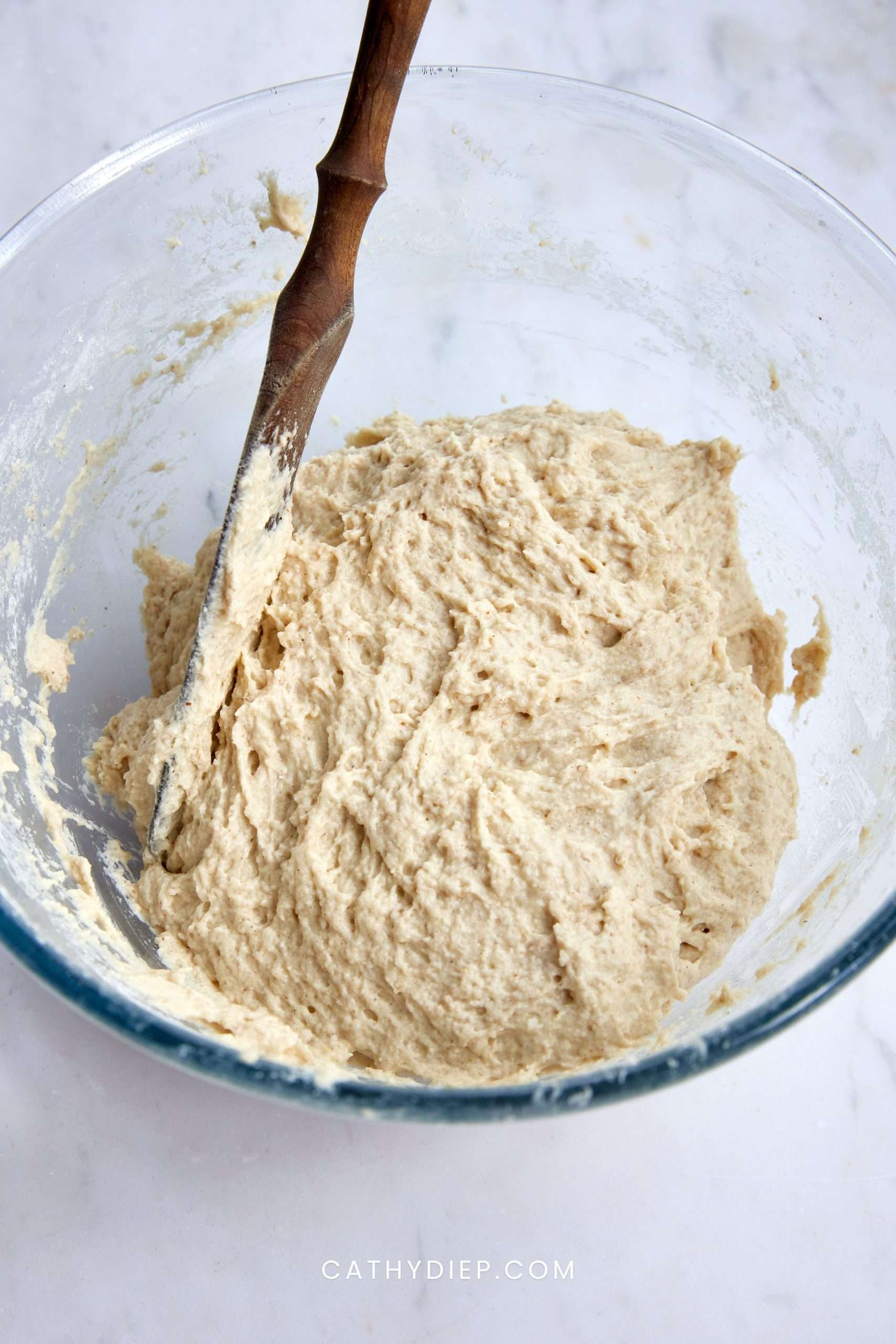
Step 5: Scrape down the sides of the bowl and shape the dough into a rough ball. Cover with a damp kitchen towel and let it rest at room temperature for 1 hour.
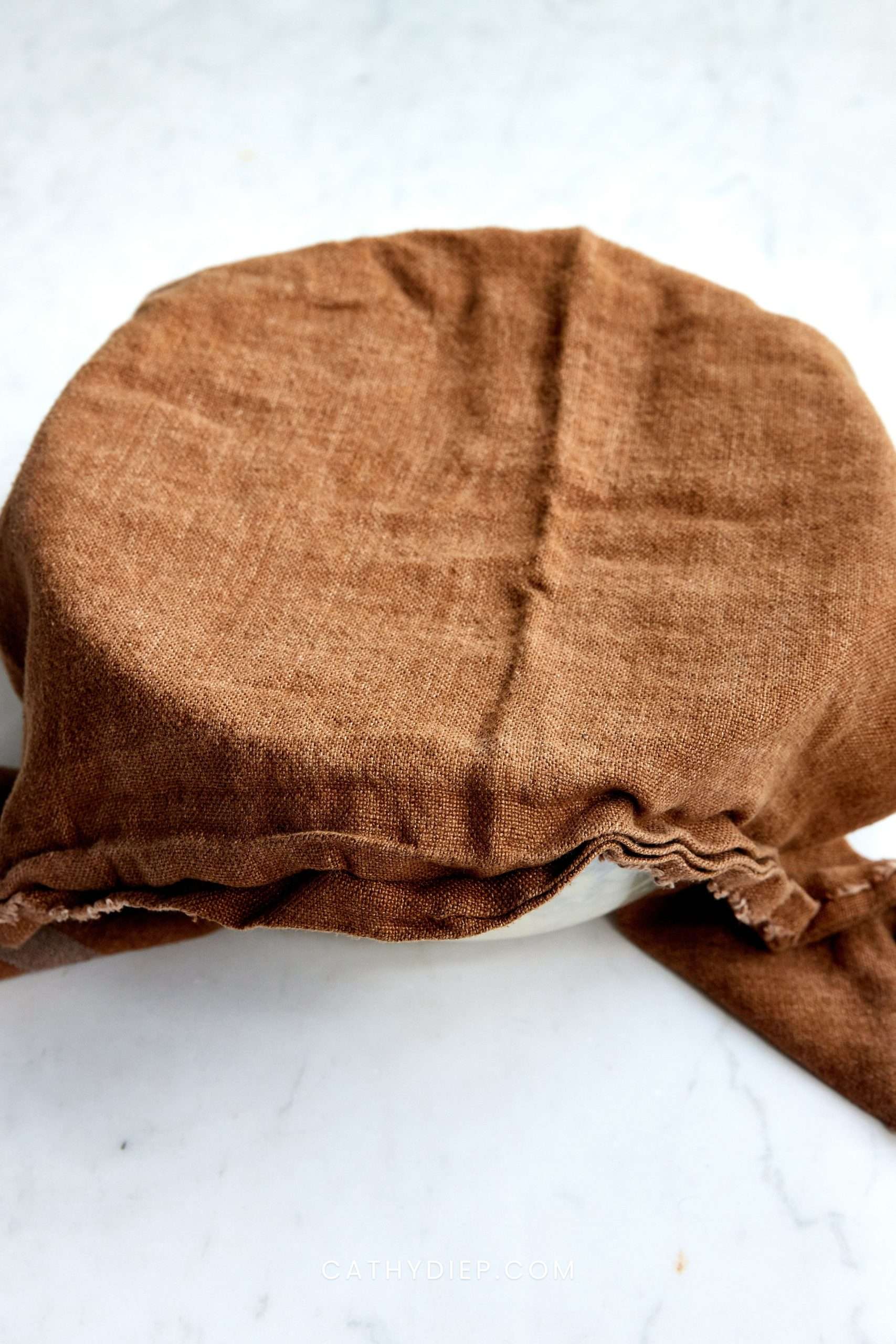
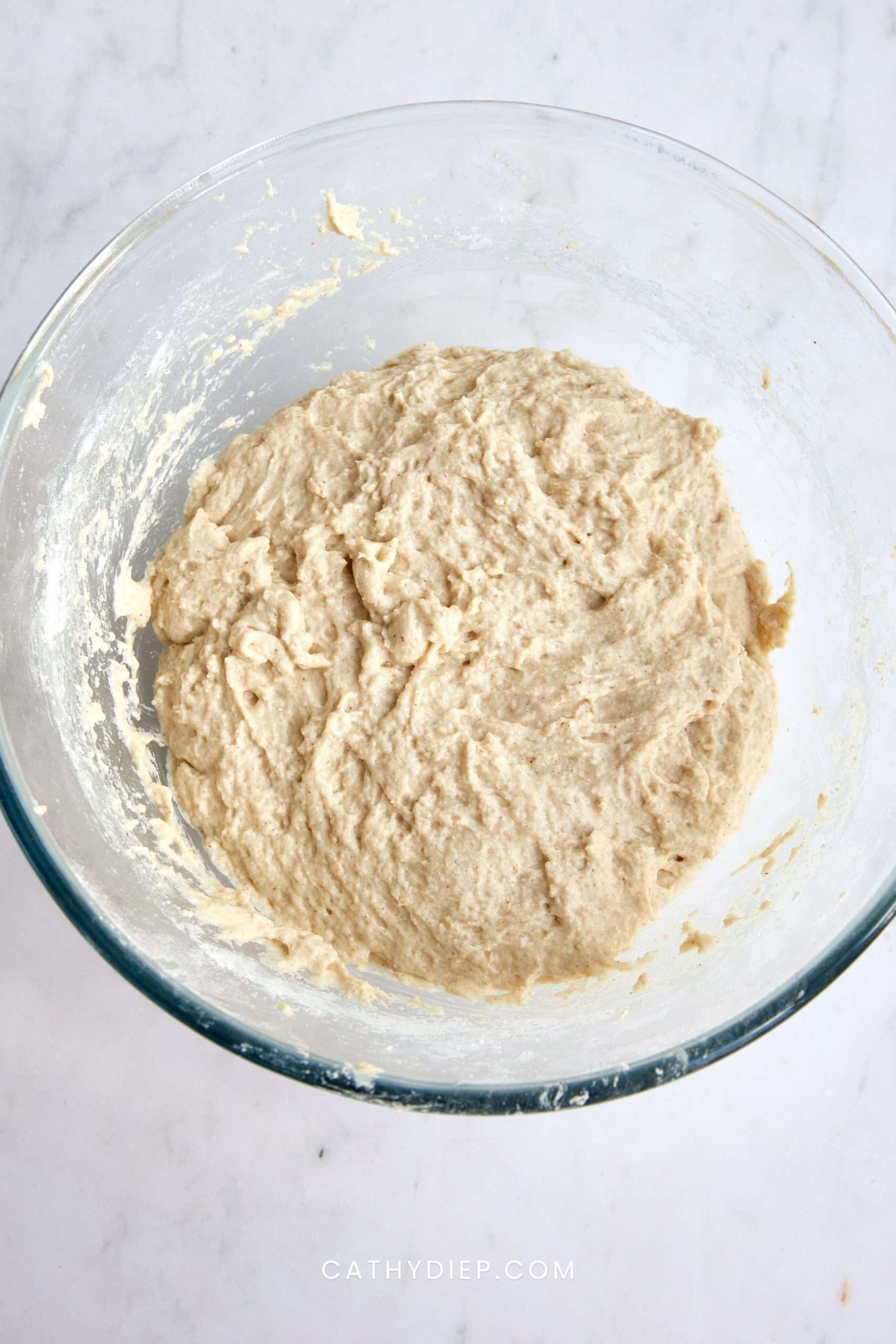
Step 6: Lightly dust your work surface and the top of the dough with white rice flour. Gently shape the dough into a ball without overworking it.
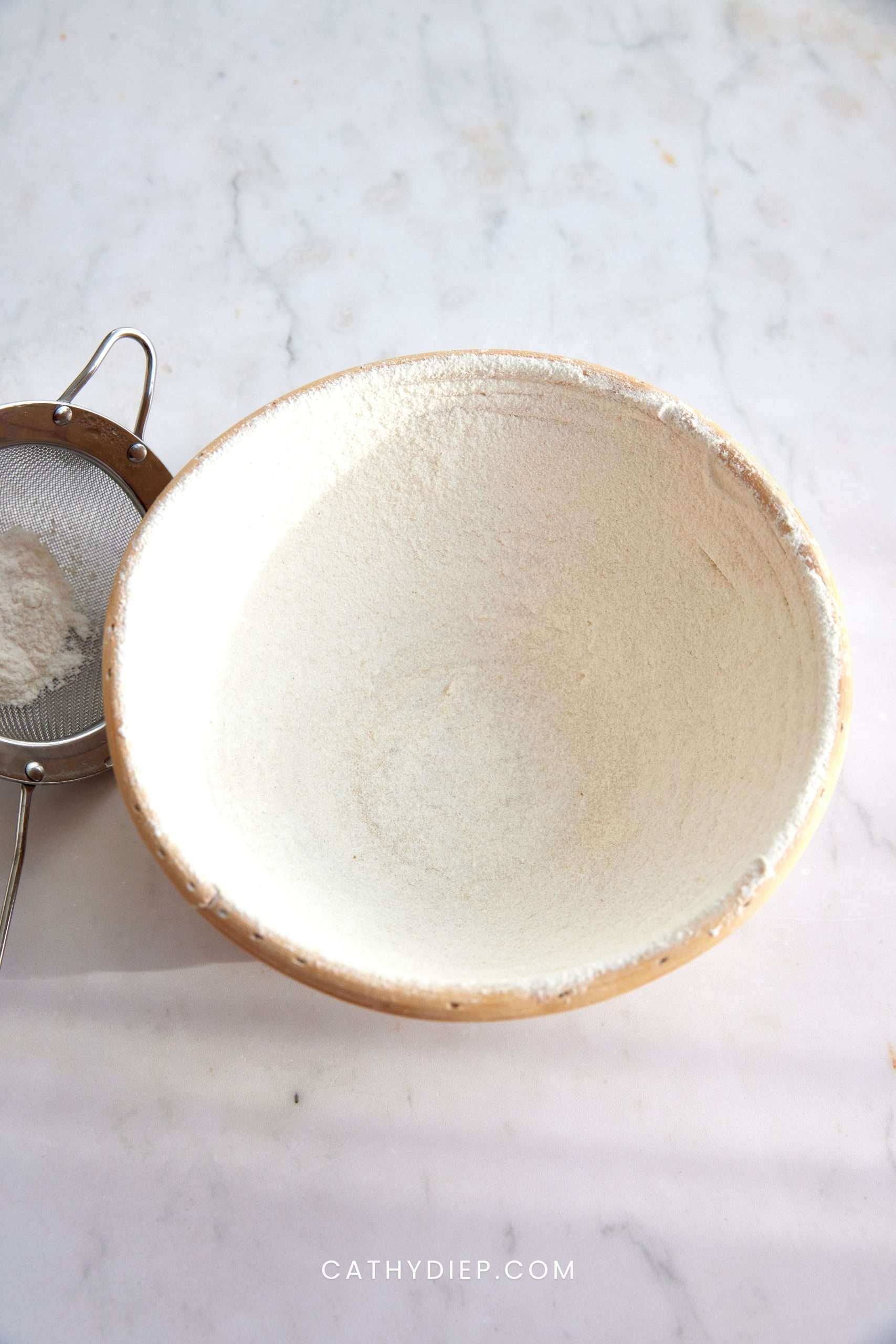
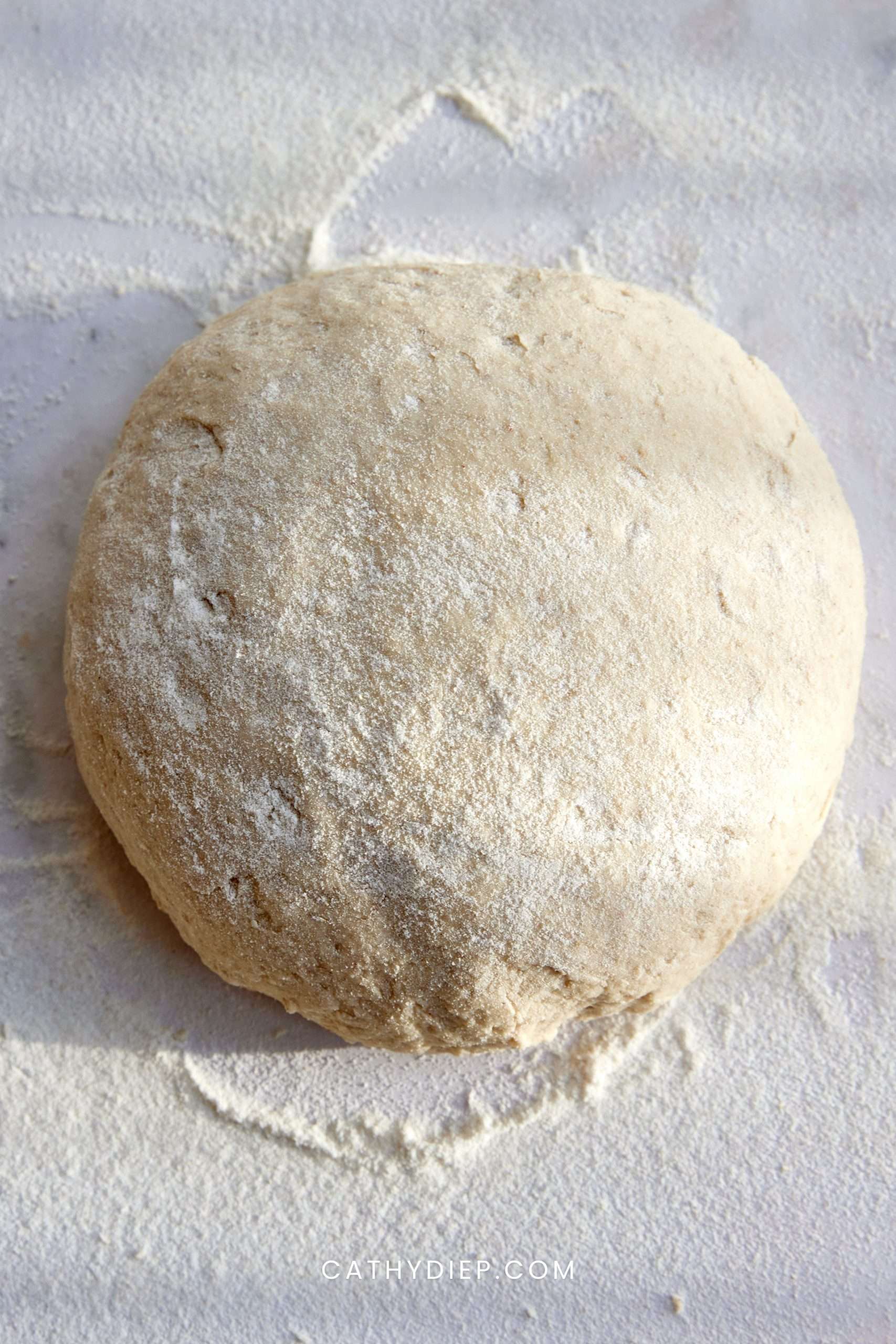
Step 7: Dust a 7-inch banneton with white rice flour. Place the dough inside with the smooth side facing down and the seam facing up.
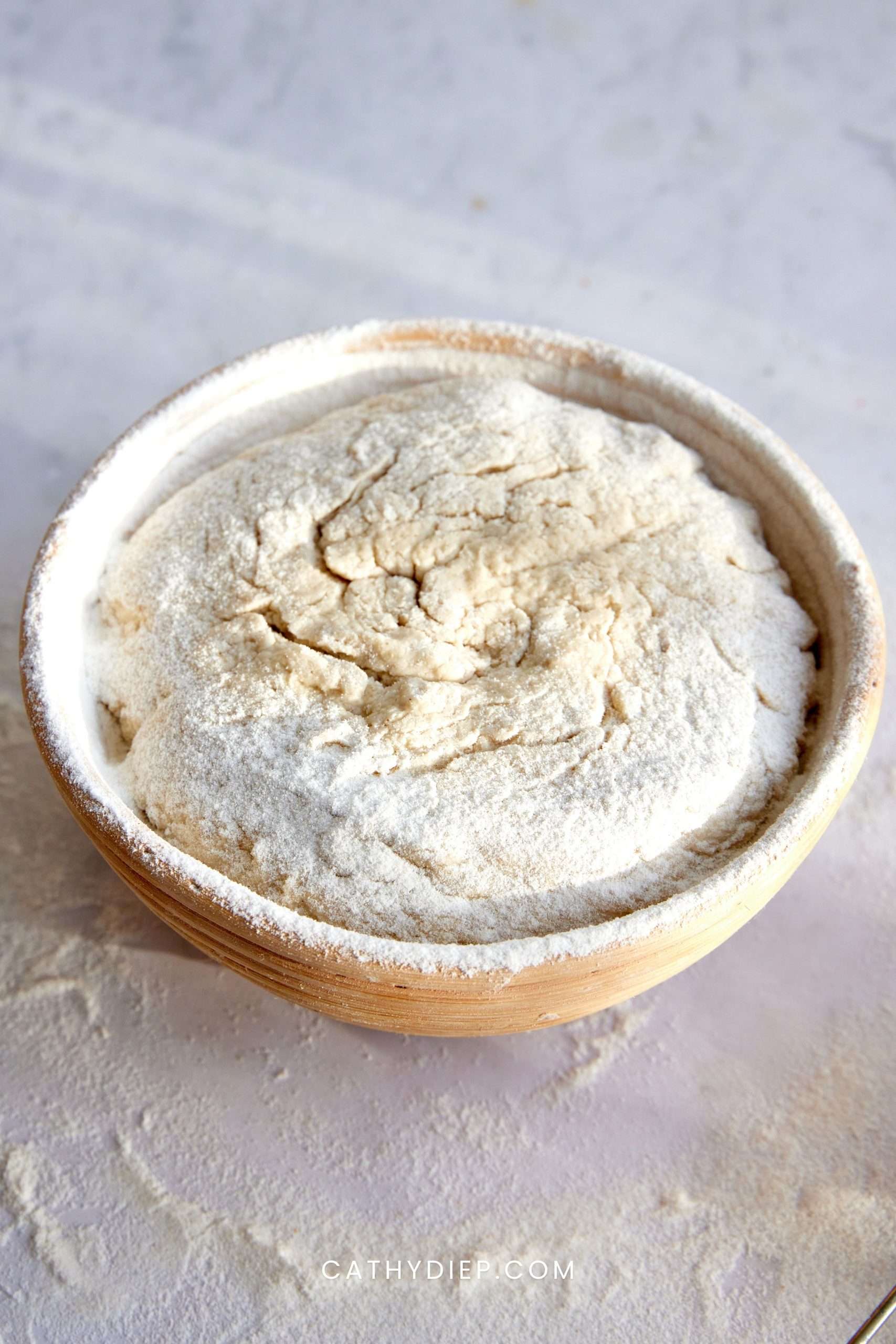
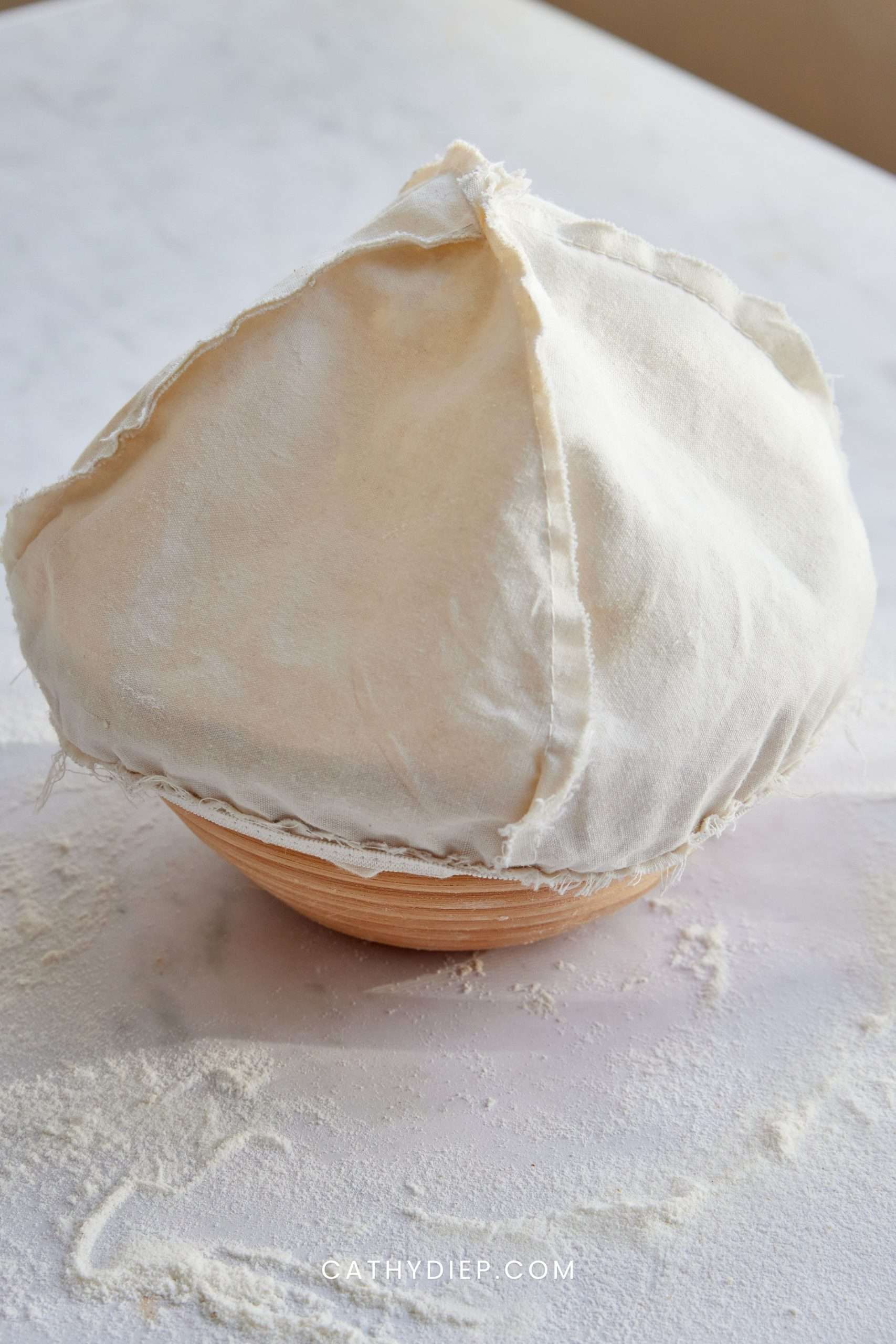
Step 8: Cover the banneton and let the dough rest at room temperature for 1 hour. Transfer it to the refrigerator and chill for 12 to 16 hours.
Step 9: Place a lidded cast-iron Dutch oven inside the oven. Preheat the oven to 500°F for 30 minutes.
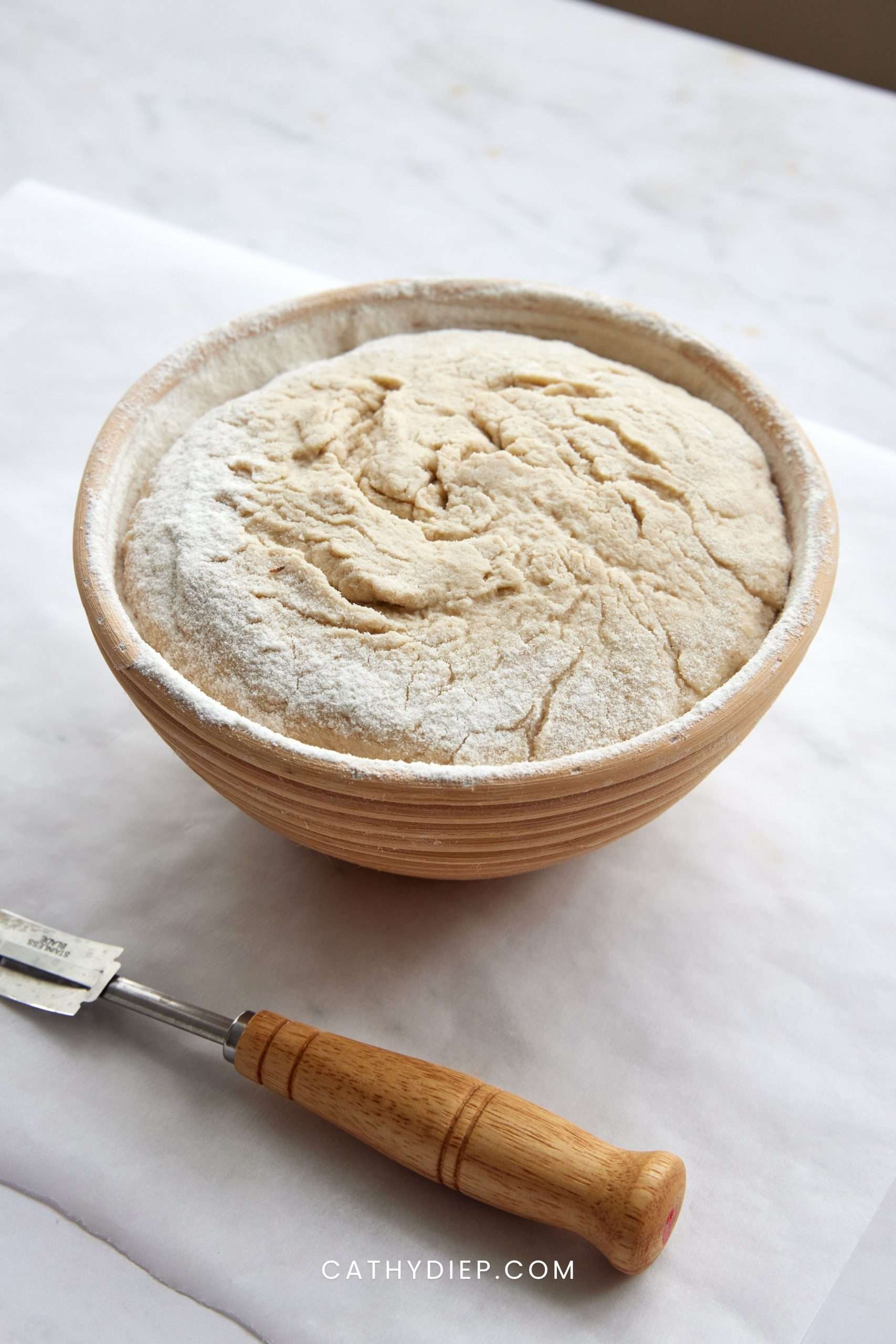
Step 10: Remove the chilled dough from the refrigerator and turn it onto a sheet of parchment paper. Score the top with a bread lame, razor blade, or sharp knife.
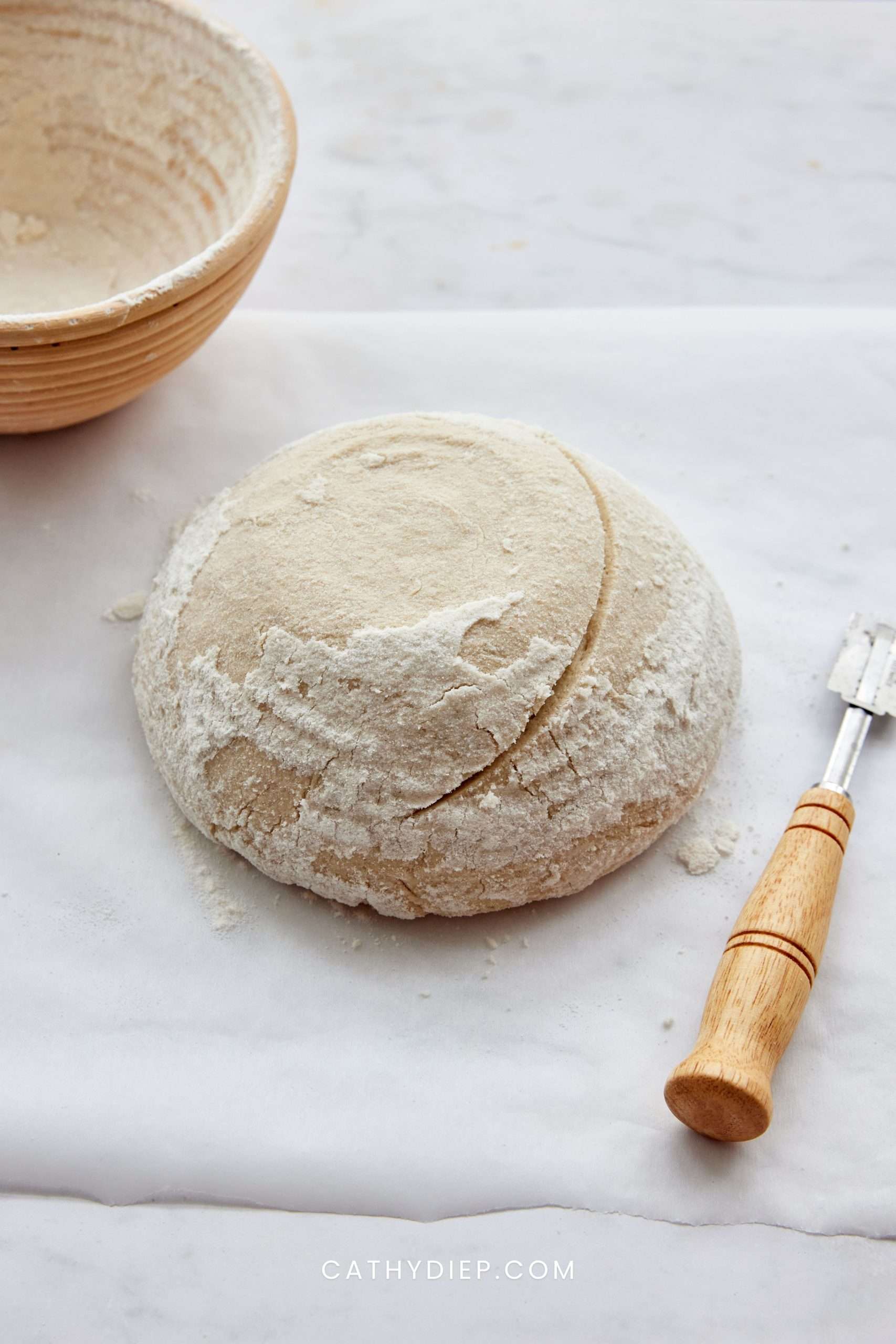
Step 11: Carefully lower the dough into the hot Dutch oven using the parchment paper as a sling. Cover with the lid and bake at 500°F for 40 minutes.
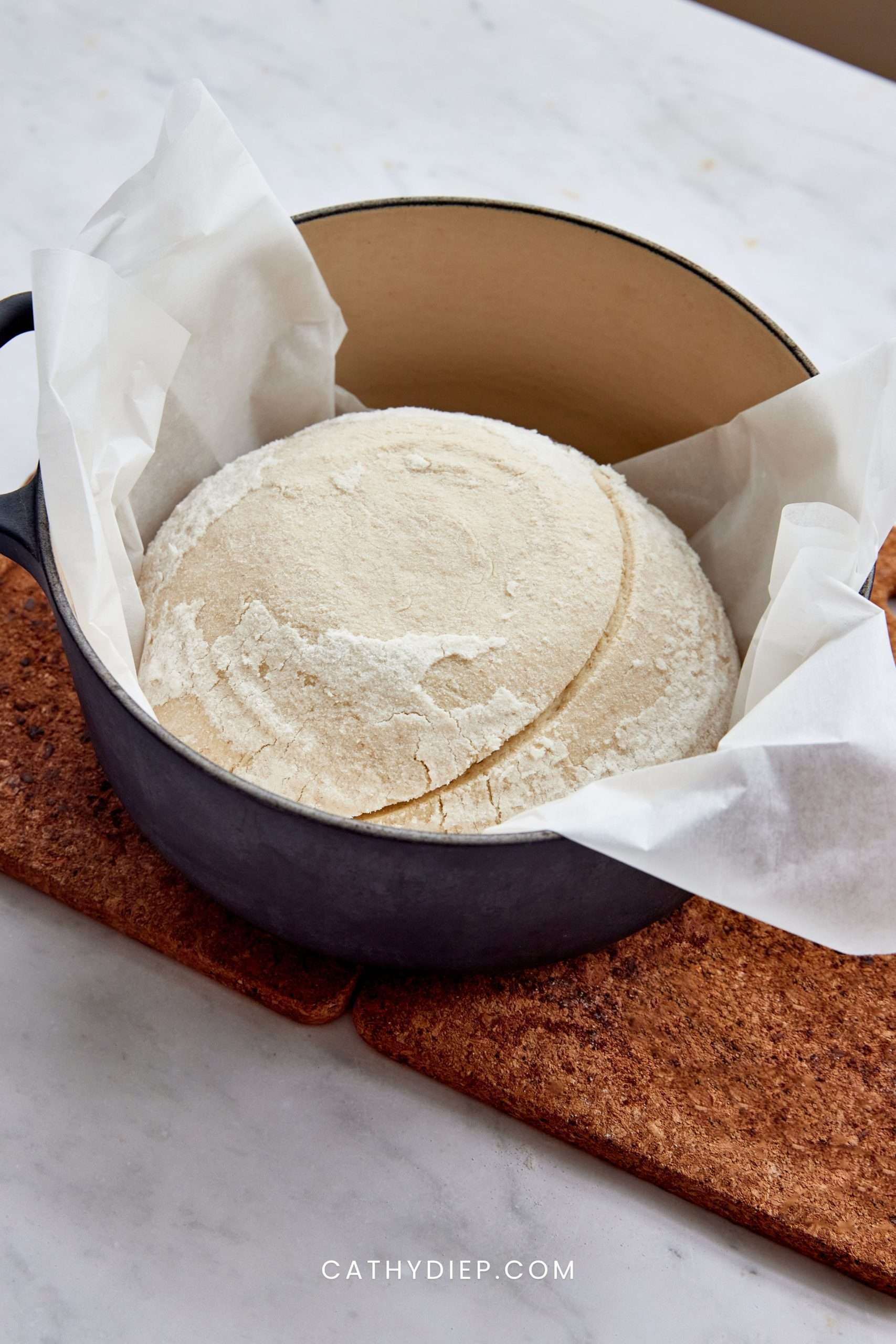
Step 12: Remove the lid and reduce the oven temperature to 450°F. Bake uncovered for another 30 to 40 minutes, until the crust is deeply browned and the center reaches 207°F.
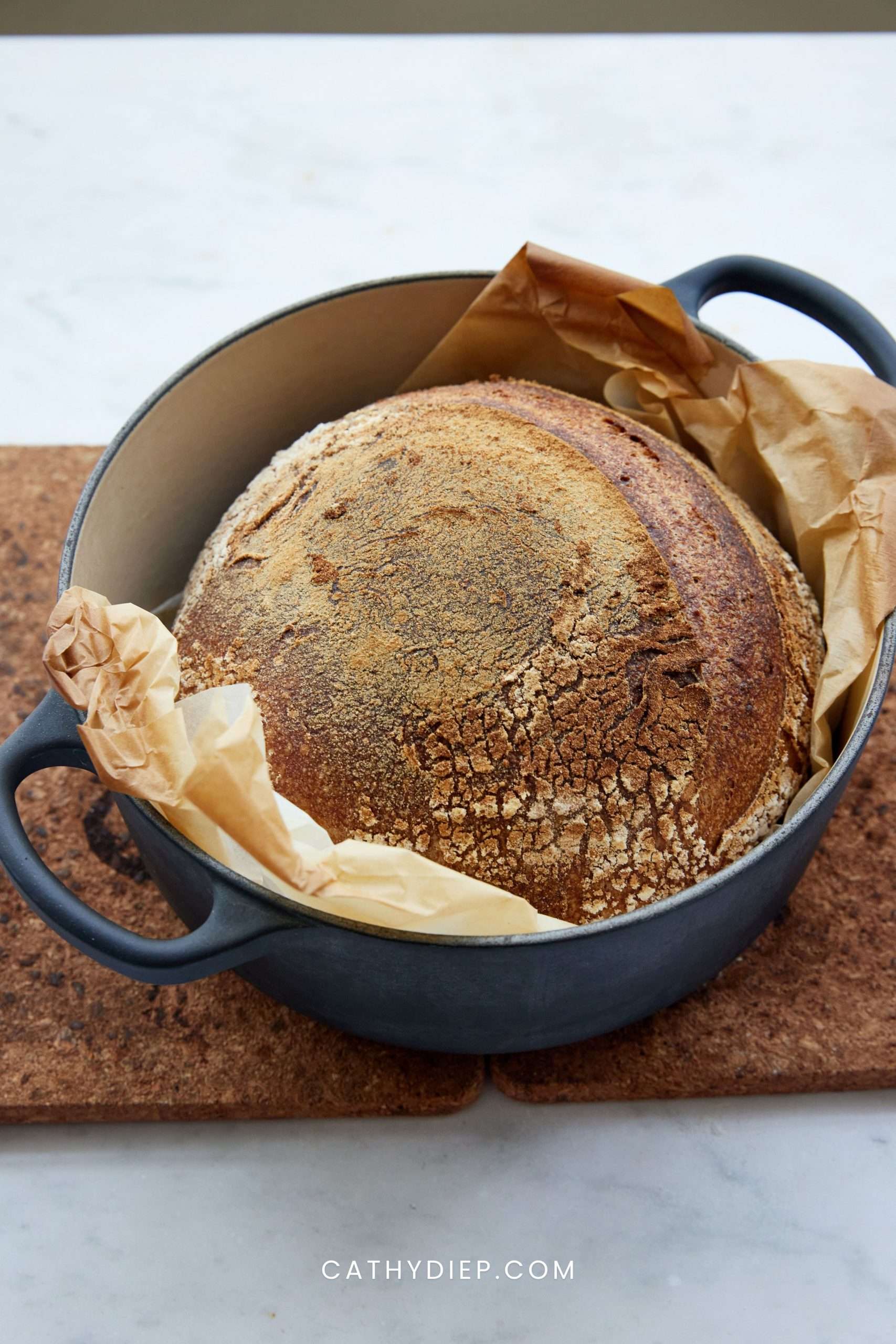
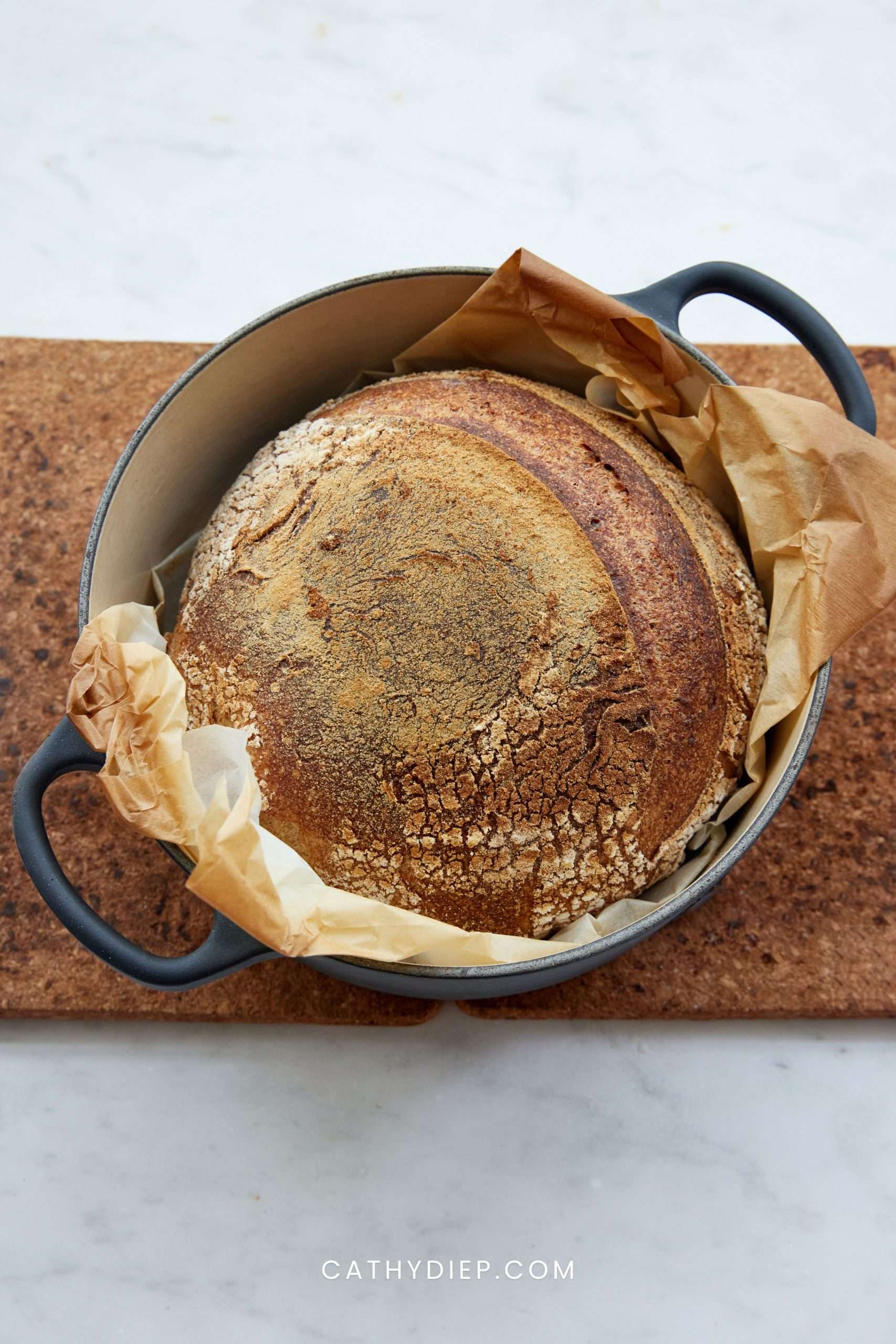
Step 13: Transfer the loaf to a wire rack and let it cool completely before slicing. Cutting it while warm can make the center gummy.
Recipe Tips & Tricks
- Use a digital scale: Gluten-free flours can vary a lot when measured by cups, so weighing the ingredients gives you the most consistent dough and crumb.
- Watch your starter, not the clock: Use the starter when it has roughly doubled in volume and looks airy and active. An underfed starter can lead to a denser loaf.
- Choose the right banneton size: A 7-inch banneton helps the dough hold a taller shape. A larger basket will still work, but the loaf may bake up wider and flatter.
- Keep the dough lightly floured: Use just enough white rice flour to prevent sticking. Too much flour can dry out the surface and make shaping more difficult.
- Check the internal temperature: The loaf is fully baked when the center reaches about 207°F. This is more reliable than judging the crust color alone.
- Freeze it in slices: Gluten-free sourdough is best fresh, so I like to slice the cooled loaf before freezing. You can toast individual slices straight from the freezer as needed.
⭐ Confidence Tip: Mix the dry ingredients together ahead of time and store them in an airtight container. When you are ready to bake, the dough comes together much faster and with less cleanup.
Storage & Reheating
- Storage: Store the fully cooled loaf in an airtight container at room temperature for up to 2 days. I do not recommend refrigerating it, since the cold temperature can make gluten-free bread dry out faster.
- Reheating: Toast individual slices or warm them in a 350°F oven for 5 to 8 minutes. This helps bring back the crisp crust and softens the center.
- Freezing: Slice the bread before freezing, then store the slices in an airtight freezer-safe container for up to 3 months. Toast individual slices straight from frozen, or let them thaw at room temperature first.
Additions & Substitutions
Additions
- Rosemary and sea salt: Fold finely chopped fresh rosemary into the dough, then sprinkle flaky sea salt over the loaf before baking.
- Seeded crust: Press sesame, sunflower, or pumpkin seeds onto the top of the shaped dough for extra texture and a lightly toasted flavor.
- Garlic-free herb loaf: Add dried thyme, oregano, or Italian seasoning for a savory loaf that pairs well with soups and salads.
- Cinnamon raisin variation: Mix in ground cinnamon and a small handful of raisins for a subtly sweet breakfast loaf. Avoid adding too many raisins, since they can weigh down the dough.
- Serving toppings: Enjoy toasted slices with avocado, almond butter, chia jam, or a drizzle of extra-virgin olive oil.
Substitutions
- Honey: Replace it with an equal amount of pure maple syrup to keep the gluten-free sourdough loaf refined-sugar-free.
- White wine vinegar: Use apple cider vinegar in the same amount without changing the resting or baking time.
- Starter flour: Feed your gluten-free sourdough starter with superfine brown rice flour instead of the oat and rice flour blend if certified gluten-free oats are not suitable for you.
- Banneton: Use a small bowl lined with a clean kitchen towel and generously dusted with white rice flour. Choose a bowl close to 7 inches wide to help the loaf hold its shape.
- Dutch oven: Bake the loaf on a preheated baking steel or cast-iron skillet with a separate pan of hot water in the oven for steam. Follow the same temperatures, but begin checking the loaf near the end of the baking time.
Psyllium husk powder, egg whites, and the listed flour and starch blend are essential for structure. I do not recommend replacing them, since doing so may produce a dense, gummy, or poorly risen loaf.
Frequently Asked Questions
Can sourdough bread be gluten-free?
Yes, sourdough bread can be gluten-free when both the starter and the flour blend are made entirely with gluten-free ingredients. Traditional sourdough made with wheat, rye, or barley is not gluten-free, even though it is fermented.
How long does gluten-free sourdough bread last?
Gluten-free sourdough bread stays fresh at room temperature for about 2 days when stored in an airtight container. For longer storage, slice the cooled loaf and freeze it for up to 3 months.
Can I make gluten-free sourdough bread without a starter?
No, an active gluten-free sourdough starter is required for this recipe. It provides the natural yeast needed to ferment the dough, help it rise, and develop its signature sour flavor.
What temperature should gluten-free sourdough bread reach?
Gluten-free sourdough bread should reach an internal temperature of about 207°F before you remove it from the oven. Checking the center with an instant-read thermometer helps prevent an underbaked or gummy crumb.
Do I need to bake gluten-free sourdough bread in a Dutch oven?
No, you can bake this loaf without a Dutch oven. Use a preheated baking steel or heavy cast-iron skillet and place a separate pan of water in the oven to create the steam needed for a crisp crust and better rise.
Try These Next


Final Thoughts
This gluten-free sourdough bread is well worth the wait, especially when you pull a deeply golden loaf from the oven and slice into that soft, chewy center. It is a great recipe to keep on hand for toast, sandwiches, or serving alongside your favorite soup.
Now I’d love to hear from you. How did you enjoy serving your gluten-free sourdough bread?
If you try it, I’d love to hear how it turned out. Leave a comment below, rate the recipe, and let me know what you think.
Easy Gluten-Free Sourdough Bread Recipe
Ingredients
- 1 ½ cups 360g lukewarm water
- 2 tablespoons 20g ground psyllium husk
- ½ cup 120g gluten-free sourdough starter, recently fed
- ⅓ cup 85g egg whites
- 1 tablespoon white wine vinegar or apple cider vinegar
- 1 tablespoon olive oil
- 1 tablespoon honey or maple syrup
- 1 cup 120g millet flour
- ¾ cup 90g tapioca starch
- ½ cup plus 1 tablespoon 70g sorghum flour
- ½ cup 90g potato starch
- 1 ¼ teaspoons 10g fine salt
- White rice flour for dusting
Instructions
- Add the lukewarm water to a large bowl. Whisk in the ground psyllium husk and let it sit for 1 to 2 minutes until a thick gel forms.
- Add the sourdough starter, egg whites, vinegar, olive oil, and honey or maple syrup. Whisk until fully combined.
- In a separate bowl, whisk together the millet flour, tapioca starch, sorghum flour, potato starch, and salt.
- Add the dry ingredients to the wet mixture. Beat until fully combined and no dry patches or lumps remain.
- Scrape down the bowl and form the dough into a rough ball. Cover with a damp kitchen towel and rest at room temperature for 1 hour.
- Transfer the dough to a work surface lightly dusted with white rice flour. Gently shape it into a ball without overworking it.
- Dust a 7-inch banneton with white rice flour. Place the dough inside with the smooth side facing down.
- Cover and rest at room temperature for 1 hour. Refrigerate for 12 to 16 hours.
- Place a lidded cast-iron Dutch oven inside the oven. Preheat to 500°F for 30 minutes.
- Turn the chilled dough onto parchment paper and score the top.
- Lower the dough into the hot Dutch oven using the parchment paper. Cover and bake at 500°F for 40 minutes.
- Remove the lid and reduce the temperature to 450°F. Bake uncovered for 30 to 40 minutes, until the center reaches 207°F.
- Transfer the loaf to a wire rack and cool completely before slicing.
Video
Notes
- Use a recently fed starter at peak ripeness that has roughly doubled in volume.
- Use a 100% hydration starter made with equal weights of flour and water.
- Use gram measurements for the most accurate results.
- Use psyllium husk powder and potato starch, not whole psyllium husks or potato flour.
- Let the loaf cool completely before slicing to prevent a gummy center.
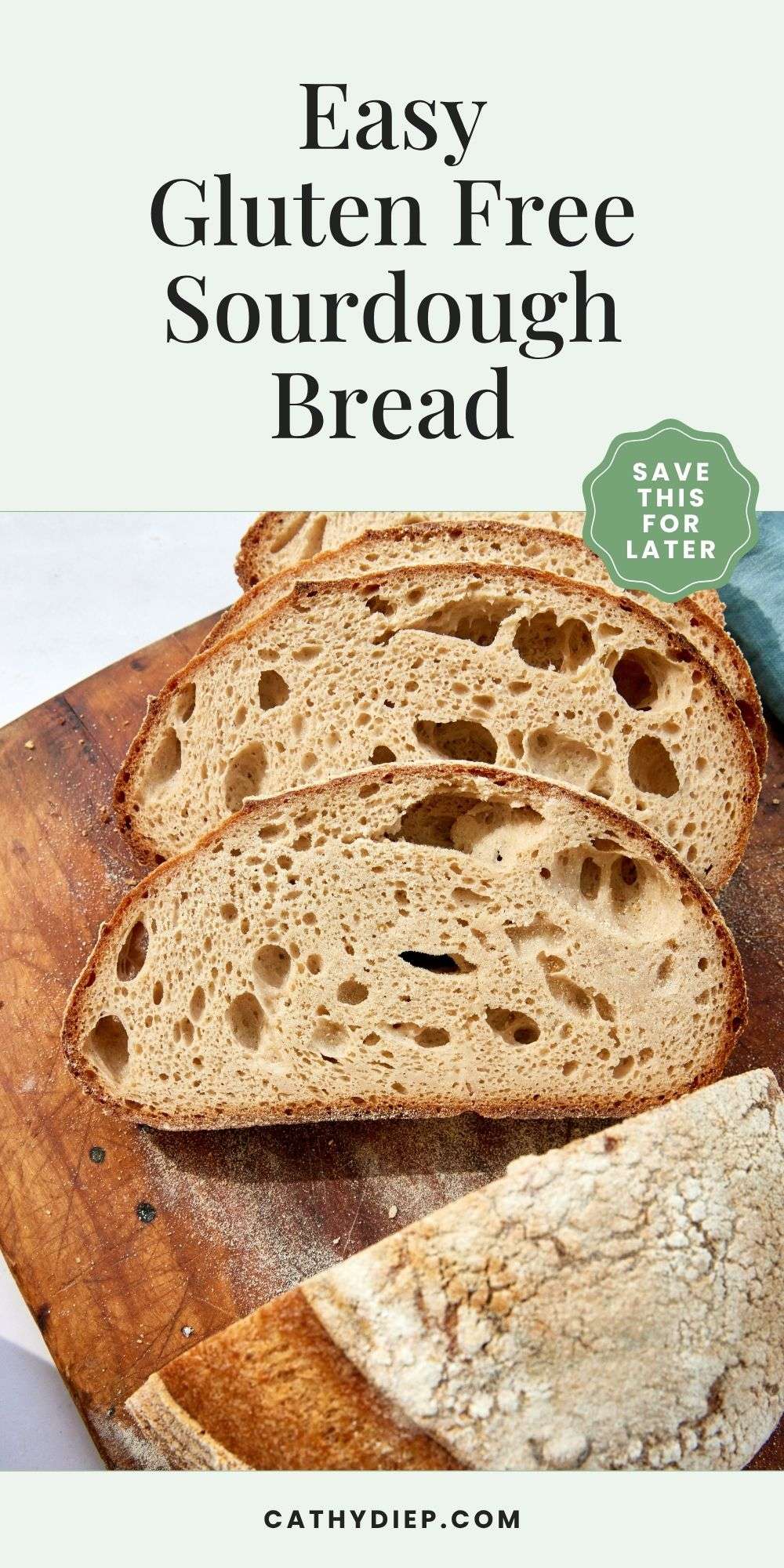
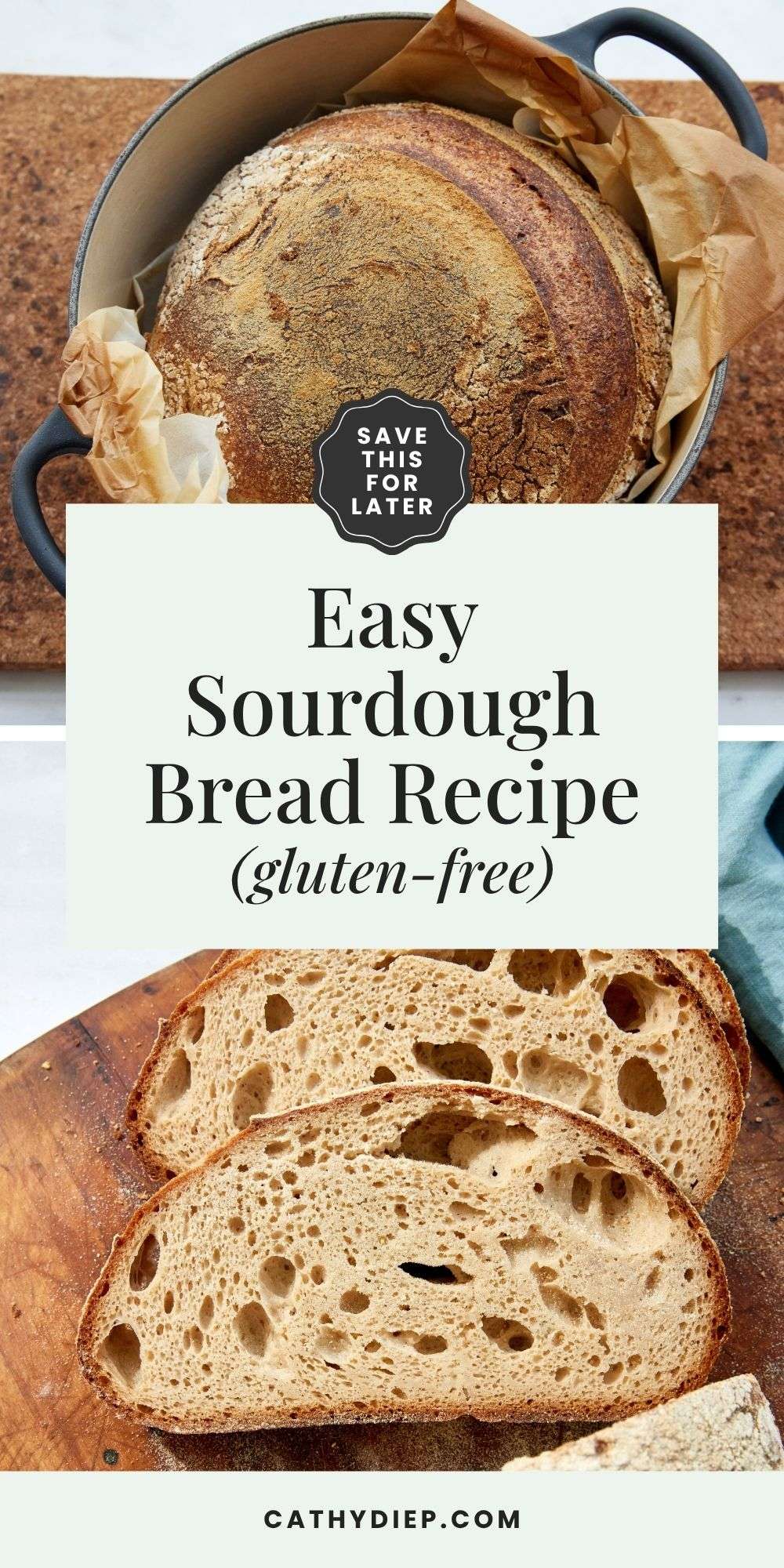
👉 Like this and want to save it for later? Tap the Pinterest Pin button below—it’s an easy way to keep it on hand when you need it.