
Disclosure: This post may contain affiliate links, which means I may earn a small commission at no extra cost to you. I only share products I genuinely love and recommend. This content is also for educational purposes only and is not intended to diagnose, treat, cure, or prevent any illness or disease. Please consult your healthcare provider with any medical concerns or medication questions.
The first time I tried Pilates reformer, I felt awkward. I remember thinking, Is this thing supposed to move? Am I doing this right? Why does everyone else look so calm?
If you’re curious about Pilates reformer but feel intimidated, stiff, out of shape, or just unsure where to start, you are exactly who this workout is for!
This post will walk you through how to get started with Pilates reformer step by step. What it is, why beginners love it, how it works, and how to feel confident even if you have never set foot on one before.
👉 Before we get started:
If you want a simple way to start Pilates at home without having to guess what to do, I made this Full-Body Pilates Workout Chart you can print at home. It walks you through gentle Pilates moves, how to use them, and how often to practice so you can feel confident instead of overwhelmed.

What Is Pilates Reformer?
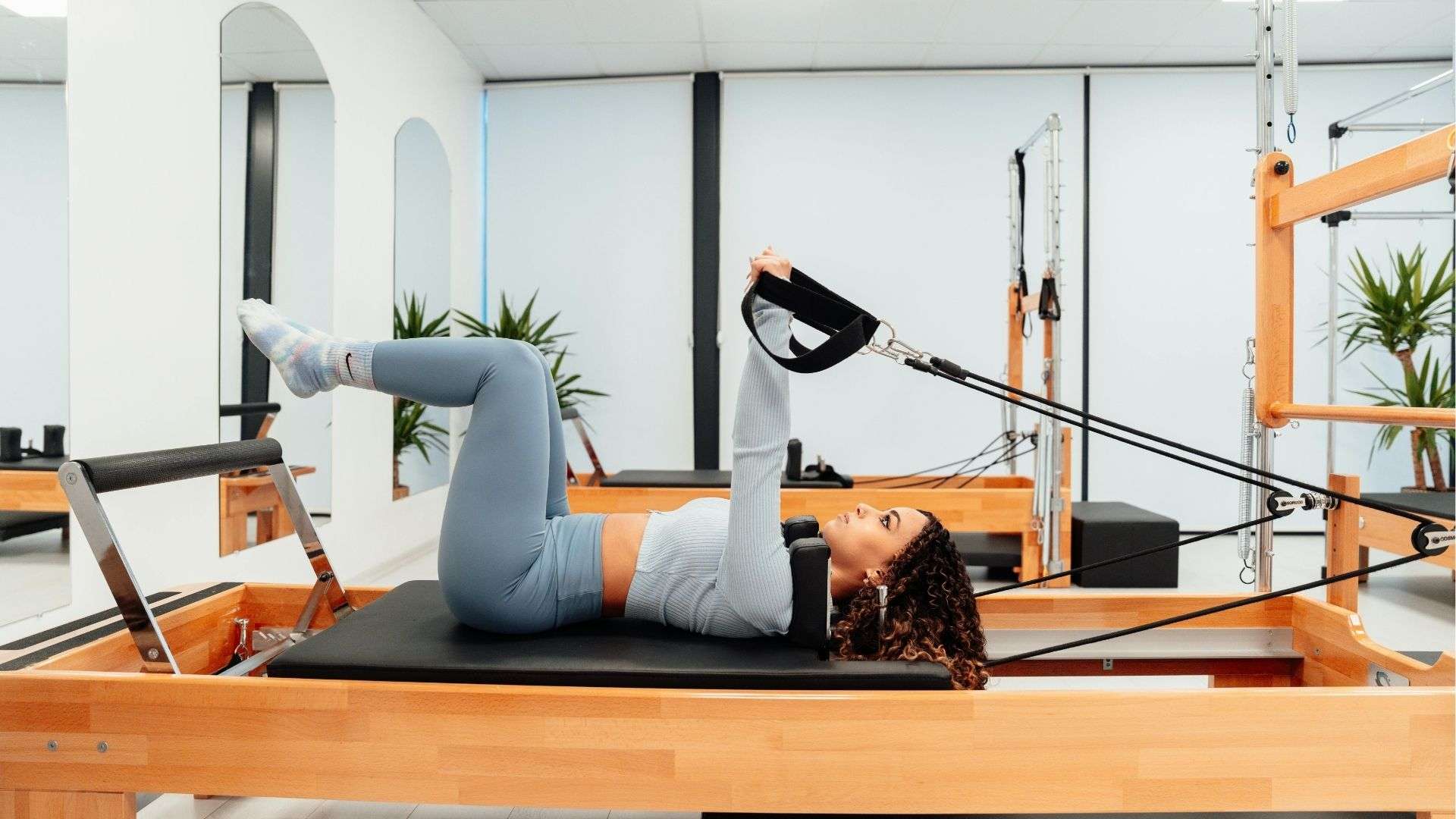
Pilates reformer is a low-impact, full-body workout done on a machine called a reformer. It uses springs for resistance instead of weights, which makes movements feel supported.

Here’s why beginners tend to love it once they try it.
- It’s gentle on joints
- Movements are slow and controlled
- You work your whole body
- The machine helps guide your movement
The reformer was created by Joseph Pilates as part of the original Pilates method. The goal was never to push your body to exhaustion.
It was to build strength, balance, and control in a way that supports your body long term.
How Pilates Reformer Works
At first glance, the reformer looks like something out of a science lab. But once you understand the basics, it becomes much less intimidating.
Here’s a simple breakdown.
- The carriage is the flat platform you lie, sit, or stand on. It moves back and forth.
- The springs provide resistance. Instructors adjust these depending on the exercise and your level.
- The footbar is something you press your feet or hands against.
- The straps are used for arms or legs during certain movements.
One thing beginners are often surprised by is this. More springs do not always mean harder. Sometimes more resistance actually makes an exercise feel more stable and easier to control.
Benefits of Pilates Reformer for Beginners
Pilates reformer is often recommended by physical therapists and fitness professionals because it builds strength in a safe, controlled way.
Low-impact resistance training has also been shown to support joint health and reduce injury risk, especially for beginners or those returning to exercise.
Here are some benefits beginners often notice first.
- Improved core strength without crunches
- Better posture and body awareness
- Increased flexibility without forcing stretches
- Strength gains without joint pain
- A calmer, more focused feeling after class
Many people also find it helpful for stress management. The slow pace and breathing can feel grounding, especially if high-intensity workouts feel overwhelming.
How to Prepare for Your First Pilates Reformer Session
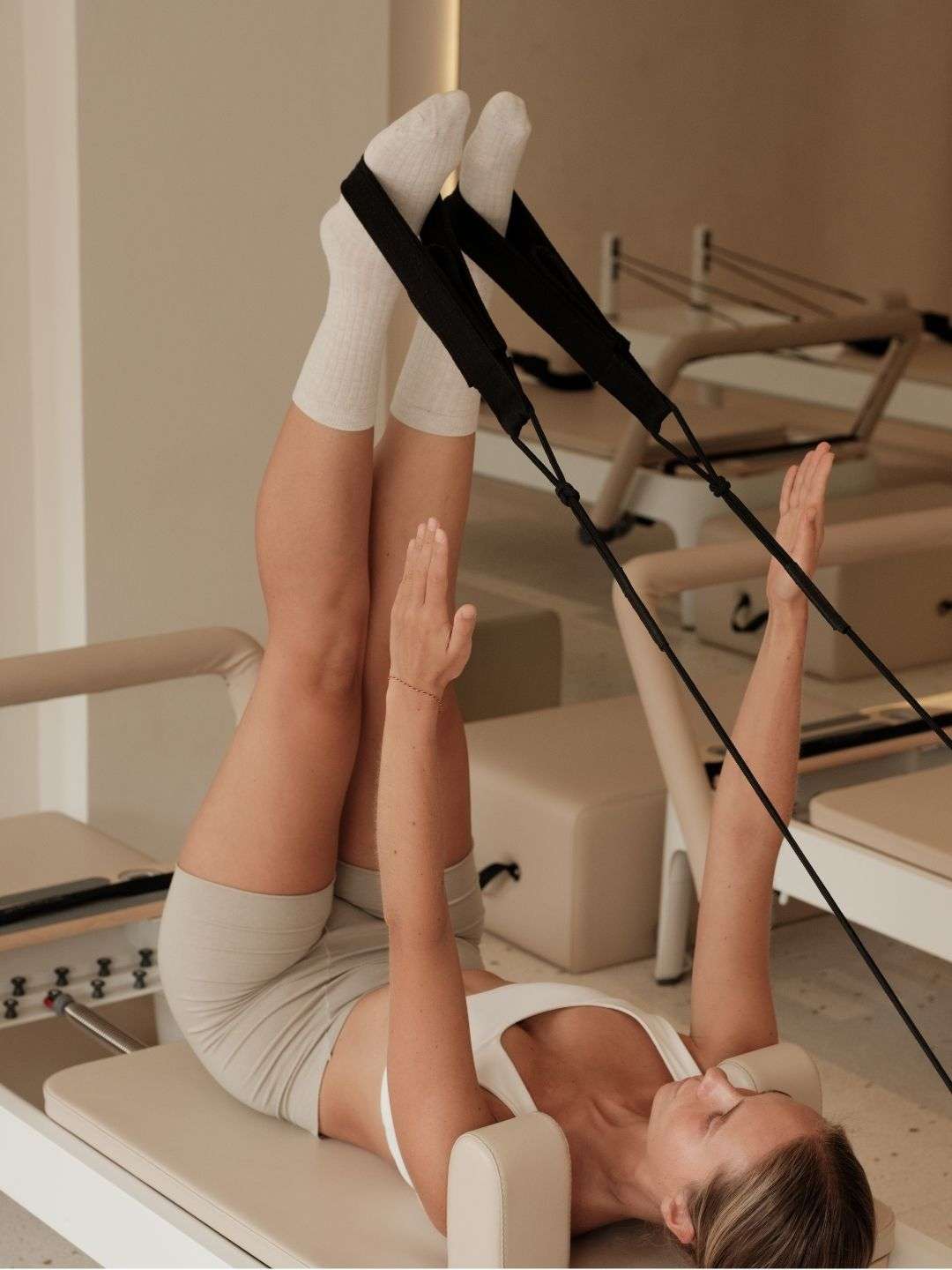
If you’re walking into your first class soon, here’s what helps.
1. What to Wear
Wear comfortable, fitted clothing that allows movement. Think leggings and a snug top. Avoid loose fabric that can get caught in the springs.
Grip socks are usually required. They help with stability and safety.
2. What to Expect
Most beginner reformer classes move slowly. An instructor will explain the setup and guide you through each movement.
You are allowed to ask questions. You are allowed to rest. You are allowed to modify.
3. Mindset Shift That Helps
Pilates is about control, not speed. Shaking muscles are normal. Feeling confused at first is normal too.
10 Pilates Reformer Exercises for Beginners
Here are a few common beginner foundations.
1. Footwork
Footwork is often the first exercise taught on the reformer because it establishes the foundations of Pilates practice.
Performed lying down, it allows clients to explore neutral alignment, coordinated breathing, and controlled use of spring resistance.
With the spine supported, the focus is on pressing evenly through the feet, tracking the knees correctly, and moving with intention rather than momentum.
2. Hundred (Modified)
The modified Hundred introduces core engagement and breath without overwhelming the body.
By keeping the head down and the feet either resting on the bar or in tabletop, beginners can focus on rhythmic breathing and gentle arm pumping.
This version builds endurance and awareness while protecting the neck and lower back.
3. Coordination (Modified)
Coordination helps clients learn basic timing between the arms, legs, and breath.
In its modified form, the exercise is performed with the head down and reduced leg range, making it more accessible.
The emphasis is on smooth transitions and controlled sequencing rather than speed or intensity.
4. Rowing Series (Intro Variations)
Introductory rowing exercises are excellent for improving posture and shoulder mobility.
Performed seated, they encourage an upright spine, controlled arm movement, and awareness of how the arms connect into the back.
These early variations are often simplified to avoid excessive spinal flexion or rotation.
4. Pull Straps (Light Springs)
Pull Straps strengthen the upper back while teaching proper shoulder mechanics.
Using light springs, the exercise focuses on drawing the arms back with control, engaging the muscles between the shoulder blades.
The movement is slow and deliberate, helping clients develop strength without tension in the neck or lower back.
5. Backstroke
Backstroke introduces gentle coordination and core control in a supported position.
Lying on the back, the arms and legs move through a controlled, circular pattern while the torso remains stable.
This exercise reinforces control through the center while challenging coordination in a manageable way.
Teaser preparation builds core awareness without the demands of the full exercise.
Instead of lifting high, the focus is on small, controlled curls of the head and chest, often with knees bent or one leg at a time.
This approach helps clients understand abdominal engagement without straining.
7. Breaststroke (Prep)
Breaststroke prep encourages spinal extension and upper-body strength in a safe, gradual way.
Performed lying prone, it emphasizes length through the spine, gentle chest opening, and controlled arm movement.
The goal is to strengthen the back while maintaining ease in the neck and shoulders.
8. Hamstring Curls
Hamstring curls are a straightforward and accessible lower-body exercise.
By bending and extending the knees against spring resistance, clients strengthen the backs of the legs while learning to keep the pelvis stable.
This exercise is often well tolerated and easy to understand, making it ideal for beginners.
9. Elephant
Elephant is a powerful teaching tool for learning the hip hinge and spinal length.
Standing on the reformer with the heels grounded, the movement comes from the hips rather than the spine.
It helps clients develop awareness of posterior chain engagement while maintaining a long, supported back.
10. Long Stretch (Modified Plank)
The modified Long Stretch builds full-body strength while offering support for beginners.
With knees down or reduced load, clients practice maintaining a long line through the body as the carriage moves.
The emphasis is on shoulder stability, core support, and controlled movement.
Quick Recap
✅ Pilates reformer is beginner-friendly
✅ The machine supports your movement
✅ Slow and controlled is the goal
✅ You don’t need to be flexible or fit to start
✅ Confidence comes with time and practice
Final Thoughts
If Pilates reformer feels intimidating right now, that makes sense. New things usually are. Especially when there’s a machine involved and everyone else looks like they know what they’re doing.
If you’re new, the most helpful thing you can do is start with beginner-level classes, focus on your breathing, and give yourself permission to move slowly.
Now, I’d love to hear from you! What part of Pilates are you most curious about or unsure of right now? Let me know in the comments below.
Lastly, if you’re ready to try Pilates at home, don’t forget to grab my beginner Pilates workout chart above and keep it on hand!
💢 Still dealing with bloating, fatigue, or gut issues, no matter what you try?
If you’ve been chasing symptoms and nothing seems to stick, it’s time to look deeper. I’d love to help you uncover the root cause of your digestive issues so you can finally get the answers you’ve been looking for.
👉 To get started, learn how private coaching and functional lab testing can help support your gut-healing journey.
Additional Resources
- How to Start Pilates at Home (Beginner Guide + Workout Plan)
- 10 Apartment-Friendly Cardio Exercises for a Great 25-Minute Workout
- 7 Simple Activities That Naturally Lower Cortisol and Improve Mood
- How Your Hidden Stress Hormones Are Blocking Fat Loss
- 7 Everyday Health Habits for Lasting Wellness and Energy

👉 Like this and want to save it for later? Tap the Pinterest Pin button below—it’s an easy way to keep it on hand when you need it.