

Disclosure: This post may contain affiliate links, which means I may earn a small commission at no extra cost to you. I only share products I genuinely love and recommend. This content is also for educational purposes only and is not intended to diagnose, treat, cure, or prevent any illness or disease. Please consult your healthcare provider with any medical concerns or medication questions.
For a long time, I thought a “good” shower meant hot water, lots of steam, and staying in there as long as possible. If you’re anything like me, you might feel the same way. Hot showers feel relaxing. They feel clean. They feel like a reset.
But if your skin often feels dry, tight, itchy, or irritated afterward, it might not be your skin that’s the problem. It might be your shower routine.
That’s what led me to look into the research and what I found was surprisingly simple.
There isn’t one perfect way to shower. But there is a science-backed approach that’s gentler on your skin and easier than you might think.
Let’s walk through what the research actually says.
👉 Before we get started:
Be sure to grab access to my Free Wellness Library. It’s packed with e-books, gut health checklists, food trackers, and practical resources to help you feel better faster. You can get your free access below!

Do You Need to Shower Every Day?
Short answer. Not always.
Most people do not need a full-body shower every single day, especially if they are not sweating heavily or getting visibly dirty.
Daily showering is often more about habit and routine than actual health.
Frequent washing can strip away the natural oils that protect your skin. These oils help keep moisture in and irritants out. When they are removed too often, the skin barrier can weaken, leading to dryness, irritation, and sensitivity.
If you exercise often, live in a hot climate, or simply feel better showering every day, that is completely fine.
A helpful way to think about it is this. Shower when you need to, not because you feel like you should.
Water Temperature Matters
This one surprised me.
Hot showers feel amazing, but research is very clear that hot water is tough on your skin.
Studies published in PubMed1 show that hot water increases moisture loss from the skin. In other words, it allows water to escape more easily, which leaves skin feeling dry afterward.
Hot water dissolves the natural oils on your skin. These oils protect your skin barrier and help it stay hydrated.
So what works better?
Warm or lukewarm water.
You do not need to take cold showers. Just turn the temperature down enough that it feels comfortable without being harsh.
If your skin feels tight or itchy after showering, changing the water temperature is one of the easiest fixes.
How Long Should a Shower Be?
There is no exact number you have to hit, but shorter showers are better for your skin.
Harvard Health experts generally recommend keeping showers around 5 to 10 minutes. Longer showers mean more water exposure and more oil loss from the skin.2
If you catch yourself zoning out or replaying old conversations in your head, it might be time to wrap it up.
A simple rule that helps. If your shower playlist has more than two songs, you are probably in there too long.
You Do Not Need to Soap Your Entire Body Every Time
This is one of the most freeing things to learn. Soap is really only needed daily on certain areas of the body, including:
- Armpits
- Groin area
- Feet
- Areas that are visibly dirty or very sweaty
For the rest of your body, rinsing with water is often enough.
Using soap everywhere, every day, can disrupt the skin barrier and the skin’s natural microbiome. The microbiome is made up of helpful bacteria that protect your skin.
If you enjoy using body wash, choose a gentle, fragrance-free option and save full-body soaping for days when you truly need it.
The Most Important Part of Your Shower Routine
If you remember one thing from this post, let it be this.
What you do after your shower matters just as much as the shower itself.
The National Institute of Arthritis and Musculoskeletal and Skin Diseases3 recommends patting the skin dry and applying moisturizer while it is still slightly damp.
Here’s why.
Water alone does not hydrate your skin. Moisturizer helps seal that water in.
Studies published in PubMed4 show that applying moisturizer after bathing improves skin hydration and helps reduce symptoms in people with dry skin and eczema.
Simple creams or ointments work best, especially if your skin tends to be dry.
Think of it like this. The shower lets moisture in. Moisturizer helps keep it there.
What If You Have Dry Skin or Eczema?
Research5 does not show that daily showering is harmful for people with eczema or very dry skin, as long as the shower is gentle and followed by proper moisturization.
- Lukewarm water
- Short showers
- Fragrance-free cleansers
- Moisturizing immediately after bathing
Bathing followed by moisturization can actually help manage eczema symptoms. This approach is often called soak and seal.
Quick Recap
Here is what this looks like when you put it all together.
✅ You do not need to shower every day unless you are sweaty or dirty
✅ Warm water is better for your skin than hot water
✅ Short showers around 5 to 10 minutes are best
✅ Soap is only needed on odor-prone or dirty areas
✅ Pat skin dry instead of rubbing
✅ Moisturize within a few minutes after showering
That’s it!
Final Thoughts
When it comes to skin care, it’s easy to think we need to do more. Longer showers. Hotter water. More products.
But the research shows the opposite is often true.
Healthy skin usually comes from simpler, gentler habits. Turning the water temperature down a little. Spending less time in the shower. Being mindful about where you use soap. And taking a minute to moisturize afterward.
Now, I’d love to hear from you! Which part of your shower routine are you most ready to change? Let me know in the comments below.
💢 Still dealing with bloating, fatigue, or inflammation, no matter what you try?
If you’ve been chasing symptoms and nothing seems to stick, it’s time to look deeper. I’d love to help you uncover the root cause of your digestive + hormone issues so you can finally get the answers you’ve been looking for.
👉 To get started, learn how private coaching and functional lab testing can help you.
Additional Resources
- 5 Scary Truths That Made Me Switch to Mineral Sunscreen
- How to Protect Your Skin from the Sun Naturally
- How to Fix Dandruff and an Itchy, Oily Scalp Naturally
- 4 Proven Poison Ivy Relief Home Remedies That Actually Work
- 3 Powerful Mosquito Bite Remedies at Home That Actually Work
Footnote:
- Impact of Water Exposure and Temperature Changes on Skin Barrier Function ↩︎
- 9 ways to banish dry skin ↩︎
- Atopic Dermatitis: Diagnosis, Treatment, and Steps to Take ↩︎
- Quantitative assessment of combination bathing and/or moisturizing regimens on skin hydration in atopic dermatitis ↩︎
- Weekly versus daily bathing for people with eczema ↩︎
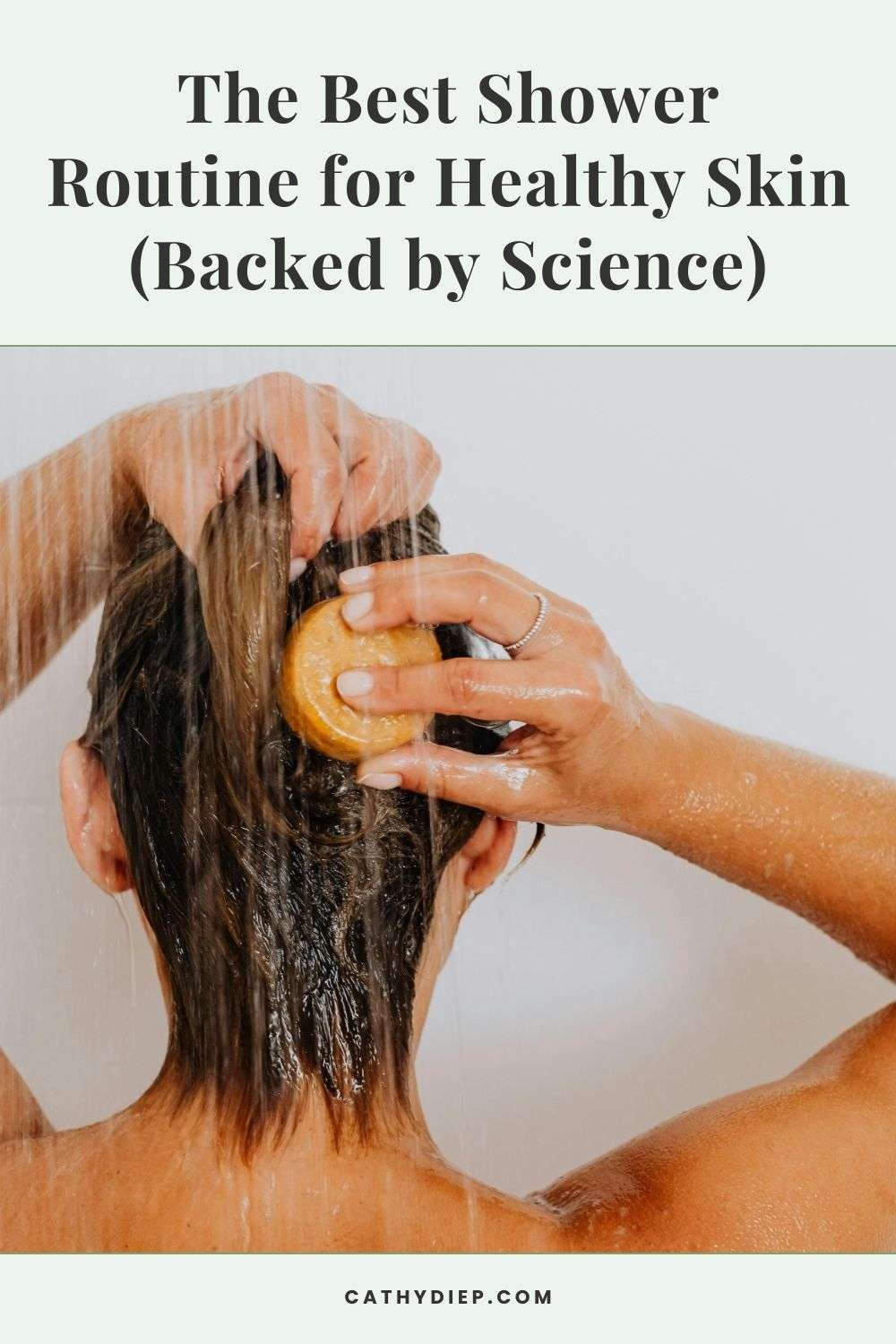
👉 Like this and want to save it for later? Tap the Pinterest Pin button below—it’s an easy way to keep it on hand when you need it.