
Disclosure: This post may contain affiliate links, which means I may earn a small commission at no extra cost to you. I only share products I genuinely love and recommend. This content is also for educational purposes only and is not intended to diagnose, treat, cure, or prevent any illness or disease. Please consult your healthcare provider with any medical concerns or medication questions.
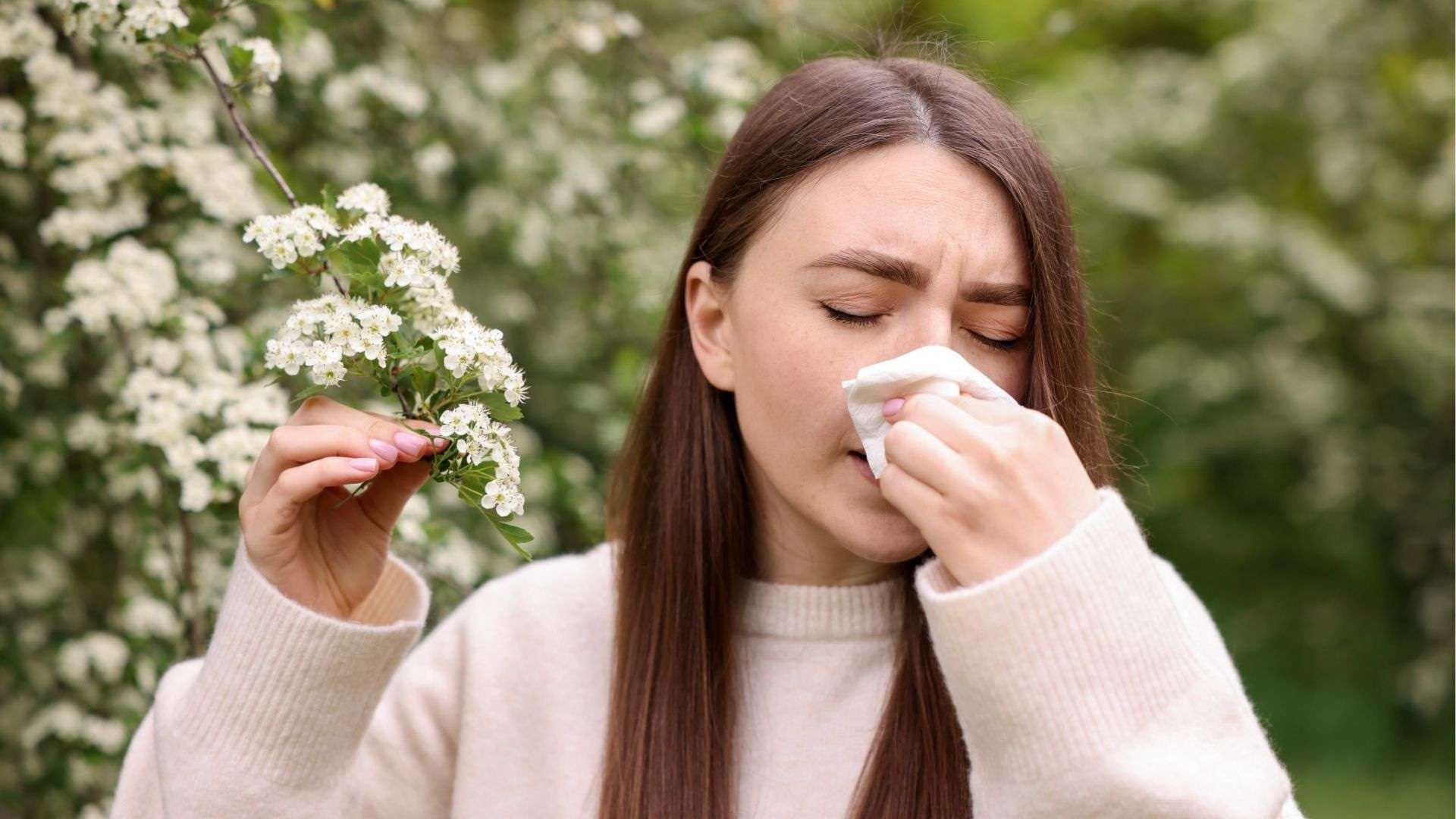
Every year, it hits out of nowhere. You wake up with a stuffy nose, your eyes won’t stop itching, and suddenly you’re carrying tissues everywhere you go. You try the usual fixes like antihistamines or sprays and hope this year will be different.
And while they might help a little, the symptoms always seem to come back.
It can feel frustrating, especially when it seems like your body is overreacting to something as simple as pollen.
But what if your allergies aren’t just about what’s in the air? What if the real issue is happening inside your body?
In this post, you’ll learn how seasonal allergies are connected to your gut and immune system and what you can do naturally to support your body and feel better over time.
👉 Before we get started:
Be sure to grab access to my Free Wellness Library. It’s packed with e-books, gut health checklists, food trackers, and practical resources to help you feel better faster. You can get your free access below!

Why Your Allergies Aren’t Really About Pollen
It’s easy to blame pollen for everything. But allergies are really about how your immune system responds.
- Your immune system is designed to protect you from harmful threats
- With allergies, it mistakenly treats harmless things like pollen as a concern
- This triggers the release of histamine, which leads to symptoms like sneezing, congestion, and itchy eyes
- Histamine itself is not the issue. It is a normal part of your body’s response. The challenge is when the response becomes too strong
- Two people can be exposed to the same pollen, but only one reacts. That difference comes from what is happening inside the body
💡 Helpful Insight: Think of pollen as the trigger, not the cause. Your body’s internal balance influences how strongly you react.
How Gut Health Impacts Your Immune System
Your gut does much more than digest food. It plays a major role in how your immune system behaves.
- Around 60 to 70 percent of your immune system is connected to your gut
- Your gut bacteria help guide your immune system to recognize what is safe and what is not
- A balanced gut supports immune tolerance, meaning your body stays calm around harmless substances
- When your gut is out of balance, your immune system may become more reactive
When your gut is inflamed or disrupted, your immune system can stay on high alert. That makes it easier for it to respond strongly to things like pollen.
💡 Tip: If your allergies feel intense, it may be helpful to look at your gut health as part of the bigger picture.
5 Hidden Root Causes That Make Allergies Worse
Seasonal allergies often build on top of deeper imbalances in the body.
- Leaky gut: When the gut lining becomes weakened, unwanted particles can enter the bloodstream and activate the immune system
- Chronic inflammation: Can be influenced by factors like processed foods, poor sleep, and stress. When inflammation is already high, your body may react more easily.
- Nutrient imbalances: Nutrients like vitamin D, vitamin C, zinc, and omega-3 fats help regulate the immune system. Lower levels can affect how the body responds.
- Microbiome imbalance: Antibiotics, low-fiber diets, and processed foods can reduce beneficial bacteria. This can impact how well the immune system stays balanced.
- Environmental exposures: Mold, pollution, and chemicals can add extra stress to the immune system. When your system is already overwhelmed, even small triggers can feel like a lot.
🚫 Myth-Busting: Allergies are not just random. There are often underlying factors that influence how your body responds.
Related:
11 Warning Signs of Parasites & Mold You Shouldn’t Ignore
Do You Have Stored Toxins? (How to Spot Them & Detox Safely)
Natural Allergy Relief: How to Calm Your Immune System
Instead of only masking symptoms, you can support your body to respond differently.
1. Lower Inflammation Through Food
- Reduce sugar, refined carbs, and ultra-processed foods
- Focus on whole foods like vegetables, berries, and healthy fats
- Include foods rich in omega-3s and colorful plant compounds
Related:
10 Best Anti-Inflammatory Foods for Better Health
2. Support and Heal Your Gut
- Eat a variety of fiber-rich foods to support healthy gut bacteria
- Add fermented foods like sauerkraut or kimchi
- Keep digestion regular to avoid buildup of toxins
Related:
15 Best Prebiotic Foods Your Gut Will Love
3. Support a Healthy Histamine Response
- Include nutrients like vitamin C and omega-3 fats
- Use natural compounds like quercetin and stinging nettle
- Consider short-term adjustments if histamine symptoms are high
4. Reduce Your Environmental Load
- Use an air filter in your bedroom
- Shower and change clothes after being outside
- Wash bedding regularly to reduce exposure
Medication vs Root Cause Healing
There is nothing wrong with wanting quick relief. Sometimes you need it.
- Antihistamines can help reduce symptoms like sneezing and itching
- Nasal sprays can help calm inflammation in the short term
- These tools help manage symptoms, but they do not address underlying factors
If you find yourself relying on more support each year, that can be a sign your body may benefit from deeper support.
Quick Recap
✅ Allergies are a sign of immune imbalance, not just pollen exposure
✅ Your gut plays an important role in regulating your immune system
✅ Inflammation, nutrient imbalances, and environmental exposures can influence symptoms
✅ Supporting your gut and reducing inflammation can help your body respond more calmly
✅ Natural strategies can help you move beyond short-term symptom management
Final Thoughts
When your immune system is under constant pressure, even small triggers can feel overwhelming. But when you begin supporting your gut, lowering inflammation, and giving your body what it needs, things can start to shift.
Now I’d love to hear from you! Have you tried any natural approaches for allergy relief, or noticed a connection between your gut and your symptoms? Let me know in the comments below.
💢 Still dealing with bloating, fatigue, or inflammation, no matter what you try?
If you’ve been chasing symptoms and nothing seems to stick, it’s time to look deeper. I’d love to help you uncover the root cause of your digestive + hormone issues so you can finally get the answers you’ve been looking for.
👉 To get started, learn how private coaching and functional lab testing can help you.
Additional Resources
If you want to go deeper and start applying what you’ve learned, these posts will help you take the next step:
- 7 Best Foods That Fight Allergies Naturally (& Help You Feel Better)
- 3 Natural Remedies for Seasonal Allergies (That Actually Work)
- How to Repair Leaky Gut Naturally in 4 Simple Steps
- How to Reduce Inflammation by Fixing the Root Cause
- How to Heal Your Gut by Calming Stress and Histamines
👉 Like this and want to save it for later? Tap the Pinterest Pin button below—it’s an easy way to keep it on hand when you need it.